


 Shkruar nga Pamfleti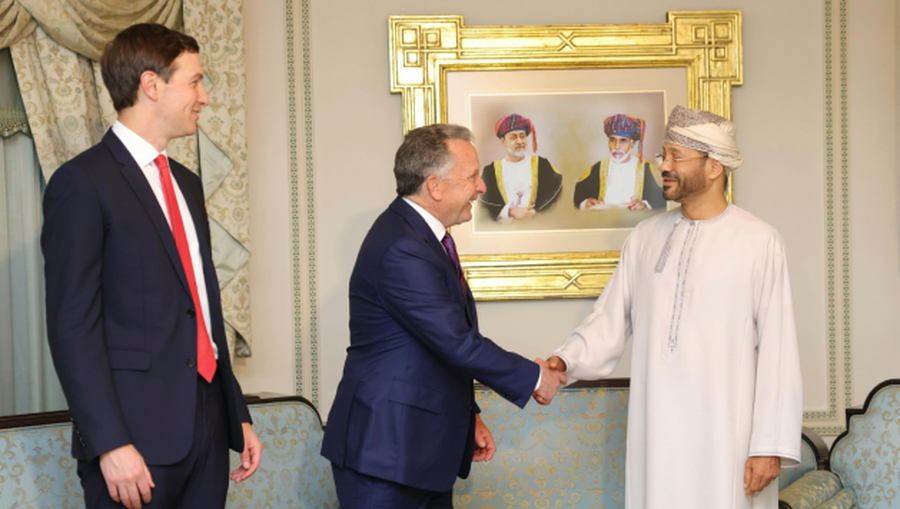
Overworked and an amateur team is risking failure on all fronts...
The Trump administration is entrusting the most critical global negotiations to a single, inexperienced team, creating a crisis-level diplomatic overload. Without a clear strategy for nuclear arms control and regional crises, the US risks losing its role as a guarantor of global stability.
The United States is facing a crisis of “diplomatic overload” of extreme proportions. Worse still, the Trump administration is relying on a single, inexperienced team to oversee three vital negotiations.
It remains unclear whether this team, or a more experienced one, will take on what is widely seen as the most treacherous challenge of all. The president's son-in-law, Jared Kushner, and his cryptocurrency business partner, Steve Witkoff, have taken the lead in talks on Gaza, Ukraine and, most recently, Iran.
Neither had any prior diplomatic experience before joining the Trump administration. To any objective observer, both find themselves in a profound conflict of interest; their outside business connections would normally serve as grounds for disqualification.
Kushner currently manages about $2 billion for Saudi Arabia's sovereign wealth fund. On the other hand, there is a possibility that Witkoff could benefit from deals with Ukraine for rare earth minerals through joint ventures, just as Kushner has done in the Persian Gulf.
The president believes he is bringing peace to the Middle East and Gaza. Israel's brutal war against Hamas has subsided, but Hamas still exists. Much of Gaza has been reduced to rubble, resembling cities like Berlin and Hamburg after World War II bombings.
Gazans face dire economic and sanitary conditions, many of which are life-threatening. So far, Trump's ambitious plans for a "Peace Board" in Gaza remain vague and unsustainable.
Ukraine remains locked in a bitter war with Russia. Reports of 1.2 million casualties (killed, wounded, and missing), including up to 325,000 dead since February 2022, seem realistic.
A cynic once remarked that even a snail would have covered more territory than the Russians have managed to conquer in four years of war. Meanwhile, Ukrainian President Volodymyr Zelensky has complained that the US has discussed secret business deals with Russia, which the White House has yet to confirm.
In parallel, the Kushner-Witkoff team has begun negotiations with Tehran. The Abraham Lincoln aircraft carrier strike group is in the Arabian Gulf, while the US has reportedly reinforced air and missile defense systems in the Gulf states.
A second wave of attacks could be on the way to increase pressure on the mullahs to reach an agreement. The question is: what kind of agreement is this?
During his first term, Trump canceled the nuclear agreement (JCPOA) reached by the Obama administration.
If Iran had adhered to the treaty, Tehran would never have been able to build nuclear weapons. At the time, the International Atomic Energy Agency (IAEA) had sufficient monitoring systems to verify compliance with the agreement. Today, this mechanism no longer exists.
The talks with Iran are much more complex than just the nuclear dossier. The US considers Iran to be the world's largest state sponsor of terrorism, given its support for Hamas and Hezbollah.
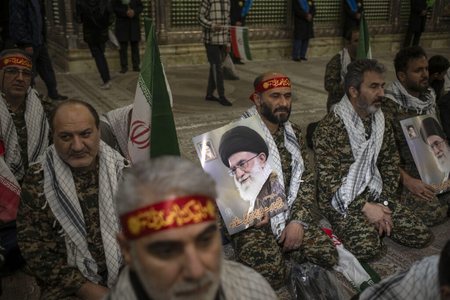
Tehran also possesses thousands of missiles that threaten the Gulf states and Israel. Washington also demands that the clerical oligarchy stop killing protesters and violence against its own citizens.
The presence of aircraft carriers is clearly intended to intimidate the mullahs into compromising. However, despite the president's optimism, what could the real outcome be?
Iran remains steadfast in its desire to maintain its nuclear capabilities and is unlikely to give up its missiles, which it sees as vital for self-defense. Although Hamas and Hezbollah have been significantly weakened, they still survive.
So what can actually be achieved? Finally, the question arises of what will replace the now-expired New START treaty, which limited the US and Russia to 1,550 nuclear warheads and 700 delivery vehicles.
The US possesses about 5,200 nuclear weapons, while the Russians have several hundred more. Meanwhile, China is expanding its arsenal at a dizzying pace. This raises the alarm about a new wave of nuclear proliferation.
If Europe were to take responsibility for its own defense, would this lead to a new arms race? Germany, Poland, Sweden, and Ukraine have the technical capacity to become nuclear powers.
Also in Asia, Japan, South Korea, Taiwan and Australia could follow China's lead. With this diplomatic overload, can America successfully manage four such critical negotiations at the same time? Unfortunately, the chances are slim. / Prepared by Pamphlet from "The Hill"





Lini një Përgjigje