


 Shkruar nga Pamfleti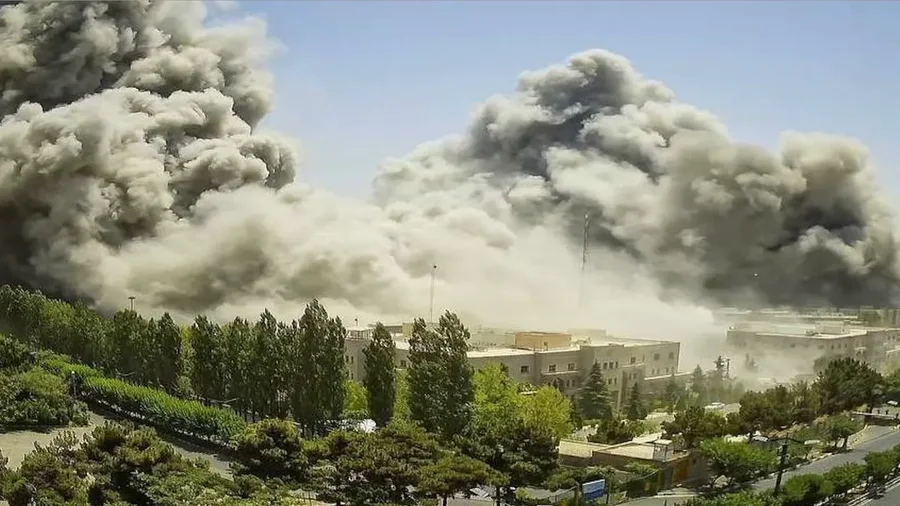
What has happened in the last 48 hours in the Middle East, from the American attack on nuclear plants to Iran's response and the continuation of Israeli bombings...
Iran attacked American interests in the Middle East in retaliation for Saturday's attack on three Iranian nuclear facilities.
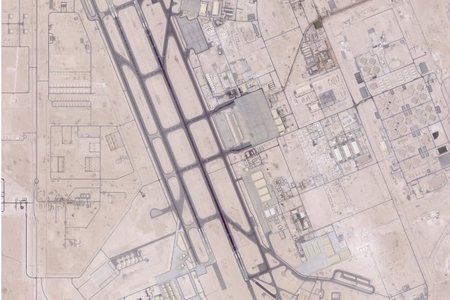
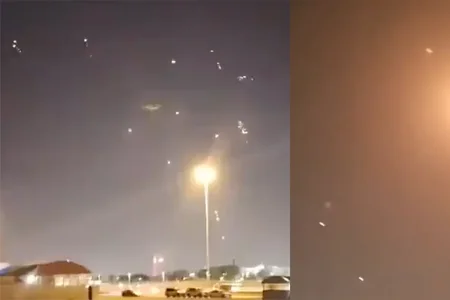
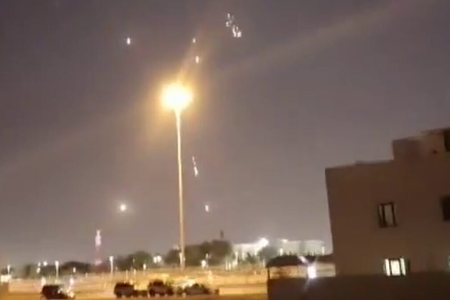
Iran has reportedly launched 10 ballistic missiles at US targets in Qatar, where Al Udeid Air Base is located, an Israeli official said, Israeli news agency N12 reported.
Sirens were also reported to have sounded in Bahrain and Kuwait, where the US has military bases.
US forces have reportedly been told to seek refuge in Iraq.
“Earlier, Iran repositioned missile launchers for a possible attack on US forces in the Middle East in response to the surprise US attack on three nuclear plants over the weekend,” Wall Street Journal reporter Laura Seligman reported in X, citing US officials.
Earlier on Monday, the US and UK embassies in Qatar issued warnings to citizens.
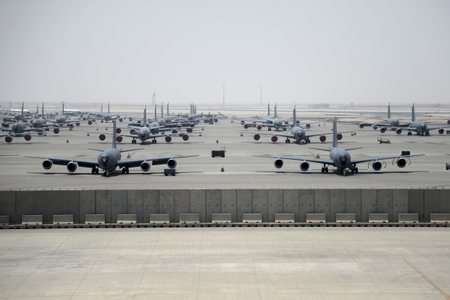
The US has troops at numerous bases in the region, including air bases in Saudi Arabia, Jordan, the United Arab Emirates and Qatar, the 5th Fleet headquarters in Bahrain and bases in Iraq, Kuwait and Syria. But, as we have previously noted, the sprawling Camp Lemonnier, located in Djibouti, is just 80 miles across the Bab al-Mandab Strait from Yemen. The base has been used for US operations in Yemen for years, as well as a key facility for America’s support for the Saudi-led Arab coalition against the Houthis.
The US attack gives Iran "a free hand" to respond, that country's top military leader said on Monday.
"Regardless of the extent of the damage caused, the very nature of this crime (the US attack on the nuclear plants) will not remain unanswered," Major General Seyed Abdolrahim Mousavi, Chief of Staff of the Iranian Armed Forces, threatened on Monday, according to the official Iranian television Press TV.
Israel-Iran confrontation
Israel and Iran exchanged another round of attacks with the Israeli Air Force (IAF) dramatically increasing its efforts to attack regime targets and particularly critical command and control infrastructure.
Attacking targets of this type further undermines the Iranian government's ability to wage war.
In particular, it makes it much more difficult for it to conduct coordinated operations, including a response to American bombing of its most important nuclear sites.
At the very least, it slows down such an operation and limits commanders' situational awareness, which reduces their effectiveness. Pursuing these objectives also destabilizes the country's leadership, something that could pave the way for internal regime change.
In the Iranian capital, Tehran, Israel says it struck targets including command centers belonging to Iran's Islamic Revolutionary Guard Corps (IRGC) and other domestic security forces responsible for "maintaining regime stability."
Israeli media reports claim that "hundreds" of IRGC members were killed in the attacks. Huge clouds of smoke were seen across the Tehran skyline.
"These forces consist of various corps and command centers and are responsible, on behalf of the Iranian regime's military, for protecting homeland security, suppressing threats, and maintaining regime stability," the Israel Defense Forces (IDF) said in a statement, The Telegraph reported.
Also targeted in Tehran was Evin prison, which, according to Israeli Defense Minister Israel Katz, holds political prisoners and opponents of the Islamic Republic.
Israeli Foreign Minister Gideon Saar shared footage of the prison being attacked on his X account and wrote "long live freedom" in Spanish. The Iranian Mizan news agency confirmed the Israeli attack on the prison, claiming that the building was damaged but the situation was under control.
In Iran, there were further reports of explosions heard in Karaj, west of Tehran, and Nour news also reported early Monday that airstrikes had hit Parchin, a military complex southeast of Tehran.
The IDF also said it was in the process of carrying out airstrikes on "military infrastructure" in Kermanshah, in western Iran.
Other Iranian targets the IDF says it has recently attacked include six air bases: Dezful, Hamedan, Mashhad, Shahid Bakhtiari, Tabriz and Tehran-Mehrabad, where it says it targeted "runways, underground hangars, refueling aircraft, F-14, F-5 and AH-1 aircraft."
Iran reported an Israeli attack on the underground nuclear plant at Fordow, south of Tehran, which bore the brunt of recent US airstrikes by stealth B-2 bombers, which you can read more about here.
"The aggressor attacked the Fordow nuclear power plant again," the Tasnim news agency reported, citing a spokesman for the crisis management authority in Qom province, where the nuclear plant is located.
The IDF later said the attack on Fordow was aimed at blocking access routes to the country.
The American position
Regarding the consequences of the US airstrikes on Fordow, President Donald Trump has doubled down on what he calls the successful nature of the attacks, declaring that "monumental damage" was caused to "all nuclear plants" in Iran.
Në një postim në platformën e tij të mediave sociale, Truth Social, presidenti amerikan shkroi:
“Dëmtime monumentale u shkaktuan në të gjitha centralet bërthamore në Iran, siç tregohet nga imazhet satelitore. Zhdukja është një term i saktë! Struktura e bardhë e treguar është ngulitur thellë në shkëmb, madje edhe çatia e saj është shumë nën nivelin e tokës dhe plotësisht e mbrojtur nga flakët. Dëmi më i madh ndodhi shumë nën nivelin e tokës. Syri!!!”
Komentet erdhën pasi gjenerali Dan Caine, kryetari i Shtabit të Përbashkët të Ushtrisë, tha se shkalla e dëmit nëntokësor nuk ishte konfirmuar ende. Ai tha se nuk ishte e qartë nëse Irani mbante ndonjë aftësi bërthamore.
Në mënyrë të ngjashme, ka raportime se zyrtarë të tjerë të lartë amerikanë nuk janë të bindur se sulmet ajrore në Fordow rezultuan në shkatërrimin e objektit bërthamor.
Zëvendëspresidenti JD Vance ka sugjeruar që Irani ende kontrollon një rezervë uraniumi të pasuruar, potencialisht të mjaftueshme për të prodhuar 10 koka bërthamore. Ka gjithashtu raportime se Irani mund të ketë ende në zotërim centrifuga të përparuara. Të kombinuara, këto mund të hapin mundësinë që Teherani të nisë një program më të fshehtë të armëve bërthamore.
Presidenti i SHBA-së, Donald Trump, ngriti çështjen e mundësisë së ndryshimit të regjimit në Iran. Komentet e tij vijnë pas sulmeve ajrore të SHBA-së mbi objektet bërthamore iraniane gjatë fundjavës, por janë në kundërshtim me deklaratat e figurave të tjera kyçe në administratën e tij.
“Nuk është politikisht korrekte të përdoret termi “Ndryshim Regjimi”, por nëse regjimi aktual iranian nuk është në gjendje ta bëjë IRANIN PËRSËRI TË MADH, pse nuk do të kishte një ndryshim regjimi??? MIGA!!!” shkroi Trump në një postim në platformën e tij të mediave sociale, Truth Social.
Përpara kësaj, zëvendëspresidenti JD Vance kishte këmbëngulur se Shtetet e Bashkuara “nuk ishin në luftë me Iranin, ne jemi në luftë me programin bërthamor të Iranit” dhe Sekretari i Shtetit i SHBA-së, Marco Rubio, tha se vendi “nuk po kërkonte luftë në Iran”.
Sa do rezistojë Khamenei në pushtet
Ndërkohë, në ato që me sa duket janë komentet e tij të para mbi këtë temë që nga sulmet ajrore të SHBA-së, udhëheqësi suprem iranian, Ajatollah Ali Khamenei, vazhdon të premtojë hakmarrje konkretisht kundër Izraelit.
Një postim në një llogari në rrjetet sociale në X të lidhur me udhëheqësin suprem të Iranit thoshte: “Armiku sionist ka bërë një gabim të rëndë, ka kryer një krim të madh; duhet të ndëshkohet dhe po ndëshkohet; po ndëshkohet tani.”
Megjithatë, ditët e Khameneit si udhëheqës suprem mund të jenë të numëruara, me raportet se Irani ka përshpejtuar planet e trashëgimisë mes kërcënimeve në rritje nga Izraeli dhe Shtetet e Bashkuara. Me spektrin e sulmeve izraelite dhe kërcënimeve me vrasje kundër Khameneit, duket se Irani mund të ketë përgatitur tashmë kandidatë për ta pasuar atë potencialisht.
Speaking in Istanbul today, Iranian Foreign Minister Abbas Araghchi said his country would consider all possible responses and ruled out diplomacy until it retaliated. "The United States showed that it has no respect for international law. It only understands the language of threat and force," Araghchi said.
According to NBC News, citing two unidentified U.S. officials, Iran sent a message to President Trump at the G7 summit threatening to activate sleeper terrorist cells in the United States if Washington launches airstrikes. The same officials told the broadcaster that the Trump administration, as well as federal, state and local law enforcement agencies in major cities across the country, are on high alert for any potential retaliation within the United States.
What does the Atomic Energy Agency say?
For its part, the International Atomic Energy Agency (IAEA) has assessed that the US airstrikes likely caused "very significant" damage to underground areas at Fordow, although the exact extent cannot be determined at this point.
The head of the UN nuclear watchdog, Rafael Grossi, called today for IAEA inspectors to be able to return to Iran's nuclear sites to "account" for its highly enriched uranium stockpiles.
"At this time, no one, including the IAEA, is in a position to have fully assessed the underground damage at Fordow," Grossi said in a statement for an emergency meeting of the agency's Board of Governors.
"Given the explosive charge used and the extremely vibration-sensitive nature of the centrifuges, very significant damage is expected to have occurred," Grossi added, referring to the US bombing. /Adapted from Pamphlet/



Lini një Përgjigje