


 Shkruar nga Pamfleti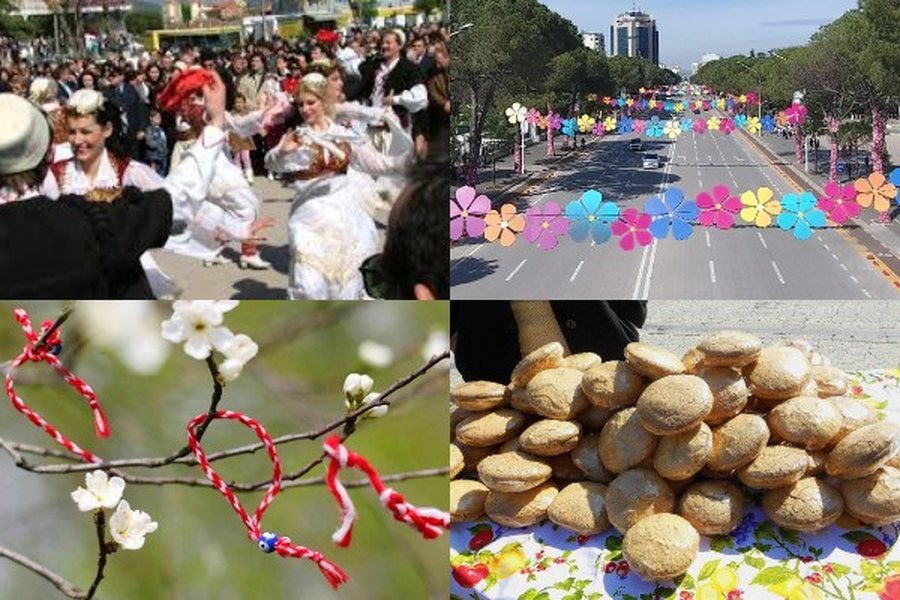
Summer Day is a pagan holiday of ancient origin. The celebration is held in honor of the beautiful Albanian nature and vegetation that comes to life precisely on March 14th.
Ballokumja is the traditional dish that characterizes this holiday. In some areas of Albania, bonfires are also lit.
Another detail of this celebration is the placing on the hand of the "verores" a bracelet made of white and red threads that is tied around the wrist and untied when the first swallow is seen. In some regions, the verores are hung on tree branches, mainly laurels, so that the swallows can pick them up and bring them good luck.
Although this day continues to be observed and celebrated in the city of Elbasan, it is a holiday for all Albanians.
Summer's Day was the day of the beginning of the year according to the very ancient Albanian calendar, a day that was celebrated many centuries before the birth of Christianity. It was celebrated on March 1 of the Julian calendar, the first day of the new year (according to the Gregorian calendar, “March 14”).
Summer Day Ritual
The pagan festival has its own ritual. The rites have been passed down from generation to generation for perhaps 24 centuries. Once dedicated to the goddess Diana, today they are practiced for a better life, filled with joy, love and prosperity. The renowned scholar and musicologist Thanas Meksi divides the Summer Day Festival into four phases.
The first phase is the preparatory phase that begins with the gathering of the zaires that are needed for Summer Day. The second phase is Summer Night that begins on March 13 with the bonfire, the third phase is the morning of Summer Day that begins on March 14 and finally the Summer Day picnic at noon on March 14.
On the eve of the Midsummer Night's Eve, every house is filled with a special joy, a feeling that overwhelms people without them even realizing it. Perhaps from the influence of the sun, the greenery, or the explosion of seeds and buds that are an expression of prosperity and continuity. The house is filled with good things and abundance.
The gate is decorated with flowers and green shoots, which symbolize the entry of goodness and nature. During this night, relatives, but also friends and acquaintances from other regions, sing old songs accompanied by the famous cuisine of Elbasan.
Some of the dishes, which you won't find anywhere else, are the pistil casserole, the yogurt casserole, the kabunia, the çomlek, the turkey, etc. During this night, the next day's portion for the closest people begins to be divided. The breakfast is joyful and festive. The people of Elbasan wake up early on March 14 and with special devotion open the door so that good can enter and evil can leave.








Lini një Përgjigje