


 Shkruar nga Gjergj Zefi
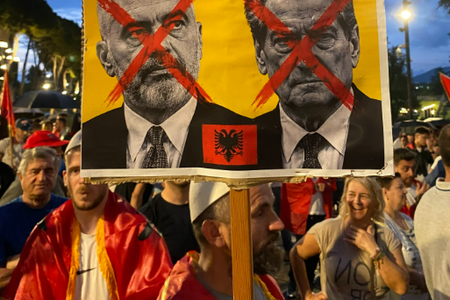
The peaceful protest does not damage Albania's image. On the contrary, it proves that Albania still has citizens who refuse to be treated as spectators in their own country...
From The Guardian to the Associated Press, from the Business Post to Die Welt, international media outlets are writing about what is now known as the “Flamingo Revolution.” A revolt that began for the protection of nature, but which quickly turned into a much larger debate: who does Albania belong to, its citizens or a handful of privileged politicians and investors?
While international journalism seeks to understand why Albanians have taken to the streets, a part of the media in Albania seems to have chosen a different mission: not to investigate the government, but to investigate the protestor; not to demand transparency about projects, contracts and the change in the status of protected areas, but to count the mistakes, emotions and slogans of citizens.
This is the Albanian paradox: the world sees a civic protest; some television studios in Tirana see a concern for the government.
"The Guardian" has described the movement as an effort by Albanians to protect not only nature, but also their rights.
The Associated Press has reported that the revolt against a tourism project linked to Jared Kushner has expanded into a larger movement against corruption and lack of accountability.
German and American media have addressed the conflict between luxury development, public interest, and the protection of a sensitive ecosystem.
So, journalism is done outside of Albania: economic interests are verified, environmental consequences are examined, investors are questioned, procedures are followed, and protesters are listened to.
Within Albania, in some cases, he becomes the advocate of the government.
Of course, the media is not obligated to support every protest. A journalist is not an activist with a microphone, nor is a protest automatically infallible. The media must denounce violence, political manipulation, fake news, and any violation of the law, regardless of which side they come from.
But there is a clear line between professional criticism and propaganda.
When a media outlet does not ask why citizens protest, but only who is "hiding behind them"; when it does not investigate public decision-making, but deals with the personal discrediting of protesters; when it presents every revolt as a foreign conspiracy, a threat to tourism, or a tarnishing of the country's image, then that media outlet is not informing. It is disciplining the public in the name of power.
The peaceful protest does not damage Albania's image. On the contrary, it proves that Albania still has citizens who refuse to be treated as spectators in their own country.
Imazhin e Shqipërisë e dëmtojnë kontratat e dyshimta, mungesa e transparencës, ligjet e ndryshuara për interesa të veçanta, kapja e institucioneve dhe ideja se çdo pasuri publike mund të negociohet larg syve të publikut.
Në një demokraci normale, gazetaria qëndron mes qytetarit dhe pushtetit, duke kontrolluar më të fortin. Në Shqipëri, shumë shpesh, ajo qëndron përkrah më të fortit dhe i kërkon llogari të dobëtit.
Kjo nuk është rastësi. Reporters Without Borders vlerëson se pavarësia e medias shqiptare kërcënohet nga ndërthurja e interesave politike dhe biznesit, ndërsa Media Ownership Monitor ka konstatuar se pronarë me lidhje politike kontrollojnë pothuajse të gjithë audiencën e tregut televiziv. Vetë organizatat ndërkombëtare flasin për përqendrim pronësie, presion ekonomik dhe vetëcensurë në redaksi.
Prandaj, kur disa gazetarë dalin kundër protestave qytetare, pyetja nuk është vetëm çfarë mendojnë ata. Pyetja është: interesin e kujt po mbrojnë?
A po mbrojnë të drejtën e publikut për t’u informuar, apo kontratat e pronarëve të mediave?
A po mbrojnë zhvillimin ekonomik, apo një model ku fitimi privat paraqitet si interes kombëtar?
A po kërkojnë qetësi publike, apo heshtje qytetare?
“Revolucioni i Flamingove” ka ekspozuar më shumë sesa një konflikt mbi një resort luksoz. Ai ka ekspozuar një sistem ku pushteti politik kërkon të vendosë çfarë quhet zhvillim, biznesi kërkon të vendosë çfarë quhet interes publik dhe media kërkon t’i bindë qytetarët se kundërshtimi është turp.
Por qytetarët nuk kanë detyrimin të jenë dekor në ceremonitë e investimeve strategjike. Ata kanë të drejtë të pyesin, të kundërshtojnë dhe të kërkojnë llogari.
As emri Trump, as kapitali i huaj, as premtimi për resorte me pesë yje nuk mund të vendosen mbi ligjin, mbi natyrën dhe mbi sovranitetin demokratik të një vendi. Investimet duhet të mirëpriten kur respektojnë rregullat, interesin publik dhe komunitetet vendase; jo kur privilegji i investitorit kërkon të zëvendësojë transparencën.
Edhe protestuesit duhet t’i nënshtrohen kritikës. Edhe organizatorët duhet të japin llogari. Edhe çdo incident duhet hetuar. Por standardi duhet të jetë i njëjtë për të gjithë.
Nuk mund të kërkosh biografinë e çdo qytetari që ngre një pankartë dhe të mos kërkosh dokumentet e atij që merr një territor.
Nuk mund të analizosh me orë një slogan të protestuesve dhe të kalosh me dy fjali mbi një projekt miliardash.
Nuk mund të kërkosh transparencë nga rruga dhe t’i falësh errësirën zyrës së kryeministrit.
Në botë ka media konservatore, liberale, proqeveritare dhe opozitare. Ka media që kritikojnë protestat, sidomos kur ato shoqërohen me dhunë ose manipulim. Por një media serioze nuk e trajton të drejtën për protestë si sëmundje kombëtare dhe qytetarin kritik si armik të zhvillimit.
Gazetaria nuk ka detyrë të duartrokasë protestën. Ka detyrë ta raportojë, ta verifikojë dhe të hetojë shkaqet e saj.
When it gives up this duty and puts itself at the service of the government, it can continue to have studios, cameras, a logo, and national broadcasting. But it is no longer the fourth estate.
It is the press office of the first government.
And perhaps that's why flamingos have become such a powerful symbol. Not just because a habitat is in danger of being covered in concrete, but because an entire society is in danger of being covered in silence.
Today, the world is listening to the voice of Albanian citizens.
The shame is not that Albanians protest.
The shame is that some Albanian media pretend not to listen./ Pamphlet


Bravo Bravo Bravo Pamfleti
BRAVO .PER ANALIZEN TE SITUATES SHQIPTARE .BRAVO PER DEMASKIMON E PUSHTETIT TE KORRUPTUARE QE KA KORRUPTUAR TE ASHTUQUAJTUR MEDIA KOMBETARE ..ATO KAN EMRIN MENDJA KOMBETARE E POR E TURPEROJN ATE EMER ..ATO JAN SERVILE DHE INTERESAXHESHKE KUNDRJET NJE PUSHTETI TE KORRUPTUARE ...NE SITUATA KRITIKE SIC NDODHET VENDI JONE QE ESHTE KAPUR PREJ FYTI NGA NJE QEVERI ANTIKOMBETARE ...DUKEN EDHE PATRIOTET DHE PUTHADORET ..BRAVO
Psh TC dhe dhe Klan janë më anti - popull të ndyra