


 Shkruar nga Pamfleti
The Belgian official also emphasizes international cooperation in the fight against organized crime, while mentioning the role of SPAK in cases where corruption and local interests prevent the seizure of criminal assets.
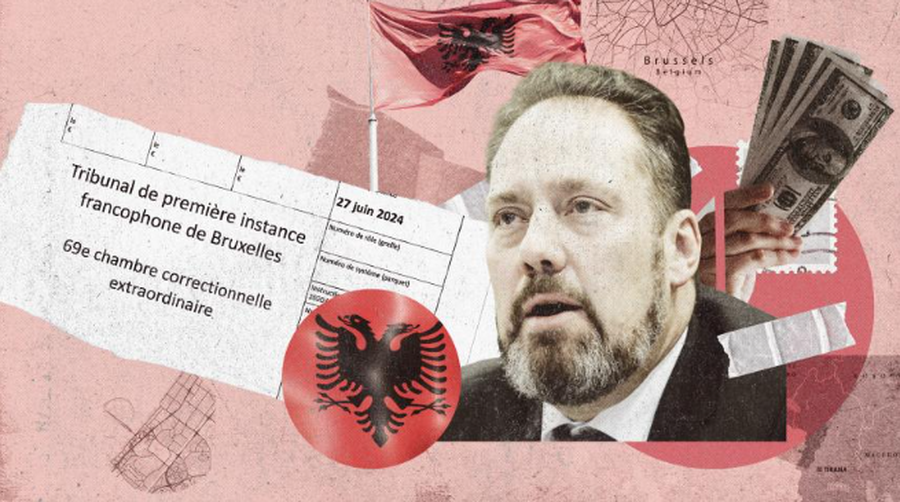
Albanian criminal groups have transformed from local gangs involved in theft and prostitution into powerful international organizations that control significant segments of drug trafficking in Europe.
This is stated by François Farcy, director of the Liège-Huy-Verviers Federal Judicial Police in Belgium, who in an interview with the Belgian media Le Soir talks about the extent of the Albanian mafia, the methods of money laundering, the links to corruption in Albania and the challenges of European authorities in the fight against these criminal networks.
Farcy says that Albanian groups have managed to create strong international ties, becoming important partners of other criminal organizations in cocaine and cannabis trafficking.
According to him, these networks have sophisticated money laundering methods through shell companies, investments in real estate, tourism, and the use of cryptocurrencies.
The Belgian official also emphasizes international cooperation in the fight against organized crime, while mentioning the role of SPAK in cases where corruption and local interests prevent the seizure of criminal assets.
Interview for the Belgian media Le Soir
Drug trafficking has evolved from cannabis produced locally in Albania, to its massive importation from Canada and the United States through hubs such as Bierset Airport. How have Albanian-speaking criminal groups evolved in Belgium? What are their specific characteristics?
It began in the early 2000s with burglaries in Verviers and a reputation for violence within the Antwerp prostitution scene. They quickly developed a range of criminal activities, including small-scale cocaine trafficking, prostitution and illegal immigration, as exemplified by the Murati clan. Their organization is heavily family and clan-based, adhering to the Kanun, an ancestral code of omertà and revenge, which criminals have exploited.
Thanks to their vast diaspora, they have become major international players, negotiating on equal terms with other criminal groups. The nature of their violence has evolved, moving from hyper-public violence to more "internal" or delegated violence through "crime as a service".
How did drug trafficking, especially cocaine, become their main business and what money laundering methods do they prefer? And what role does corruption play in Albania in supporting and expanding their operations?
Drug trafficking has evolved from domestically produced cannabis in Albania (such as in Lazarat) and cargo theft to the massive importation of cannabis from Canada and the United States through hubs such as Bierset Airport. Cocaine has become an industrial activity, with extraction and import networks established in Latin America and West Africa.
To launder money, they have moved from basic methods like transporting cash and Western Union transfers to more complex systems, including buying up companies – I’ve lost count of how many banana import-export companies there are in Albania – and using cryptocurrencies. Local businesses like cafes and barbershops can also serve as fronts. Corruption remains endemic in Albania, allowing criminal profits to be reinvested in real estate and tourism. Adding to the difficulty is the fact that in Albania, people change their identities as easily as changing shirts. So you end up with Albanians with Belgian or French names.
In the face of this growing threat, what strategies are being used to combat these networks? How is cooperation with Albanian authorities progressing?
International cooperation is organised through projects such as Aton, led by the Italian DIA (Anti-Mafia Investigation Directorate), which brings together 55 law enforcement agencies in 45 countries to support investigations into organised crime networks. The European project Empact also targets the most threatening criminal networks. These initiatives provide operational support, including funding for operations, deployment of personnel and translation of documents. In a rapidly changing Albania, cooperation agreements are signed and implemented to address key challenges, including the fight against money laundering and corruption of local authorities, which sometimes hinder the confiscation of criminal assets, necessitating the intervention of SPAK, which is protected and financed internationally./ Le Soir




Lini një Përgjigje