


 Shkruar nga Jaroslav Trofimov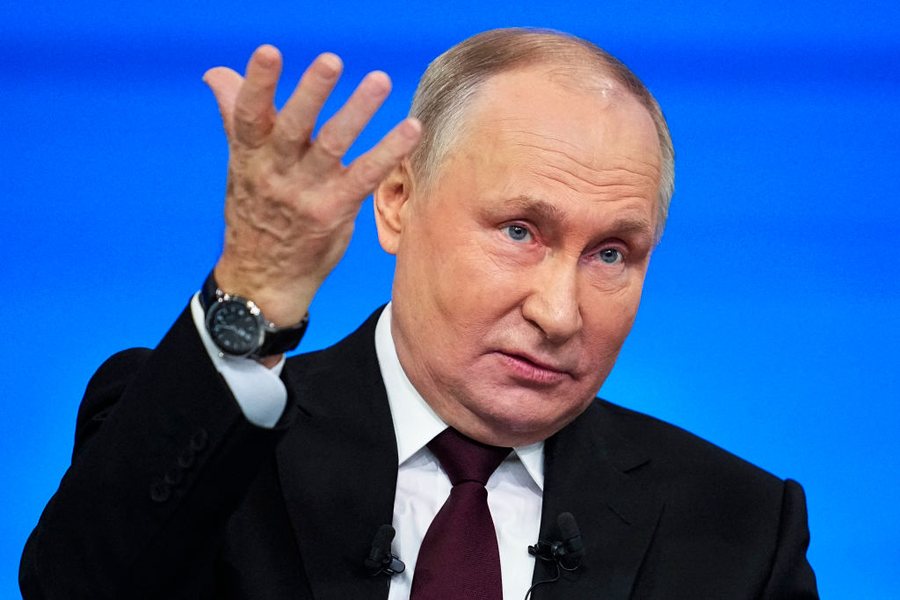
The nation that Putin continues to describe as "artificial" has been bravely resisting Moscow's efforts to end its independence for almost 2 years, managing to liberate half of the territory it conquered in the first weeks and months. But Putin's historical views are not unique to him...
Russian President Vladimir Putin's long lecture on European history, presented during a 2-hour interview with Tucker Carlson a few days ago, may have seemed mysterious and unfamiliar to many viewers.
But as Putin recounted events from centuries past, and produced 17th-century documents, he was explaining his views on the past, hotly debated by historians, that have prompted him to launch the continent's bloodiest conflict since World War Two.
Putin's fixation with the history of Ukraine and the Slavic peoples is nothing new. In 2008, when he was holding a meeting with the then US ambassador to Moscow, William Burns, now director of the Central Intelligence Agency (CIA), Putin openly expressed his vision.
"Don't you know that Ukraine is not a real nation?" the Russian president asked Burns.
And Putin's actions since then — from the initial invasion of part of Ukraine in 2014 and the annexation of Crimea, to the full-scale war Moscow launched in February 2022 — all stem from that conviction.
The nation that Putin continues to describe as "artificial" has been bravely resisting Moscow's efforts to end its independence for almost 2 years, managing to liberate half of the territory it conquered in the first weeks and months. But Putin's historical views are not unique to him.
They have deep roots in the historical narrative of the Russian Empire, which even predates the Russian Revolution of 1917. The very name Ukraine and the printing of Ukrainian-language books and newspapers were illegal in Russia at the time. Ukrainians were officially called "Little Russians".
According to Western intelligence officials, Putin spent a lot of time during the Covid-19 pandemic reading and analyzing historical texts. The result was a treatise titled "On the Historical Unity of Russians and Ukrainians," which was published in July 2021 and read to every member of the Russian armed forces before the invasion.
Putin's lengthy and often erroneous explanations in the first half of the interview he gave to Tucker Carlson essentially repeated the main arguments of his long essay, though often with some even more extreme modifications and additional historical revisionism.
I tillë ishte momenti kur ai deklaroi se Hitleri nuk kishte zgjidhje tjetër, veçse të pushtonte Poloninë në vitin 1939 dhe të shkaktonte fillimin e Luftës së Dytë Botërore. Ndërsa fiksimi mbi ngjarjet e shekujve të kaluar mund të duket i çuditshëm, çështja e identitetit ukrainas është thelbi i mitit themelor të Rusisë, dhe rrjedhimisht i politikës së saj aktuale.
Si Putin, ashtu edhe presidenti ukrainas, Volodymyr Zelensky, kanë marrë emrin e Princit të Madh të Kievit, që në vitin 988, u konvertua në besimin e krishterë dhe e pagëzoi shtetin e tij, Rusinë e Kievit, që përfshinte pjesë të mëdha të Ukrainës, Bjellorusisë dhe Rusisë së sotme.
Vetë Moska u themelua më shumë se një shekull pas vdekjes së tij. Menjëherë pas aneksimit të Gadishullit të Krimesë të Ukrainës (ku ndodhi konvertimi i Princit të Madh) në vitin 2014, Putin urdhëroi ndërtimin e një statuje gjigante të Princit Vladimir - Volodymyr për ukrainasit - pranë mureve rrethuese te Kremlinit.
Një fakt i papëlqyeshëm dhe i përshtatshëm për Moskën, është se sot Kievi është kryeqyteti i një vendi të huaj, që e minon vizionin e Rusisë për veten, si trashëgimtare e vërtetë e lavdisë së Kievit Rus, me një të drejtë historike për të gjitha tokat e sunduara dikur nga princat e Kievit.
Po sipas fjalëve të Putinit, identiteti ukrainas është një shpikje e fillimit të shekullit XX-të nga armikja e Rusisë, Perandoria Austro-Hungareze. Ideja “që njerëzit që banonin në atë territor nuk ishin vërtet rusë, por i përkisnin një grupi të veçantë etnik, ukrainas, filloi të përhapej nga Shtabi i Përgjithshëm i Ushtrisë Austriake”- deklaroi ai në intervistën për Carlson.
Pjesë të Ukrainës nën sundimin austriak në atë kohë, si qyteti Lviv, u shndërruan në qendra të jetës intelektuale ukrainase - por vetëm sepse shkrimtarët, historianët dhe poetët nga Kievi duhej të kërkonin strehim atje pasi Rusia nxori të jashtëligjshme përdorimin e ukrainishtes. Në vitin 1847, poeti kombëtar i Ukrainës, Taras Shevchenko, u arrestua për shkrimin e poezive patriotike dhe u dërgua me detyrim si ushtar në Azinë Qendrore. Ai u lejua të kthehej në Ukrainë më shumë se një dekadë më vonë, për t’u arrestuar më pas shumë shpejt.
Putini, që dikur fliste sesi lexonte Shevchenkos në gjuhën ukrainase kur ishte student, nuk e përmend më atë në versionin e tij të historisë, pasi në këtë mënyrë do të pranonte se letërsia ukrainase i paraprin intrigave të supozuara të Shtabit të Përgjithshëm austro-hungarez.
Gjatë takimit me Carlson, Putini i dha atij kopje të letrave nga Bohdan Khmelnytsky, të cilin ai e përshkroi si “njeriun që kontrollonte pushtetin në këtë pjesë të tokave ruse që tani quhet Ukrainë”. Titulli i Khmelnytsky ishte Hetman, ose Duka i Ukrainës - siç dëshmohet në shumë portrete të kohës së tij.
But admitting that the name Ukraine has been used for centuries is taboo in today's Putin's Russia. In May last year, the head of Russia's constitutional court, Valery Zorkin, handed Putin a 17th-century map found in the court's archives.
"Why did I bring it? Because it does not show any Ukraine" - said Zorkin.
Putin was delighted as he examined the map, once again explaining how Ukraine was only created as a result of the Russian Revolution in 1917. “Soviet authorities created a Soviet Ukraine. Everyone knows this very well. Before that, there was no Ukraine in the history of mankind," he wrote. The map shown by Zorkin in May 2023 is well-known and exists in many copies. Just below Kiev, the map bears the inscription: "Ukraine: Land of the Cossacks". /Adapted "Pamphlet" from "Wall Street Journal"



Lini një Përgjigje