


 Shkruar nga Pamfleti
Business is the main agent of the economy. He who creates jobs, pays taxes and leaves added value. This means that a healthy business translates into a healthy economy. But is the Albanian business like that? Or the difficulties faced by billing consumers with price increases?
The Albanian market is small and due to the prolonged transition and many times wrong fiscal policies, it has suffered strong distortions in terms of competition. It is mainly dominated by small businesses. Therefore, it is not surprising that within a neighborhood there are several pharmacies, bakeries, coffee bars or hairdressers. Similar business models, which start with little money and serve mainly for family employment.
In 2023, the number of businesses nationwide reached over 130,000, with a 4.1% increase compared to the previous year. But while the growing trend of opening new businesses is positive, the structure remains a problem.
Currently, only 1.6% of businesses in the country are large enterprises with more than 50 employees. The vast majority are small entities, with between 1 and 4 employees.
Albanians prefer to deal more with trade and services and less with production. This is because doing business in these sectors is easier and with lower risk. In addition, you do not need a large income to open such an activity, nor deep knowledge or experience.
The data show that more than 44 thousand businesses are active in the field of trade and more than 62 thousand in the field of services. In total, more than 82% of all businesses in the country are concentrated in these two sectors alone.
But how has this year been for small businesses? What are the main problems they face?
This considering that to help them, in June 2020 the government exempted them from taxes until 2029.
But while small businesses are important mainly for employment, large enterprises are the ones that produce, contribute more to the state budget with taxes and leave added value in the economy. The year 2024 has not been easy for them.
The data show that in the first 10 months of this year, exports reached the value of 369.8 billion ALL, with a decrease of 53 billion ALL or 14.3% compared to the same period a year ago.
For a part of the "Made in Albania" production, the losses have been even greater.
The groups "Minerals, fuels, energy", "Textiles and shoes", otherwise known as fashions, as well as "Construction materials, metals" suffered the strongest decline this year.
Doing business in Albania is not easy. A refrain that the leaders of large companies repeat over and over as they list the range of difficulties they must face every day,
Some problems are inherited and others created in recent years, such as the lack of manpower, the strong devaluation of the euro, informality; difficult relations with institutions; corruption and lack of funding.
To this panorama are added some of the recent initiatives of the government, which have focused on business. Initiatives that have not always been welcomed. After raising the minimum wage last year, which increased costs for doing business, the government has returned to the fight against informality in the labor market. With a harsh language, the prime minister during the last months has asked the business to declare the real salaries of the employees, as the only way to increase the pensions.
But how much has the government consulted with business about the anti-informality initiative, but not only? Is there a real dialogue between the parties today? Where the government not only listens, but also takes into account what the business says and demands?
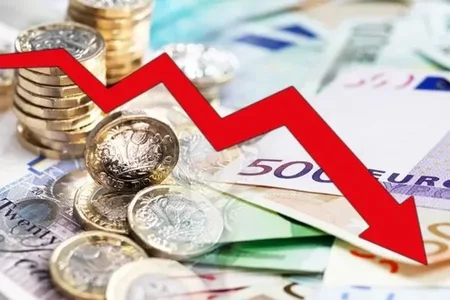
Businesses today are facing the pressure of rising costs. This is because the lack of workers translates into additional costs for the business. Raising the minimum wage is another additional cost. Corruption is a hidden tax, which also increases costs. The enterprise does not bear these added costs by itself, as it aims at profit. They are transferred to the citizen with price increases.
And when prices rise, as has happened especially in the last two years, neither the salary increase nor the pensioners' bonus is of any use anymore. Therefore, every initiative, no matter how well-intentioned, should be consulted and not imposed, since the government offloads the costs to business and business to citizens. And for the latter, who should think about everyone, you don't think about anyone./ A2CNN



Lini një Përgjigje