


 Shkruar nga Bajram Peci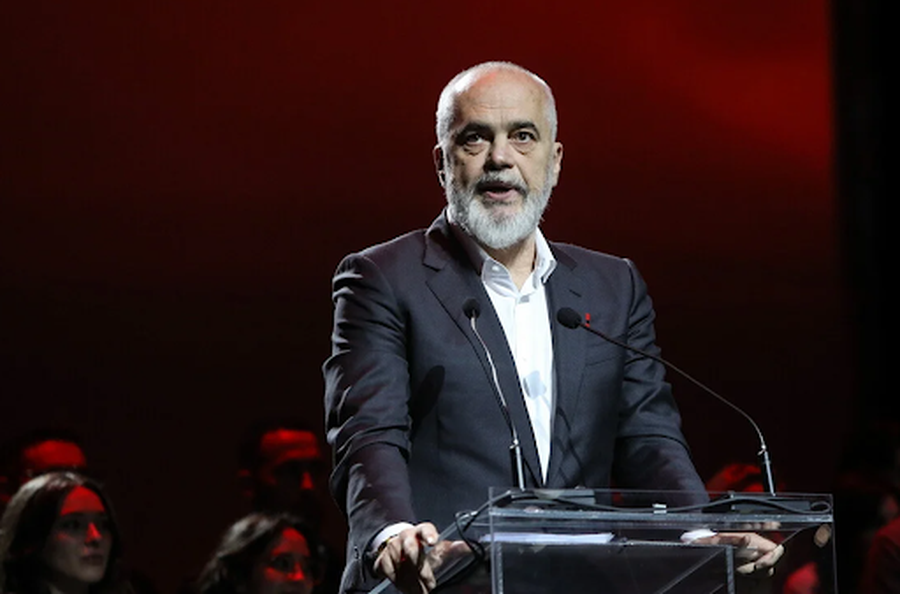
The inordinate appetite of sick Greek nationalism for the distortion of history arrived at the doors of the Paris Conference.
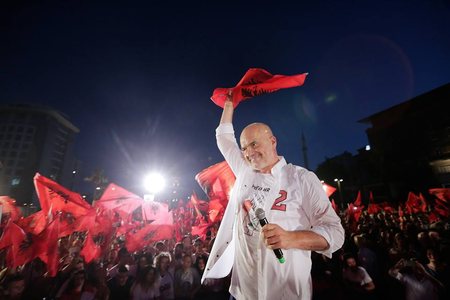
Edi Rama tried to "steal" Laskarina Bubulina from the Greeks. May God never allow us Albanians to have other anxieties, that in addition to this, we ask to take from the Greeks the other heroes of the war for independence, such as Theodhor Kollokotron, Odise Andruço, Marko Boçari or Karaiskaq! This Laskarina spoke Albanian to us in her home, according to Rama, these Arvanites who led the war for independence also spoke Albanian, but this gentleman is dismissed as if he does not know the explanation after 1821, which was universally announced at the Peace Conference in Paris in in 1919, that "Every Orthodox, regardless of the Albanian people, is Greek". So, this Edi, who openly and shamelessly (according to the Greek nationalist media) tries to steal a precious part of the glory from Hellenic history, still has no knowledge of the doctrine that Christian Arvanites "are Greek".
Of course, the Greek press, "Kathimerini", "Protothema", flame after flame returned the right answer to our prime minister, calling his behavior shameless and provocative. If these newspapers had known about the world when Konica was rewarding, they would have won, but the sum of 1000 francs, which Konica put as a prize and which would be given in October 1897, to the one who "... could prove that among the heroes of the Greek independence, there was even a single one who was not of Albanian or Vlach origin", as is known, it was not taken into account that no one appeared.
While the German emperor's efforts to revive ancient Greece had taken off, along with them, sick Greek nationalism had taken off, distorting the history of the centuries-old Greek-Albanian coexistence. The struggle for Greek independence, although known to have been fought between Albanians, Christian Arvanites, and Muslim Albanians, for less than two decades after independence, began to distort.
"On February 3, 1830 - writes historian Faveirial - the Congress of London created a so-called Greek kingdom. From that time the English wanted this kingdom not to exceed Pindus and Parnassus. From here to Pind, the residents are all Albanians". Independence arrived, and with it, the institutions and the first president, who was an Albanian speaker, not Arvanitas, but a Girocastrian, Joani Kapodistria, son of Andon Gjika, settled in Corfu due to Turkish persecution. With the murder of his treachery and that of a number of former Arvanite commanders of the uprising for independence, unfortunately, the social and political epithet "Greek Revolution" is worn on the historical course.
The excessive appetite of sick Greek nationalism for the distortion of history arrived at the doors of the Paris Conference, when, as Margaret Macmillan writes in the work "Paris 1919", "The Greeks argued ... Orthodox Christians who speak Albanian are Greeks (?!) ... that the Bulgarians and many of the Turks were true Greeks ... that they had lost all knowledge of their mother tongue". Is there a medicine that cures their disease?
The Arvanitas, with an intact, unwritten national language, today self-identify as Greeks, as a result of a long process of assimilation, and do not consider themselves to belong to Albania or the Albanian nation, as they do with their Arbëresh brothers of Italy. a part of which was cut off from Moreja. Their Greek consciousness does not make them a Greek race at all. Their AND remains Albanian.
However, for centuries, life between Greeks and Albanians, like life between Balkan countries, was no less violent than in other European countries. We have seen ethnic cleansing take place and primitive hatred erupt, stemming from sick nationalism. The source of conflicts may be old or new, but between neighbors we necessarily need peaceful coexistence. This is only achieved by a society that agrees to take medication.


Lini një Përgjigje