


 Shkruar nga Ben Blushi
In the paradise that Simon Shuter creates through Artificial Intelligence, there will be neither poor nor rich, there will be no state nor democracy, people will have no reason to vote and everyone will be equal and happy.
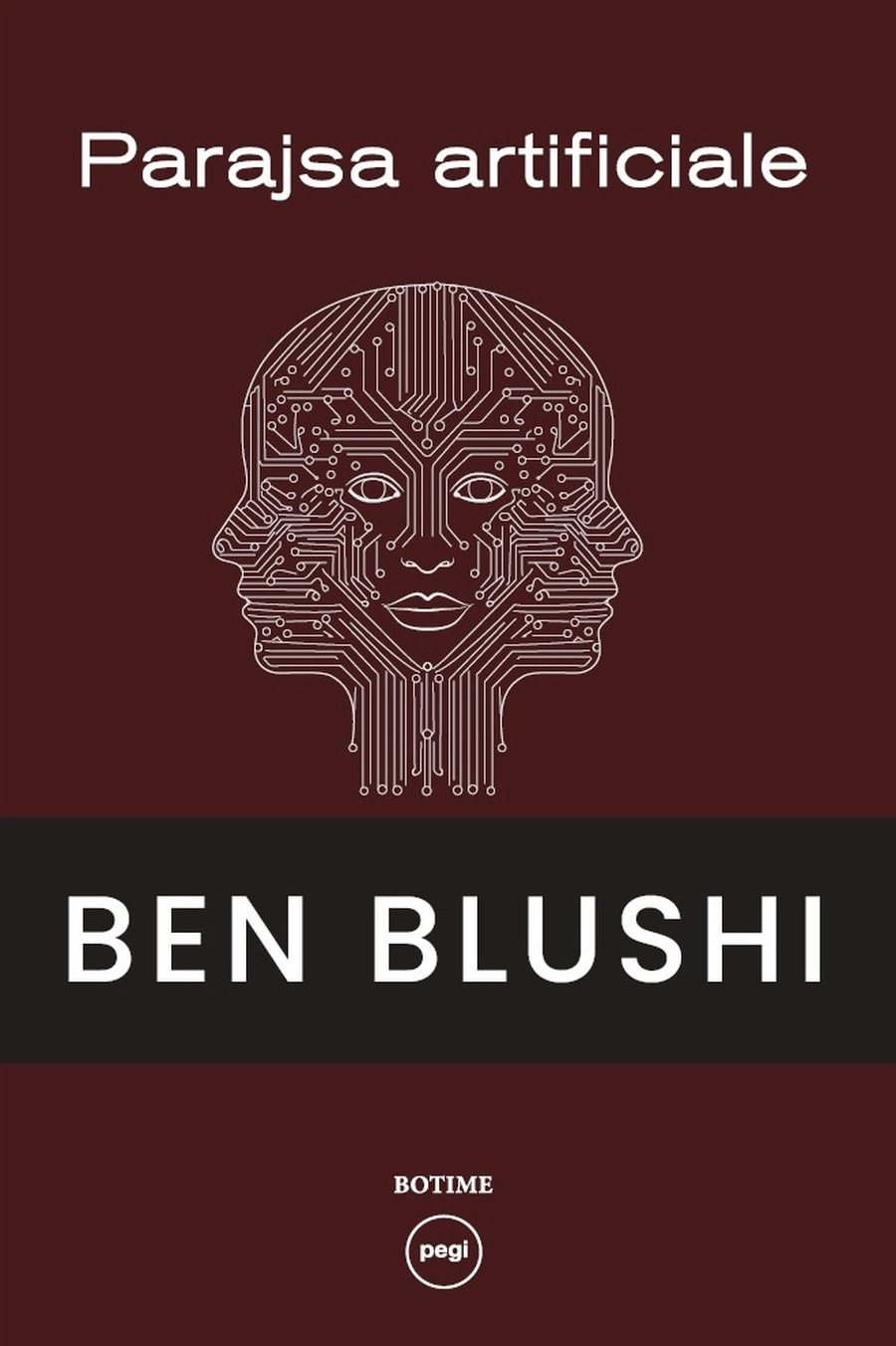
Artificial Paradise is my new novel, which was written in January of this year. It changed the title several times while it was being written, then while it was being edited, then while it was being proofread, and until the last day it went to press.
Never before have I negotiated so much over the title of a book with those who read it. Surprisingly, everyone didn't like the title I had chosen, so Artificial Paradise remained a compromise variant, because that's the role of paradises: to please everyone a little bit.
This novel is almost a literary experiment that I didn't believe I would ever try, because experiments no longer give me the pleasure they once did. Artificial Paradise has no descriptions but only dialogues.
The novel almost never shows what the characters are thinking, what they are wearing, where they went, what the weather is like, is the wind blowing, what time is it, is it Tuesday or Sunday, but only shows what they say to each other. Therefore Artificial Paradise is a dialogue between two people. A conversation that lasts from morning to evening. When they break up.
The two characters are a middle-aged man and a girl half his age who are in a love relationship. When I told this detail to my publisher, she took it as good news because like many people who have read me, she believes that I lack the ability, reason, and inspiration to write romance novels. To some extent he is right.
Artificial Paradise is and is not a romance novel. It is not because it does not show a love extended in time, which is born on a bench and ends on another bench or in a park that leaves fall. But on the other hand, Artificial Paradise is a love novel, because in the name of love, the main character Simon Shuter, invents an imaginary war to calm the family drama of the young girl.
What more can a man do than make up a war for a woman?
During this fight in a bedroom, anything happens. There pass the prophets, Jesus Christ and Muhammad, their religions, Christianity and Islam, armies, great states, invasions, tragedies, betrayals, God, happiness and love. Because of Simon Shuter's mind games, the girl cries, suffers, gets upset, then calms down, laughs, cries again with joy and in the end remains happy.
This is the first part called Hell.
In the second part called Paradise, Simon Shuter shows what the world will be like in the time of Artificial Intelligence. For the girl's happiness, he explains as in a fairy tale, how Artificial Intelligence will eradicate lies, betrayal, despair and many of the human vices. Simon Shuter predicts how the world will be at the time when Artificial Intelligence will replace man by eliminating his three main enemies: physical work, money and God.
In the paradise that Simon Shuter creates through Artificial Intelligence, there will be neither poor nor rich, there will be no state nor democracy, people will have no reason to vote and everyone will be equal and happy. Without working. But only by making love and art.
This is Simon Shuter's ideal world. It is his utopia completed by Artificial Intelligence.
If Artificial Intelligence did not sound like a scientific term, perhaps this book would deserve this title, but when science and art are combined, art always loses. So Artificial Paradise is a well-deserved title because the characters create paradise by imagining that they live there themselves.
The Artificial Paradise will be released at the Book Fair that starts this week on November 13, in Tirana and of course it will be in all bookstores in Albania and Kosovo.
I am waiting for you at the Fair, of course at the stand of Pegi Publications.







Lini një Përgjigje