


 Shkruar nga Dr Sadri Ramabaja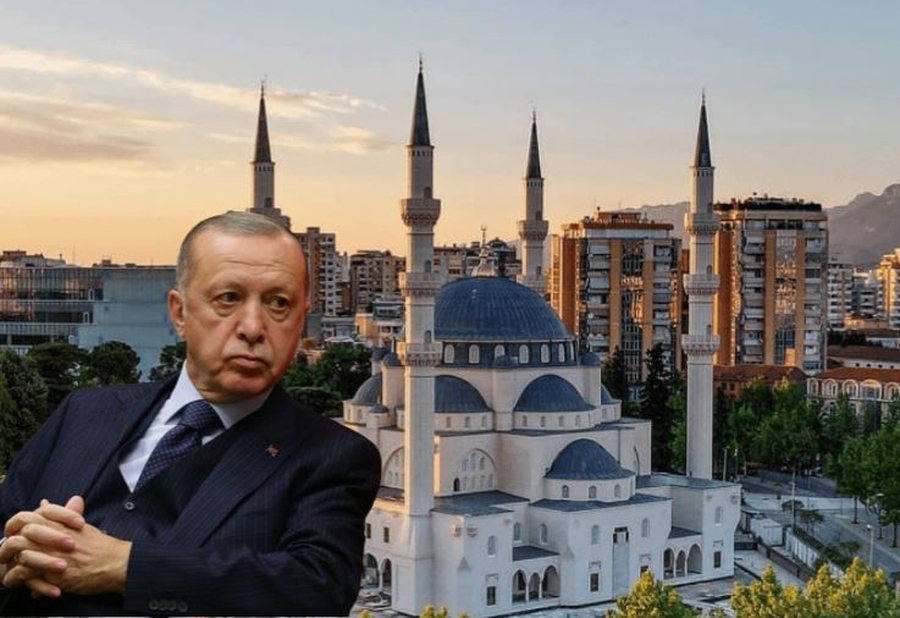
Neo-Ottomanism has grown in the Albanian space as well. There are several political forces, apart from the three Islamic communities based in Skopje, Pristina and Tirana, which are meanwhile completely controlled by the official Ankara. In case of political inaction, especially in the Tirana-Prishtina axis, in the not too distant future, we may very soon face risks for our security and strategic orientation as a nation, even in the proportions that the AfD represents today in Germany.
Turkey days ago officially asked the BRIC group to join this forum, of course to increase its global influence and deepen its ties with non-Western allies. This is reported by the American news portal Bloomberg, citing people familiar with the matter.
The BRICs bloc was created as an alternative to Western groupings such as the G7 or NATO and aims, among other things, to dedollarize the global economy.
But Turkey's geopolitical focus remains multidimensional and reflects its ambitions to be a regional power and a global actor on the international stage. This ambition has been reflected better than anyone else in his book "Strategic Depth", former foreign minister Ahmed Davutoğlu.
Turkish foreign policy has been shaped by historical, cultural and geographical factors, as well as by Ankara's strategic interests in the Middle East, the Balkans, the Caucasus, Central Asia and its ties with the West.
However, the main pillars of Turkey's geopolitical focus remain as follows:
1. Role in the Middle East
Turkey has played a key role in the affairs of the Middle East, being involved in various conflicts, such as that in Syria, Iraq and Lebanon. This involvement is part of Ankara's efforts to expand its influence in the region and promote its strategic interests:
• Syria and Iraq: Turkey has intervened militarily in Syria to fight Kurdish groups and prevent the creation of a Kurdish state near its border, as well as to fight Daesh.
In Iraq, Turkey has been active against the Kurdistan Workers' Party (PKK), which it considers a terrorist organization. In both cases, we are dealing with a preventive war to prevent the creation of the pantheon of the Kurdish Nation, which could be the beginning of the scenario that would reduce the geopolitical weight of Turkey.
• Palestine and Israel: Turkey has often supported the Palestinian cause and has had strained relations with Israel, although there are efforts to normalize ties. Influence in this conflict gives Turkey a moral weight in the Muslim world. But that's all. In fact, if Turkey continues with this seemingly extreme position in relation to Israel [the case of Gaza], while essentially anti-Arab and with an anti-Palestinian emphasis, it could quickly be compromised before the Islamic opinion as a whole and the Arab one in particular.
2. The Balkans and Southeast Europe
Turkey has historical and strategic interests in the Balkans, where it seeks to strengthen its political, economic and cultural influence. It follows an active policy through:
• Relations with Bosnia-Herzegovina, Albania and Kosovo: Turkey has strong relations with all three of these republics, which, according to the Turkish judgment, consist of a majority population of Muslim religious affiliation. This type of cooperation has until recently been generally focused on the cultural and religious plane. Meanwhile, recently, also in the military, with emphasis on Kosovo. Through investments and aid, Ankara tries to strengthen its role in the region.
• EU membership: While Turkey's EU membership process has stalled, Ankara continues to maintain strong ties with Balkan countries that are part of the EU or aspire to membership. In the long term, Turkey, like Russia, is interested in its Balkan allies being part of the EU. Its policy in this region is a combination of soft power and economic investments.
3. Relations with Russia and the Caucasus
Turkey follows a complex policy towards Russia and the Caucasus region:
• Russia: While Turkey and Russia have deep disagreements on issues such as Syria and Libya, they have cooperated closely in the economic and energy fields, especially in the natural gas sector. Their relationship is a mixture of rivalry and cooperation, with a fluctuating dynamic.
• Caucasus: Turkey has strong ties with Azerbaijan, with which it shares a deep cultural and strategic bond. In fact, we are dealing with a Turkmen population here. The Nagorno-Karabakh conflict has made Turkey an important player in the region, with efforts to support Azerbaijan against Armenia, challenging Russia's influence in the region.
4. Role in Central Asia and the Caucasus
Central Asia is another priority of Turkey's foreign policy, due to its cultural, ethnic and historical ties with the Turkic peoples of the region. Turkey seeks to play an active role in strengthening economic, cultural, and political ties with Central Asian states (such as Kazakhstan, Uzbekistan, and Kyrgyzstan), thereby challenging Russian and Chinese influence in the region.
5. Politika e “Neo-Otomanizmit”
Kjo politikë është një komponent qendror i strategjisë së jashtme të Ankarasë, e cila kërkon të rindërtojë ndikimin turk në territoret e ish-Perandorisë Osmane. Kjo përfshin përpjekjet për të ndikuar në Ballkan, në Lindjen e Mesme dhe Afrikën e Veriut, duke përdorur lidhjet historike dhe fetare për të zgjeruar ndikimin politik dhe ekonomik të Turqisë.
Neootomanizmi si lëvizje e re politike ka lëshuar shtat edhe në hapësirën shqiptare. Ka disa forca politike, përveç tri bashkësive islame me qendër në Shkup, Prishtinë e Tiranë, që ndërkohë kontrollohen plotësisht nga presidenti turk, Rexhep T. Erdogan dhe strukturat e shtetit turk. Së fundmi neootomanët morën në kontroll edhe xhaminë më të madhe në Tiranë dhe me këtë akt, de fakto, po fusin nën kontroll të plotë që të tri bashkësitë islame shqiptare. Në rast të mosveprimit të politikës, sidomos asaj në boshtin Tiranë-Prishtinë, në një të ardhme jo të largët, disa nga partitë politike minore tonat, mund të shpërfaqin rrezik për sigurinë dhe orientimin strategjik të shqiptarëve si Komb, në përmasat e rrezikut që sot paraqet AfD në Gjermani.
6. Politika ndaj SHBA-së dhe NATO-s
Turqia është një anëtare me peshë e NATO-s dhe ka marrëdhënie të ngushta historike me SHBA-në. Megjithatë, këto marrëdhënie janë tensionuar në vitet e fundit, veçanërisht për shkak të mosmarrëveshjeve mbi mbështetjen amerikane për kurdët në Irak dhe së fundmi edhe në Siri dhe blerjen nga Turqia të sistemeve raketore S-400 nga Rusia. Falë kësaj mbështetje të SHBA-ve për kurdët në Irak, ata sot mund të thuhet se kanë arritur të krijojnë shtetin në shtet dhe kështu gradualisht të shndërrohen në faktor me peshë në federalizimin real të Irakut. Ky model, në një të ardhme, mund të aplikohet fare lehtë edhe në Turqi. Kjo ka bërë që, së fundmi, marrëdhëniet Turqi-SHBA të jenë të luhatshme. Megjithëkëtë, NATO vazhdon të mbetet një shtyllë e politikës së mbrojtjes turke. Çështje krejt tjetër do të jetë nëse Turqia së shpejti aderon në BRICs.
7. Marrëdhëniet me Kinën dhe Azinë Lindore
Turqia po ndjek një qasje gjithnjë e më të gjerë ndaj Kinës dhe rajonit të Azisë Lindore, duke shpresuar të përfitojë nga nisma kineze “Një rrip – Një rrugë” (Belt and Road Initiative) për të forcuar lidhjet ekonomike dhe tregtare. Megjithatë, ka tensione për çështjen e ujgurëve, një popull me origjinë turke që përballet me represion në Kinë, çështje që Ankaraja ndonjëherë e ngre, por duke e balanson gjithmonë me interesat ekonomike.
8. Politika energjetike dhe Deti Mesdhe Lindor
Turqia ka interesa të mëdha energjetike në Detin Mesdhe Lindor dhe po kërkon të shfrytëzojë burimet e gazit në këtë rajon, çka ka sjellë tensione me Greqinë dhe Qipron. Ankaraja pretendon të drejtat e saj mbi disa zona detare që janë të diskutueshme, dhe ka ndërmarrë veprime për kërkimin e gazit në këto ujëra, duke sfiduar aleatët e saj evropianë.
Përfundim
Fokusi gjeopolitik i Turqisë është një përzierje ambicieve rajonale dhe ndërkombëtare, të cilat formësohen nga historia, interesat ekonomike dhe strategjike, si dhe sfidat globale. Politika e jashtme e Ankarasë është e ndërlikuar dhe shpesh e përballur me tensione mes lidhjeve të saj tradicionale me Perëndimin dhe ambicieve për të luajtur një rol më të pavarur dhe të fuqishëm në skenën globale.
Jetojmë në epokën e rigrupimeve dhe krijimit të blloqeve të rinj./Pamfleti




Lini një Përgjigje