


 Shkruar nga Pamfleti
The document highlights the close cooperation between Albanian criminal networks and the Italian mafia 'Ndrangheta, while warning that these organizations are functioning as international crime corporations...
A recent Europol report sheds more light on what is considered the "cocaine empire", as it highlights the connections between transnational groups to traffic drugs from South American countries to Europe, which is also considered the largest consumer of narcotics.
Europol highlights that organized crime in the European Union is transforming at a rapid pace, becoming more sophisticated, more flexible and more capable of evading crackdowns by authorities.
"Although European police have managed to dismantle hundreds of criminal organizations in recent years, new networks are quickly taking their place, keeping the level of threat to security on the continent unchanged," states Europol's latest report, "Decoding the EU's Most Threatening Criminal Networks – Issue 2: The Blueprint of Criminal Opportunism", which analyzes how the most dangerous criminal organizations in Europe operate and highlights the increasingly important role of technology, legitimate business and international cooperation in their activities.
Albanian groups, key link in international cocaine trafficking
One of the most significant parts of the report is related to the role that Europol attributes to Albanian criminal groups in international cocaine trafficking. According to the report, Albanian criminal families have built a consolidated cooperation with the Calabrian mafia 'Ndrangheta, considered for years as the most powerful organization in global cocaine trafficking. The cooperation extends to Latin America, where Albanian groups operate directly on the ground together with cartels from Brazil and Colombia.
Europol points out that Albanians are not limited to transporting drugs to Europe, but are also established in Latin American production and transit countries, where they manage relationships with local cartels, organize the logistics of shipments and oversee agreements for the purchase of large quantities of cocaine. This gives them a strategic role in the entire trafficking chain, from source to distribution on the European market.
The report highlights that this presence of Albanian groups in Latin America is the result of years of building transnational relationships with drug cartels, making them important partners in a market that Europol estimates at around 31 billion euros for cocaine in Europe alone.
Europol e konsideron mafian italiane 'Ndrangheta si organizatën kriminale më të fuqishme në trafikun e kokainës në Evropë.
Raporti thekson se kjo organizatë ka krijuar prej kohësh lidhje të forta me rrjetet kriminale shqiptare, të cilat operojnë në Amerikën Latine. Sipas Europol, pikërisht ky bashkëpunim u lejon të kontrollojnë pothuajse të gjithë zinxhirin kriminal, nga blerja e kokainës në vendet prodhuese, transporti ndërkontinental dhe deri te shpërndarja në tregjet evropiane.
Përveç grupeve shqiptare dhe 'Ndrangheta-s, raporti rendit edhe organizata të tjera me ndikim global.
Mes tyre është karteli kolumbian Clan del Golfo, organizata më e madhe kriminale në Kolumbi, e cila kontrollon eksportin e kokainës nga portet e Karaibeve.
Një tjetër grup i rëndësishëm është Primeiro Comando da Capital (PÇ) nga Brazili, i cili sipas Europol ka lidhje të ngushta me organizatat kriminale evropiane dhe po përpiqet të krijojë qeliza të përhershme në territorin e Bashkimit Evropian.
Raporti përmend gjithashtu organizatën kriminale skoceze The Lyons, e lidhur me familjen irlandeze Kinahan dhe e përfshirë në luftëra të dhunshme për kontrollin e tregut të drogës në Skoci.
Si funksionon rruga e kokainës
Sipas Europol, kokaina transportohet nga vendet prodhuese në Amerikën Latine drejt porteve evropiane përmes rrugëve detare të konsoliduara.
Një pjesë e dërgesave realizohet me të ashtuquajturat "go-fast boats", mjete lundruese me fuqi të lartë që transportojnë ngarkesa të mëdha droge drejt pikave të tranzitit. Më pas, droga mbërrin në porte strategjike si Antëerp dhe Zeebrugge në Belgjikë, të cilat prej vitesh konsiderohen ndër portat kryesore të hyrjes së kokainës në Bashkimin Evropian.
Sipas raportit, kontrolli mbi këto korridore i jep organizatave kriminale shqiptare dhe partnerëve të tyre mundësinë të dominojnë një pjesë të rëndësishme të tregut evropian të kokainës.
Një nga konkluzionet kryesore të Europol është se organizatat kriminale nuk funksionojnë më si banda tradicionale, por si kompani shumëkombëshe.
Ato investojnë fitimet, analizojnë tregjet më fitimprurëse, krijojnë struktura ndërkombëtare, rekrutojnë specialistë dhe përdorin teknologjinë për të zgjeruar aktivitetin.
Komisioneri Evropian për Çështjet e Brendshme dhe Migracionin, Magnus Brunner, i përshkroi këto organizata si "korporata të krimit", që ndjekin të njëjtën logjikë ekonomike si kompanitë legjitime.
Nga AI te kriptomonedhat dhe bizneset e ligjshme
Sipas Europol, 85 për qind e organizatave kriminale më të rrezikshme përdorin biznese të ligjshme për të fshehur aktivitetin e tyre.
Kompani ndërtimi, agjenci transporti, restorante, hotele, kazino, firma import-eksporti, agjenci të pasurive të paluajtshme dhe institucione financiare shfrytëzohen për pastrimin e parave, fshehjen e pronësisë së aseteve dhe transportimin e mallrave të paligjshme.
The report also highlights the role of professionals such as lawyers, accountants, logistics experts, financial advisors and information technology specialists, who help criminal organizations create complex financial structures and evade investigations.
Europol warns that criminal organizations are increasingly investing in artificial intelligence and digital technologies.
According to the report, AI can be used to create forged documents, synthetic identities, online fraud, phishing campaigns, and analyze the vulnerabilities of law enforcement institutions.
Meanwhile, cryptocurrencies continue to be widely used for money laundering and the anonymous transfer of criminal proceeds.
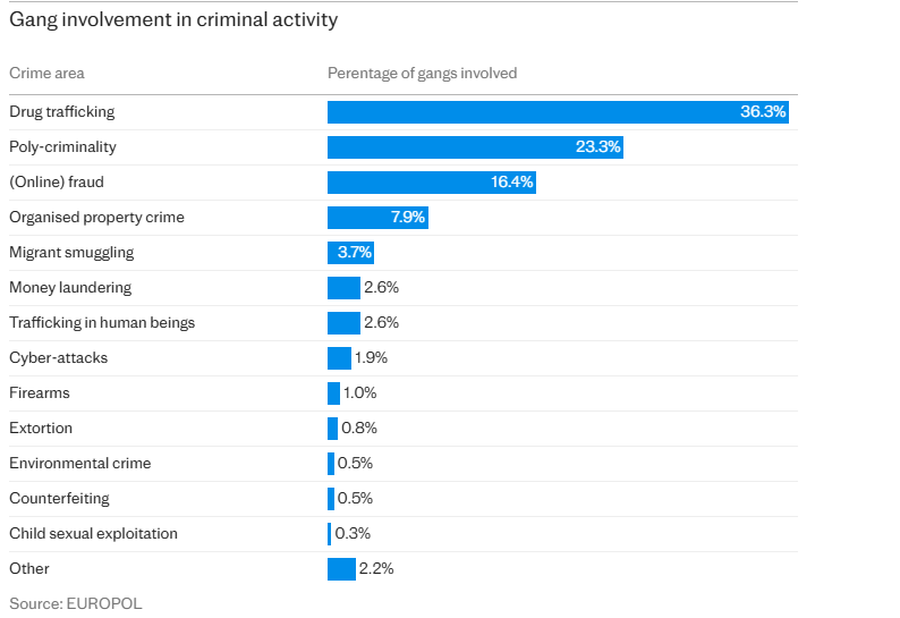
The report highlights that 731 high-threat criminal networks have been identified in the European Union. Around 400,000 people, with 118 nationalities, are part of these organizations. Of the 821 networks analyzed in the 2024 report, 198 remain active, while 533 are new or previously undetected organizations. Over a third of the organizations deal with drug trafficking, but their activity also extends to human trafficking, migrant smuggling, financial fraud, cybercrime and money laundering.
Europol warning
Europol's acting executive director, Jürgen Ebner, stated that targeting individuals is not enough to destroy organized crime. According to him, every time one organization is dismantled, another one emerges to take its place, as long as the huge profits and demand in criminal markets exist.
For this reason, Europol recommends a broader strategy that aims not only to arrest the leaders of criminal groups, but also to crack down on money laundering, seize assets, destroy the financial infrastructure of organizations, and strengthen international cooperation.
The report concludes that the biggest challenge for Europe is not only dismantling existing organizations, but preventing the creation of new criminal networks, which are rapidly adapting to global technological and economic developments. / Pamphlet /




Lini një Përgjigje