


 Shkruar nga Pamfleti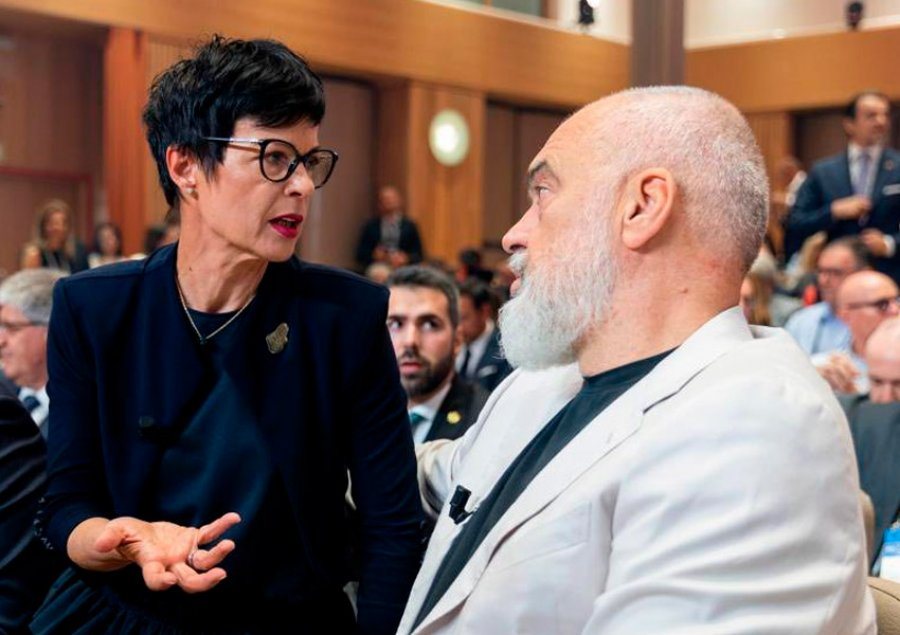
Under the shadow of accusations of links to the UDB, Enlargement Commissioner Marta Kos is facing increasing pressure in Brussels. The April hearing is expected to clarify whether this is a political attack or an issue that affects the integrity of one of the key figures of the EU, and at the same time a friend of Edi Rama...
At the end of April, one of the European Commission's most important figures for enlargement, Marta Kos, will face one of the most delicate moments of her political career. The Commissioner will have to give explanations before MEPs about the accusations linking her to the former Yugoslav secret service, the UDB, a structure that carries a heavy political and symbolic weight in the history of Eastern Europe.
The issue is not new, but the way it has come back into the spotlight makes it even more sensitive. Everything was reignited after the publication of a book in the European Parliament, where the author claims that there are documents suggesting her collaboration with secret services in the 1980s. These claims were immediately taken up by MEPs from the European People's Party, who demanded official clarification.
" The new documents suggest that Marta Kos, as a candidate, lied to the European Parliament's parliamentary committee, after declaring that she had never been a collaborator of the Yugoslav secret police ," said Slovenian MEP Romana Tomc, taking the issue to an institutional level.
Although the European Commission has attempted to close the debate by emphasizing that Kos has passed all the verification filters, the political pressure has not subsided. On the contrary, the fact that a previous session was canceled by Kos himself, precisely at the moment when this information emerged, has only increased suspicions and public interest.
“ Commissioner Kos has undergone an extensive and detailed verification process… The Commission has no further comments ,” the European Commission spokesperson responded, a stance that seems more like an attempt to close the debate than to clarify it.
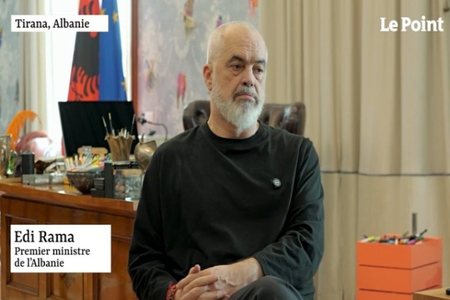
Against the backdrop of all this history, the name of Marta Kos is not unknown to Albanian politics. She is considered one of the closest voices to the Albanian government in Brussels and has often been perceived as a supporter of Prime Minister Edi Rama's line in the integration process. It is precisely this close relationship that has made critics view her silence or stances on certain cases involving the Albanian government with more suspicion.
In this context, the questions being asked in Brussels take on a broader dimension: are these just old accusations brought back into the political game, or is this an issue that requires full transparency from one of the key figures in EU enlargement?
The UDB, the Yugoslav secret service, is one of the most controversial structures of the Cold War period, known for its pursuit of political opponents and its operations at home and abroad. Any connection, even alleged, to this structure remains a serious accusation for any public official in Europe.
Meanwhile, a direct confrontation is expected in the European Parliament. MEPs have warned that they will demand clear answers, while the EPP has also given an open warning about the difficulty of this session.
" Sooner or later it will have to come to AFET and it will not be easy ," said a European official, hinting that this will not be a formal procedure, but a real test of its credibility.
Beyond the concrete accusations, the case of Marta Kos is becoming a test for the very standards that the European Union seeks to impose, not only on countries aspiring to membership, but also on its own representatives. /Pamphlet


Lini një Përgjigje