


 Shkruar nga Francesco Margiocco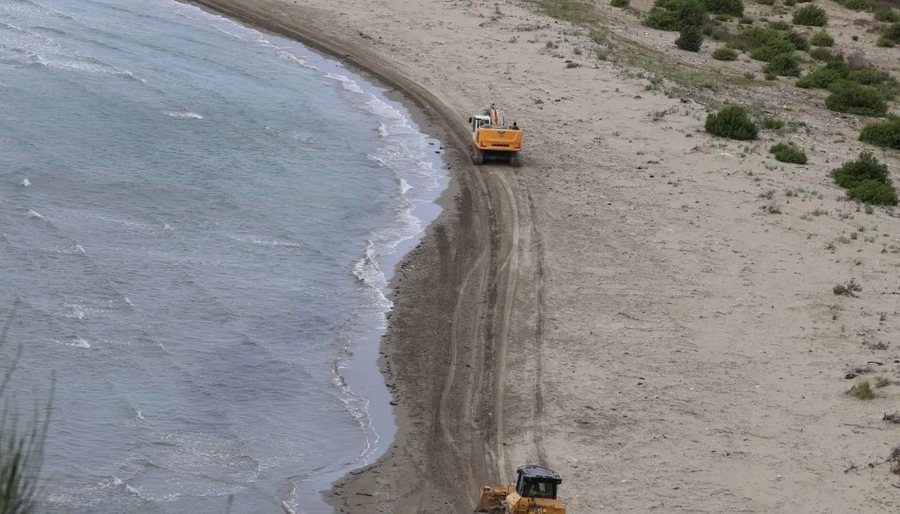
The environmental massacre in Nartë and Sazan is being executed through closed decisions of a National Territorial Council that answers only to the prime minister. This blind worship of “big investors” is replacing the principles of the rule of law with the concrete of private interests.
Funded by the European Commission, a group of environmental engineers from the University of Genoa are working in the Narta lagoon, which lies on the southern coast of Albania, south of the Vjosa River delta.
Their work helps protect one of the most pristine and fragile areas in the entire Mediterranean. This place serves as a habitat for rare species of birds, fish and sea turtles, and is home to a unique ecosystem of coastal dunes and an extremely precious flora.
However, Jared Kushner has set his sights on the strip of land that separates the lagoon from the Adriatic Sea right on the coast of Zvërnec and on the island of Sazan opposite, which is still largely untouched, and millions of dollars.
Donald Trump's son-in-law intends to build a luxury mega-resort there through his investment company Affinity Partners, which is largely funded by the Saudi government.
Russians have been excavating in the Zvërnec area for two and a half months. This has prompted millions of people in Albania and other parts of Europe, including Genoa, to protest.
In Tirana, the civic revolt continues every day without stopping in what is now being called the "Flamingo Revolution", given that pink flamingos are among the most important and most present species in the lagoon.
From the moment work began on the site, engineers from the University of Genoa were forced to suspend their activities. Together with other Italian and foreign colleagues who are part of this protection plan, they addressed a letter to the European Union on June 18:
"With deep concern (...) we are observing the progress of recent works in the Narta area. These interventions include the installation of fences that block the movement of local fauna and impede the access of residents and visitors. In addition, a massive deforestation of indigenous vegetation is being carried out and infrastructure is being built between the beach and the dunes."
The Genoese engineers' project is financed by IPA (Instrument for Pre-Accession) funds, which the EU makes available to help candidate countries meet European standards.
Shqipëria synon anëtarësimin në vitin 2030, dhe mbrojtja e mjedisit e lufta ndaj ndryshimeve klimatike janë shtyllat kryesore të këtyre fondeve. Francesco De Leo, kërkues shkencor në Universitetin e Gjenovës, i cili ka studiuar për një kohë të gjatë qarkullimin e ujërave në Nartë, shpjegon: “Laguna lidhet me Adriatikun përmes dy kanaleve. Kanali i veriut është bllokuar plotësisht nga rëra që sjell lumi Vjosë, ndërsa kanali i jugut mbahet i mbyllur me rrjeta nga peshkatarët që mbarështojnë ngjala. Përmes sondave tona hidrometrike, kemi vërtetuar se laguna nuk e shkëmben dot ujin me Detin Adriatik, gjë që e bën këtë ekosistem jashtëzakonisht të brishtë”.
Në letrën e nisur në qershor sqarohet se “sistemet e dunave janë mjedise dinamike që formohen përgjatë një kohe të gjatë nga veprimi i përbashkët i erës dhe valëve. Ato shërbejnë si barriera natyrore jetike kundër përmbytjeve bregdetare dhe zbutin forcën e dallgëve gjatë stuhive (...). Kur dunat rafshohen, ky funksion mbrojtës humbet plotësisht, duke rritur ndjeshëm rrezikun e erozionit dhe përmbytjeve”.
Për më tepër, “heqja e vegjetacionit bregdetar zhduk një tjetër mburojë natyrore, gjë që do të sjellë grumbullimin e dherave dhe bllokimin e kanaleve që lidhin lagunën me detin”. Në fund, ekspertët paralajmërojnë se “urbanizimi i bregdetit do të shkatërrojë një nga të paktat zona të mbetura ku speciet autoktone, e veçanërisht breshka Caretta caretta, depozitojnë vezët e tyre”.
Delta e Vjosës dhe laguna e Nartës janë zona të mbrojtura me ligjin shqiptar 81/2017.
Ky ligj, duke u mbështetur në rregullat e IUCN-së (Unioni Botëror për Konservimin e Natyrës), parashikon gjashtë nivele mbrojtjeje.
Narta, për shkak se ka qenë historikisht e banuar, nuk mund të përfshihej në nivelet më të larta, ndaj u klasifikua në nivelin e pestë (të parafundit). Megjithatë, edhe ky nivel i ndalon ndërtimet agresive, pasi sipas udhëzimeve të IUCN-së, “ruajtja e integritetit të kësaj zone është jetike për mbrojtjen, mirëmbajtjen dhe zhvillimin e saj mjedisor”.
Në letrën drejtuar BE-së nënvizohet se “këto ndërtime të papritura në zona të mbrojtura shkelin hapur parimet e Kapitullit 27 të Bashkimit Europian”. Ky është kapitulli që rregullon çështjet e mjedisit në negociatat e anëtarësimit, ku Shqipëria duhet të provojë se i përmbahet standardeve europiane.
Ekonomistja e mjedisit Valeria Parracino, e cila koordinon projektet në Shqipëri për OJQ-në italiane Celim dhe ka bashkëpunuar ngushtë me inxhinierët gjenovezë, shpjegon: “Në vitin 2024, Parlamenti shqiptar bëri ndryshime në ligjin e vitit 2017. Ai ia kaloi Këshillit Kombëtar të Territorit (KKT) të gjithë pushtetin vendimmarrës për aktivitetet në zonat e mbrojtura, duke lejuar aty ndërtimin e strukturave hoteliere me 5 yje apo më shumë.
The KKT is a structure that reports directly to the Prime Minister and its processes do not include public hearings. Meanwhile, the law clearly states that for any intervention in protected areas, public participation is mandatory. In the case of Zvërnec, this was completely overlooked.
The first protest against this construction site was organized by the non-governmental organization PPNEA (Organization for the Preservation and Protection of the Natural Environment in Albania), which is convinced that the ecological and economic consequences will be catastrophic.
Xhemal Xherri, an environmental expert at PPNEA, explains: "This lagoon is part of the migration corridor for hundreds of bird species, as well as a key area for their reproduction and wintering. If this resort is allowed, others will sprout after it. We will do everything we can to oppose it, both at home and abroad. Together with our partners, we are influencing the EU to intervene."
It all started in 2021 with the start of work on the Vlora international airport, right next to the lagoon. Although the runway is finished, work is still ongoing and this project is part of Prime Minister Edi Rama's plan to turn Albania into a "tourism champion."
PPNEA has filed a lawsuit against the airport construction. It lost the trial in the first instance, but has appealed the decision and the case is currently in the Appeals Court, although the works have not been stopped.
In the face of protests that have continued every day for two months, Rama has defended his position on the government's official website, saying that this resort is a model "for building new generation tourist destinations, where nature and development walk in harmony."
He added that the KKT “has not yet issued a building permit, but has simply approved the preparatory phase”. “They call it a preparatory phase”, Valeria Parracino concludes, “but in reality, so far they have opened a 7-kilometer-long road, cut down part of the pine forest behind the beach and leveled the dunes”./ Adapted from “Pamfleti”, from “Il Secolo XIX”





Lini një Përgjigje