


 Shkruar nga Pamfleti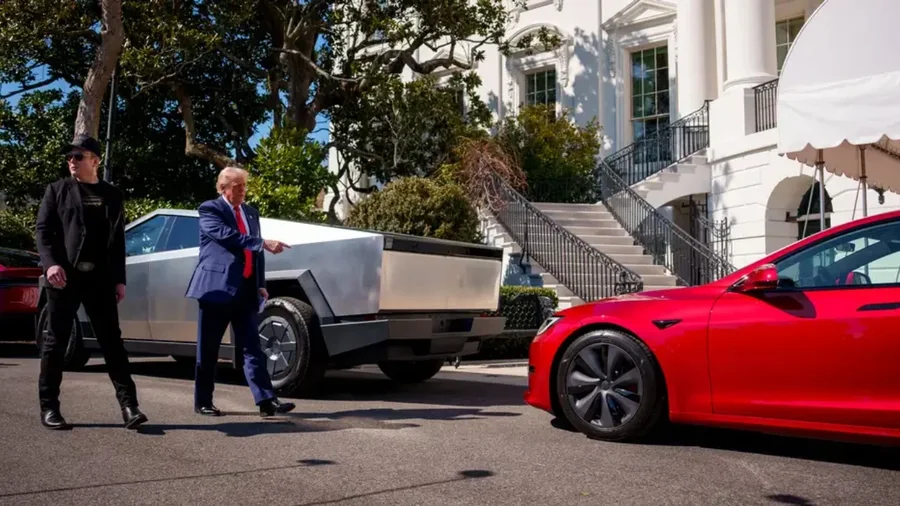
The Trump administration's tough stance on tariffs has sparked a global wave of resistance - should American products be boycotted?
Scandinavian countries and Canada are leading a growing international trend of shunning American products due to US President Donald Trump's decision to impose tariffs on a range of products from around the world.
In recent weeks, numerous groups calling for boycotts have been created on Facebook. A Swedish group called Bojkotta varor från USA (Boycott Goods from the USA) had almost 80,000 members at the time of writing.
The group believes it is defending “democracy, self-determination and security” and hopes to put pressure on the Trump administration through the boycott. They justify using American Facebook as a platform by saying it is the “best weapon” for their cause.
Similar groups have also emerged in Canada, while a French group BOYKONT USA: Achetez Francais et Europeen! has over 20,000 members.
Tesla sees sales decline due to Musk
At the moment, there is little data on whether such campaigns have any concrete impact. However, one American product that has a direct connection to the Trump administration is Tesla. This electric car brand is led by Elon Musk, who is currently a senior advisor to the US President and heads the newly created Department of Government Efficiency (DOGE).
Data from the European Automobile Manufacturers Association (ACEA) shows that Tesla car sales in Europe fell by 45 percent in January compared to the same period in 2024. Over the past year, Tesla had sales decline by 13 percent across the European Union.
Buy Canadian products
Anti-American sentiment is particularly pronounced in Canada. Trump imposed 25 percent tariffs on Canadian products, despite a long-standing alliance and a nearly 9,000-kilometer-long shared border between the two countries.
Trump has repeatedly stated that Canada should become the 51st state of the U.S. He has publicly and intentionally referred to Prime Minister Justin Trudeau as “Governor Trudeau,” which has angered Canadians.
Such provocations led to a serious public backlash. The growing anti-Trump sentiment helped the Liberal Party of Canada, once led by Trudeau and now by Mark Carney, achieve a remarkable turnaround in the polls. In early 2025, the Liberals trailed the Conservative Party by 25 percentage points, but they now lead in many opinion polls.
This sentiment is increasingly being reflected in consumers. Dylan Lobo, who runs the website Made in CA, which offers an online catalog of Canadian products, told Business Insider that his site has seen a huge increase in visits.
“Canada is being swept up in a huge wave of patriotism right now,” Lobo says. “Canadians want to support their fellow Canadians.”
Many Canadian companies have also launched “Buy Canadian” campaigns. In Ontario, the provincial Liquor Control Board announced that it would no longer sell American products such as bourbon and wine. The province of New Brunswick has also announced similar measures.
Ontario Governor Doug Ford has canceled a contract worth 100 million Canadian dollars (63.3 million euros) with Starlink, Elon Musk's telecommunications company. "Ontario will not do business with people who are determined to destroy our economy," Ford said on the social network X (which is owned by Musk).
European resistance
In Europe, some companies are also taking action against American products. Denmark's largest retailer, Saling Group, has announced that it will mark European products with a black star in its stores, to make them easier for customers to recognize.
Some companies are going a step further. Norwegian ship fueling company Haltbak announced it would no longer sell fuel to the US Navy.
Outside of Europe and Canada, many business leaders are becoming aware of the potential consequences of such boycotts on American products.
Takeshi Ninami, CEO of Japanese giant Santori Holdings, which owns brands such as Jim Beam, warned that American brands could suffer consequences due to the situation among consumers around the world.
“We prepared the strategic and budget plan for 2025 based on the assumption that American products, including American whiskey, may be less accepted in countries outside the US, firstly because of tariffs and secondly because of emotions,” Ninami told the Financial Times.
This suggests that boycotts and consumer behavior could negatively impact sales for U.S. companies in Canada, Europe, and other regions. The coming months will bring more accurate data on this trend, and it will be closely monitored on both sides of the Atlantic.
A spokesman for the European Consumers' Organisation (BEUC), which represents consumer interests across Europe, said they do not yet have an official position on the boycott and are currently focused on "analysing the impact of the tariffs on consumers." In a statement to Deutsche Welle, the BEUC spokesperson also said it was working with US consumer organisations to ensure that "transatlantic cooperation remains in the interest of consumers."/ DW




Lini një Përgjigje