


 Shkruar nga Pamfleti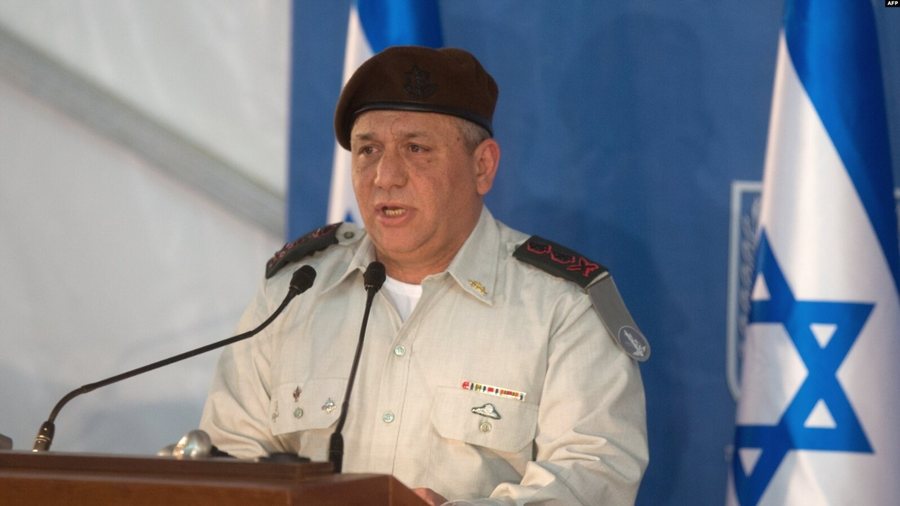
Divisions are emerging among senior Israeli officials over how to handle the war against Hamas in the Gaza Strip.
Gadi Eisenkot, one of four members of the war cabinet, cast doubt on the strategy for the hostage release, a stance that comes as Prime Minister Netanyahu rejected calls from the United States to reduce the intensity of military operations.
"Only a ceasefire agreement can secure the release of dozens of hostages still held by Islamist militants in Gaza, and claims that they can be freed by other means are just an 'illusion,'" former army chief Gadi Eisenkot said in the statement. his first public appearance as the war continues.
Mr Eisenkot's comments on Thursday evening were the latest signs of disagreements between political and military leaders over the direction of Israel's offensive against Hamas, which is now in its fourth month.
Israel struck Gaza prompted by Hamas' unprecedented terrorist attack on October 7, during which around 1,200 people, mostly civilians, were killed and around 240 others were taken hostage. The Israeli response in the region with a population of 2.3 million has destroyed most of Gaza. Israeli authorities say more than 130 hostages are still being held in Gaza, and not all are believed to be alive.
During the Israeli offensive, one of the bloodiest and most destructive military campaigns in recent decades, some 25,000 Palestinians have been killed, according to Gaza health authorities, while more than 80 percent of the territory's population has been displaced.
The Hamas-run Health Ministry in Gaza announced on Friday that 142 people were killed and 278 others wounded the previous day. The total number of injured has reached over 62 thousand.
Israel has cut off almost all supplies to the Gaza Strip including food, water and fuel. Every day only a small part enters the territory, compared to the pre-war volume of about 500 trucks. Both the United States and the United Nations have called for more aid to the region.
Likewise, communication in the region has been disrupted, entering its seventh day on Friday, the longest interruption since the beginning of the war. The lack of communication hinders coordination for the distribution of aid as well as efforts to rescue the injured.
The United States, Israel's closest ally, has provided strong military and political support for the offensive, but is increasingly calling on Israel to tone down the intensity and take steps toward creating a Palestinian state after the war - suggesting that Israeli Prime Minister Benjamin Netanyahu has strongly rejected it.
During a nationally televised news conference on Thursday, Mr Netanyahu reiterated his early opposition to a two-state solution. He said a Palestinian state would serve as a base for launching attacks on Israel.
Israel "must have control over the security of the entire territory west of the Jordan River," Mr. Netanyahu said.
The United States has said the internationally recognized Palestinian Authority, which governs the semi-autonomous areas in the Israeli-occupied West Bank, should be reorganized and returned to Gaza. In 2007, Hamas ousted the Palestinian Authority from power in Gaza.
Washington has also called for steps towards the creation of a Palestinian state. The Palestinians want their future state to include the Gaza Strip, the West Bank and East Jerusalem.
Speaking Wednesday at the World Economic Forum in Davos, Switzerland, Secretary of State Blinken said the two-state solution is the best way to protect Israel, unite moderate Arab countries and isolate Israel's main enemy, Iran. . He said that without a path to a Palestinian state, Israel cannot have "real security."
At the same conference, Saudi Arabia's foreign minister said the kingdom was ready to establish full relations with Israel as part of a larger political deal. "But this can only happen through peace for the Palestinians, through a Palestinian state," he said.
A spokesman for Palestinian President Mahmoud Abbas, who heads the Palestinian Authority, said Thursday evening that there can be no "security and stability in the region" without a Palestinian state.
Mr Netanyahu and Defense Minister Yoav Gallant have said the fighting will continue until Hamas is destroyed and argued that only military action can secure the release of the hostages.
Hamas wants an end to the war before discussing the release of the hostages. Likewise, the militant group has demanded in return the release of thousands of Palestinians imprisoned by Israel.
Experts have questioned whether Mr. Netanyahu's goals are realistic, given the slow pace of the offensive and growing international criticism, including genocide charges at the United Nations World Court, which Israel vehemently denies.
Mr Netanyahu's opponents accuse him of delaying discussions on post-war scenarios as a way to avoid possible investigations into government failures, to keep the coalition intact and to postpone elections. Polls show the popularity of Mr. Netanyahu, who is on trial on corruption charges, has fallen during the war.
Zoti Eisenkot, djali i të cilit u vra në dhjetor në Gazë, tha për programin investigativ “Uvda” që u transmetua të enjten në mbrëmje në stacionin televiziv izraelit ‘Channel 12’, se “pengjet do të ktheheshin gjallë vetëm nëse do të kishte një marrëveshje, për një pauzë të konsiderueshme në luftime”. Ai tha se operacionet e mëdha të shpëtimit nuk kanë gjasa t’i lirojnë ata, pasi pengjet me sa duket janë të shpërndarë dhe shumë prej tyre në tunele nëntokësore.
Pretendimi se pengjet mund të lirohet me mjete të tjera përveçse një marrëveshje “është iluzion”, tha ai.
Në një kritikë indirekte ndaj zotit Netanyahu, zoti Eisenkot tha se duhen marrë urgjentisht vendime strategjike për drejtimin që duhet të marrë lufta dhe se diskutimet se si duhet dalë prej saj, duhet të kishin nisur menjëherë me fillimin e luftës.
Ai hodhi poshtë gjithashtu sugjerimet se ushtria i ka dhënë një goditje vendimtare Hamasit.
Zoti Gallant ka thënë se trupat kanë çaktivizuar strukturën komanduese të Hamasit në Gazën veriore, nga ku në fillim të javës u tërhoqën një numër i konsiderueshëm trupash. Vëmendja është përqendruar tani në gjysmën jugore të territorit.
“Ne nuk kemi shënuar ende një arritje strategjike, ose më saktë vetëm pjesërisht“, tha zoti Eisenkot. “Nuk e kemi shkatërruar Hamasin”.
Grupi militant vazhdon të luftojë në të gjithë Gazën, madje edhe në zonat më të shkatërruara të rajonit dhe ka lëshuar raketa ndaj Izraelit.
Në intervistën e tij, zoti Eisenkot konfirmoi gjithashtu se gjatë ditëve të para të luftës ishte anuluar në minutën e fundit një sulm parandalues kundër militantëve të Hezbollahut në Liban. Ai tha se ishte në mesin e atyre që debatonin kundër një sulmi të tillë, në një mbledhje të kabinetit më 11 tetor, që ai e përshkroi si mjaft të tensionuar.
Një sulm i tillë do të kishte qenë një “gabim strategjik” dhe me gjasë do të kishte shkaktuar një luftë rajonale, tha zoti Eisenkot.
Ish-shefi i ushtrisë tha se po shqyrton çdo ditë çështjen nëse duhet apo jo të qëndrojë në kabinetin e luftës, i cili përfshin zotin Netanyahun, zotin Gallant dhe ish-Ministrin e Mbrojtjes Benny Gantz. Zoti Eisenkot është një anëtar i parlamentit i aleancën opozitare të Unitetit Kombëtar që kryesohet nga zoti Gantz. Të dy iu bashkuan zotit Netanyahut për të ndihmuar në drejtimin e luftës.
“Unë e di se cila është vija ime e kuqe“, tha zoti Eisenkot kur u pyet se në çfarë pike do të largohej. “Ajo lidhet me pengjet, ky është një nga objektivat, por është i lidhur edhe me mënyrën se si ne duhet ta drejtojmë këtë luftë”, shtoi ai.
The war has spread across the Middle East, with Iranian-backed groups attacking American and Israeli targets. Fighting between Israel and Hezbollah militants in Lebanon risks turning into a full-scale war. Similarly, the Iran-backed Yemen-based Houthi group, which was recently re-designated a terrorist organization by Washington, continues to attack international shipping despite US-led airstrikes.
On Thursday, the United States carried out a fifth strike against the Houthi rebels, even as President Joe Biden admitted that the bombing of the militants has not yet stopped their attacks on ships in the important Red Sea corridor./VOA




Lini një Përgjigje