


 Shkruar nga Kenan Malik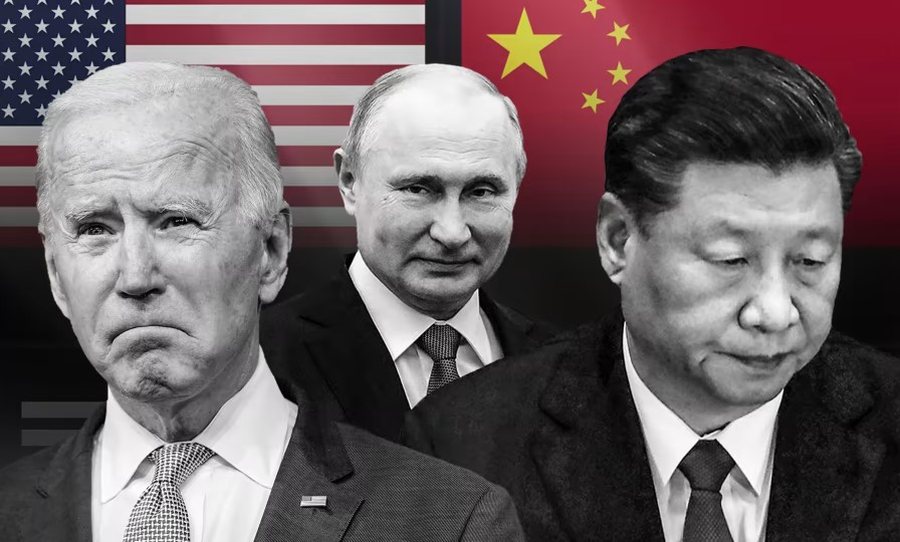
Gerontocracy is the cousin of plutocracy. The problems we face are not primarily those of old versus young, or a generational war, but of class and power, entrenchment of wealth, and efforts to marginalize insurgent foreigners.
" Those when in trouble or in fear desire the rule of the elderly ," wrote Plutarch, the first-century Greek historian and philosopher, as he pondered " whether an old man should engage in politics." Only the elderly, he believed, possessed wisdom. given by age and the calm that came from experience.
" The state which always rejects the elders, " he argued, " must be filled with youth who are eager for reputation and power, but who do not have the mind of a statesman . "
What would Plutarch have to say about Joe Biden's embarrassing performance in last month's debate with Donald Trump and his insistence on remaining the Democratic nominee in November's presidential election? Plutarch recognized that old men could become weak, but " the evil caused by their physical weakness ," he insisted, " is not so great as the advantage they have in their care and prudence ."
Whatever his thoughts on Biden, Plutarch would probably have recognized aspects of the contemporary political world. It's not just that the two men running for US president are 81 and 78 years old. Even American lawmakers have gone gray. The average age in the House of Representatives is 58 and 65 in the Senate. More than a third of the senators are over 70 years old.
Nor is it only in America that old people rule. Vladimir Putin is 71 years old, as is Xi Jinping. India's Narendra Modi is 73; his Pakistani counterpart, Shehbaz Sharif, a year younger; and Sheikh Hasina of Bangladesh three years older. Benjamin Netanyahu is 74, while Palestinian Authority leader Mahmoud Abbas is 88 and Iran's Supreme Leader Ayatollah Ali Khamenei is 85.
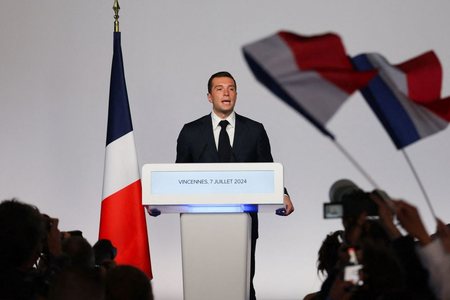
Of course, there are new leaders. The French Prime Minister, Gabriel Attal, is the youngest 35-year-old on the world stage. But probably not for much longer. After the votes are counted in Sunday's French parliamentary elections, 28-year-old Jordan Bardella of the far-right Rassemblement National may be on the verge of becoming the new prime minister. However, the trend towards "gerontocracy" – the rule of the old – is a striking feature of the modern world.
" It didn't have to be this way, " noted American historian and philosopher Samuel Moyn. In the premodern world, respect for the elderly was sewn into the social fabric, a means of maintaining social order and discipline. " With the ancient is wisdom; and in the sense of long days ," as Job says in the Hebrew Bible or in the Old Testament.
The advent of modernity seemed to transform the social status of the old. " At the dawn of political modernity ," argues Moyn, the French revolutionaries, in overthrowing the ancien regime, " explicitly targeted the empowerment of the elderly ," seeking "not only to overthrow the aristocrats on behalf of the common people and fathers on behalf of the boys, but more broadly to mitigate the age-old commitment to the gerontocracy for the sake of the younger majority. ” However, over time, the authority of the elders was restored and the new claimants were displaced.
The paradox of contemporary societies, especially in the West, is that at the same time that the elderly hold great political power, the elderly are often neglected, lacking support in our more atomized, individualized societies, in the social networks that once provided food that was difficult to digest. The paradox is also that we live in societies that celebrate youth and youth culture, and yet give the keys to political power to older leaders.
These paradoxes arise because modern gerontocracy is the product of societies in which power and wealth are concentrated within certain families and within a certain class, and in which rigid political systems are designed to minimize disruption by outsiders.
In Born to Rule, their forthcoming book on the "making and remaking of the British elite," sociologists Aaron Reeves and Sam Friedman note that, despite all the talk of transforming elites and "new elites," the ruling order reproduces themselves in the same way as a century ago, and that there is a lot of " continuity when it comes to who gets into the elite and how they get there ". Certainly, new social groups – especially women and ethnic minorities – have claimed the privileges of Britain's upper echelons. But, Reeves and Friedman point out, those born into the top 1% are just as likely to enter the elite today as they were 125 years ago. The same families, schools and institutions form the ruling classes of the country. Inevitably, it leaves the old already entrenched in wealth and power possessing great advantages.
At the same time, the political systems that were created to bring about democratic transformation have been transformed into structures in which stability matters above all, and which are designed to minimize political disruption. From Britain's first system, to the use of second rounds in French elections to maximize any vote against insurgent parties, to a US Senate that gives sparsely populated rural states equal representation with large populous states substantial urban, political and electoral systems create palisades for protection against threatening outsiders.
Plutarch's fear that stormy youth would " rush headlong into public affairs, dragging the multitude with them into confusion like the stormy sea " still haunts many, though today the terror is not so much of the youth as of the leaders. "populist". . Efforts to minimize disunity also enable older leaders to seize power. Both the machinery that ensured Biden remained the Democratic presidential nominee despite concerns about his age, and the difficulties his domestic critics face in replacing him, illustrate this process well.
In the West (though not necessarily elsewhere in the world), demographic changes, particularly the aging population, play an important role in maintaining the power of the old. Beyond demographics, however, lies politics.
Gerontocracy is the cousin of plutocracy. The problems we face are not primarily those of the old against the young, or a generational war, but of class and power, of wealth entrenchment and efforts to marginalize insurgent foreigners./ Adapted "Pamphlet" from "TheGuardian"







Lini një Përgjigje