


 Shkruar nga Pamfleti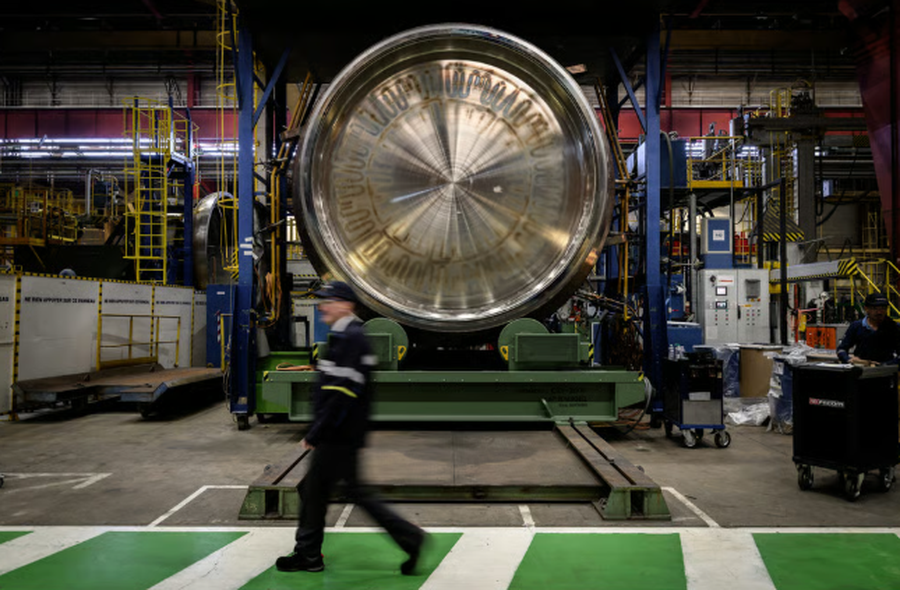
A nuclear project linked to the Russian state company Rosatom has received approval from state authorities in northwestern Germany, under strict conditions to mitigate the risks posed by Russian involvement. The Lower Saxony environment ministry granted French company Framatome permission on Wednesday to produce Russian-designed nuclear fuel rods and assemblies in the northwestern German city of Lingen.
The Franco-Russian project, which will be operated by Framatome (a subsidiary of French state-owned company EDF), will use key Russian components supplied by TVEL, a subsidiary of the Kremlin-controlled nuclear giant Rosatom. TVEL will not operate the plant itself, but will provide essential parts manufactured in Russia. The proposal had previously raised concerns in both regional and federal government circles about potential espionage and security risks.
The approval notice sets out extensive conditions. For example, Rosatom and TVEL employees are prohibited from entering the plant. “ Entry is only permitted in justified exceptional cases and when accompanied by the nuclear regulatory authority,” explained a spokesman for the Lower Saxony Ministry of the Environment.
The regulations also stipulate extensive security inspections of licensed machinery supplied by TVEL and Framatome's subsidiary, ANF. Framatome employees must adhere to the rules governing their interactions with TVEL and Rosatom employees, particularly regarding protection against espionage, sabotage and recruitment attempts.
The green light comes at a time when nuclear power is increasingly seen as essential to weaning the EU off fossil fuels, while the bloc is simultaneously trying to halt energy imports from Russia in response to President Vladimir Putin's full-scale invasion of Ukraine.
According to Lower Saxony, an updated assessment by security authorities regarding Russian involvement and the proposed security requirements for the project was a key factor in the decision to grant the license. The updated assessment was in a federal government statement issued in February and drafted under the leadership of Germany's Federal Ministry for the Environment. Under the "traffic light" coalition government, statements issued by the relevant federal ministries had been significantly more critical.
Although the Lower Saxony Environment Ministry itself made the final decision on the Lingen project, Lower Saxony Environment Minister Christian Meyer considers the federal government's approval and revised safety assessment to be "fundamentally wrong." But Meyer was forced to accept them in a state governed by the rule of law, he said.
Meyer's office says it asked the federal ministry whether there was still a possibility that, even with the strict conditions in place, the request could be rejected on grounds of internal and external security. Berlin's response was clear: "Based on the current findings regarding the risk potential and the conditions imposed, there is no discernible situation that would allow for a legally grounded refusal of permission."
Foreign policy expert from the center-right Christian Democratic Union, Roderich Kiesewetter, is calling for the permit to be revoked.
“This decision poses a security risk and must be reversed ,” Kiesewetter said. He said the decision to approve the Lingen project could be seen almost exclusively as a successful Russian influence operation or an incomprehensible display of irresponsibility.
The Federal Ministry of the Environment denies any responsibility for the decision. The Lower Saxony Ministry of the Environment, as the licensing authority, is responsible for investigating and assessing the facts of the case. Although the state ministry is subject to federal supervision, it makes its decisions independently, provided that the federal ministry does not assume decision-making authority in the matter.
However, in practice, the federal ministry has been involved in the project since 2022, reserving the right to adopt the final decision, which it has now done.



Lini një Përgjigje