


 Shkruar nga Pamfleti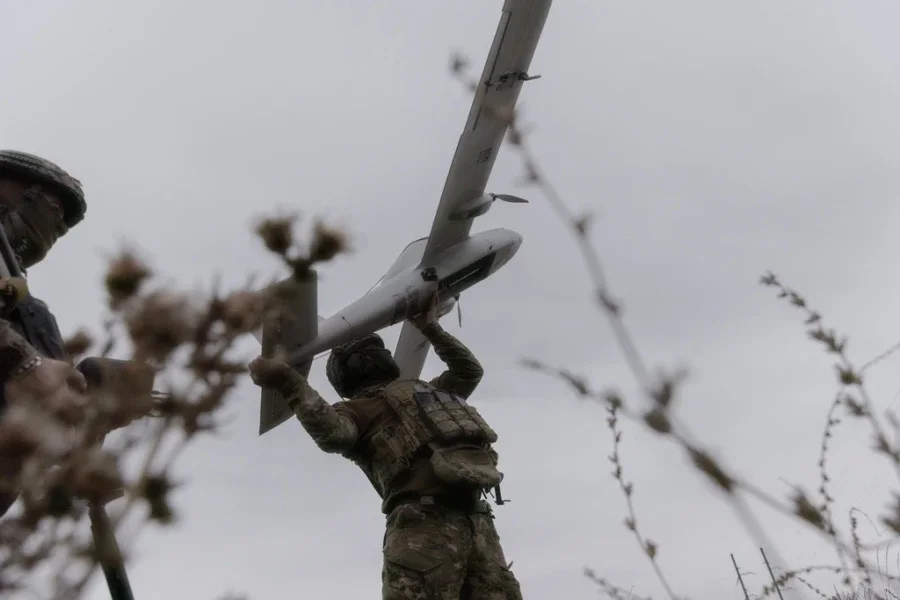
A stark warning for the future is given by British historian Niall Ferguson, a senior fellow at the Hoover Institution at Stanford University, in an analysis published in The Free Press.
Ferguson focuses on the radical transformation of the war in Ukraine, where drone technology has upended traditional methods of warfare.
“Hundreds of drones hover overhead like deadly hornets, surveying targets and swooping in to kill. Soon there will be thousands,” he writes, describing the new reality of the battlefield.
According to the historian, the development of the conflict between Russia and Ukraine has been dizzying. "The war of the future is already here and you don't have to be afraid of it. Unless you're Ukrainian, of course," Ferguson warns.
He criticizes Europe's still-deficient perception of the danger posed by Russian drones, despite the fact that countries like Poland, Romania, Estonia, and perhaps even Denmark now know that their airspace can be easily penetrated.
The psychological trauma of this kind of war also emerges from the testimonies of Ukrainian soldiers on the front lines. “The most common expression you hear from those who have served on the front is: 'If you hear the drone, then you are dead,'” Ferguson quotes.
In relation to Russia's numerical superiority, he emphasizes that innovation is Ukraine's strongest weapon. "The key to balancing Russia's quantitative advantage is continuous qualitative progress, and here Ukraine has excelled. But the growing shortage of manpower cannot be hidden," he explains.
Ferguson sees two urgent steps for Europe and Britain as necessary at a time when the United States is increasingly seeing the war in Ukraine as a European problem: an immediate increase in financial aid to Kiev and an accelerated rearmament program. But, he says, European structures are slow and incapable of adapting to the lessons the war is teaching on the ground.
“Procurement agencies, defense contractors, and militaries themselves are not being supplied with the right weapons fast enough, not producing the right equipment, and not restructuring as needed,” Ferguson criticizes.
He stresses that a rapid change of mentality is needed. “European leaders are not understanding that a lightning-fast German rearmament – setting up giant factories for the mass production of the most advanced Ukrainian-designed drones – would be Europe’s shield, provide an economic boost and weaken populism,” the expert says.
Finally, he warns that Europeans should not misinterpret the messages coming from Washington. “Above all, Europeans are not understanding that when Trump says 'Good luck to all,' he really means 'Goodbye and good luck,'” Ferguson concludes.








Lini një Përgjigje