


 Shkruar nga Pamfleti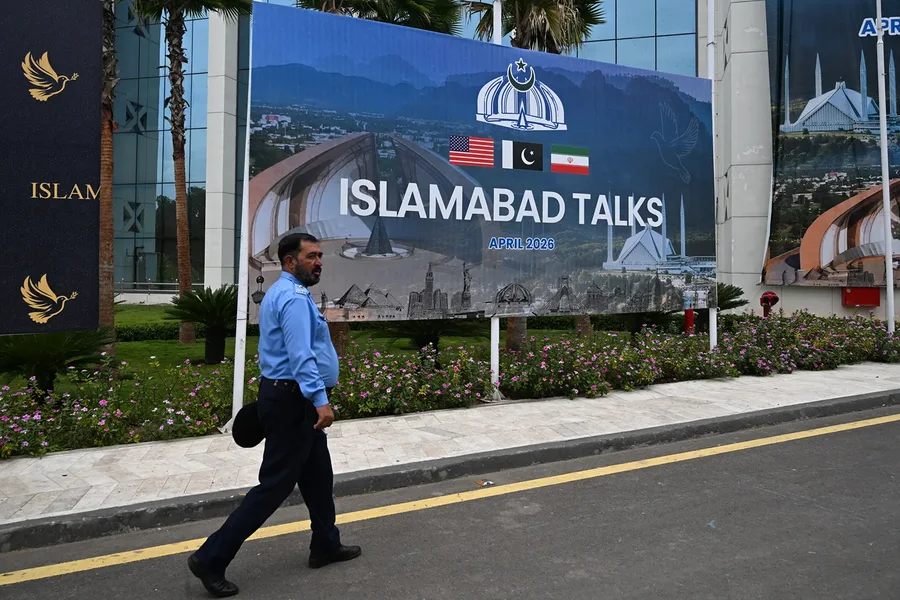
A short, vague agreement with numerous legal loopholes was interpreted differently by the US and Iran, leading to the breakdown of the ceasefire in the Strait of Hormuz and calling into question any future efforts for a lasting solution.
The White House undermined the Strait of Hormuz ceasefire agreement because it did not understand, or did not attach importance to, the obligations it had undertaken. Instead of reducing tensions, the agreement quickly became a source of conflict, as the US and Iran interpreted the text in completely different ways and acted on incompatible grounds.
In peace and ceasefire agreements, every word counts. Even the smallest changes in wording can change the legal meaning of a provision and create disputes with serious consequences. For this reason, such documents are usually drafted for months by teams of negotiators, lawyers and experts who weigh every sentence. The US-Iran agreement was the complete opposite: a document of little more than two pages, with vague wording, general provisions and no clear mechanisms for monitoring, implementation or dispute resolution.
One of the most contentious points was the article requiring Iran to ensure the safe passage of commercial ships through the Strait of Hormuz. The text did not specify what measures Tehran could take to this end, how they would be implemented, and whether they would have to be approved by the US side. This gap gave Iran room to claim that it had the right to practically manage maritime traffic in the strait.
On this basis, Tehran imposed a new transit regime, requiring all commercial ships to obtain special permits and to use only sea lanes approved by Iranian authorities that passed through the country's territorial waters. Although these measures were opposed by the US and its allies, the agreement itself did not explicitly prohibit them and did not place clear limits on how Iran could implement them.
The text also did not explicitly prohibit the use of force against merchant ships that did not comply with these rules. The provisions of the agreement prohibited the use of force between the US and Iran, but did not address how Iran could enforce its measures against third parties. For this reason, Tehran argued that actions taken against ships sailing outside the agreed corridors did not contradict the text of the agreement.
Meanwhile, Washington also took steps that weakened the agreement. US maritime coordination centers continued to recommend that commercial ships use alternative corridors, outside of those approved by Iran. At the same time, the US administration maintained sanctions on the Iranian authority responsible for managing the strait and warned companies that cooperation with it could lead to financial consequences. The situation escalated further with US strikes on Iranian targets, which Tehran considered a direct violation of the agreement.
This created two diametrically opposed interpretations. Iran was convinced that it was acting within the limits of the text it had signed, while the US refused to accept any form of Iranian administrative control over the Strait of Hormuz. As a result, the agreement lost its practical effect almost immediately, and both sides returned to clashing and mutual attacks.
The document itself also had other significant shortcomings. Provisions related to Lebanon, sanctions, and other security issues were unclear or left room for different interpretations. In some cases, they were not even harmonized with existing rules of international law, making their implementation in practice even more difficult.
Beyond the immediate crisis, the way this agreement was drafted and interpreted is expected to influence any future negotiations on the Strait of Hormuz. The mistrust between the parties and the lack of a clear, enforceable text make it much more difficult to reach a lasting solution. Without an agreement with precise provisions, functional mechanisms, and common interpretation, any new diplomatic effort risks ending in the same way. / Adapted from "Foreign Policy"




Lini një Përgjigje