


 Shkruar nga Gjergj Zefi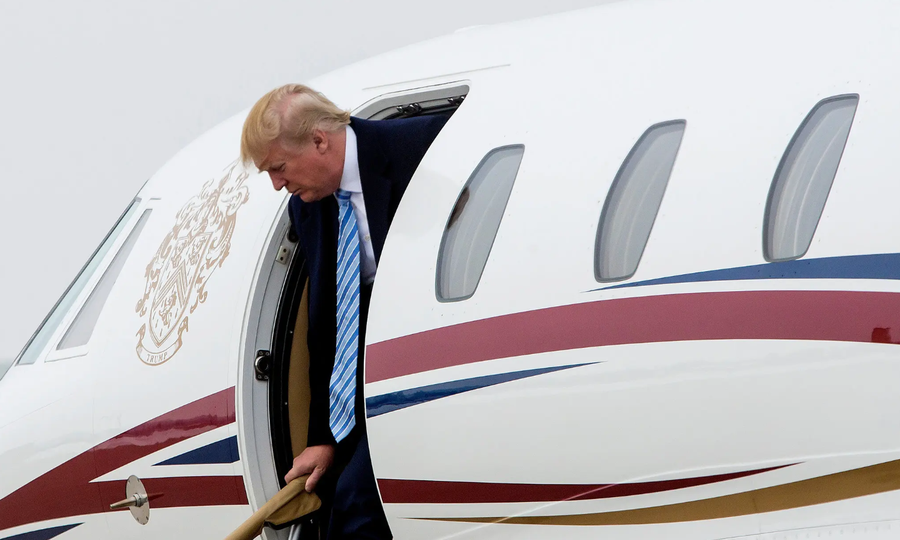
The meeting between Donald Trump and Xi Jinping is not just a trade negotiation. In Beijing, technology, Taiwan and the new global balance between the two powers that are vying for control of the 21st century are being discussed...
Diplomacy has now ceased to be protocol and has become a pure clash of global interests. The meeting between Donald Trump and Xi Jinping in Beijing is precisely one of those moments when not just a few trade agreements are served on the table, but the very architecture of the future world order.
The world is not seeing a routine summit between two great leaders. It is seeing a confrontation between two systems that are now competing for economic, technological, and strategic control of the 21st century.
Donald Trump returns to the international stage with his classic instincts as an aggressive negotiator, seeking to emerge as the leader who can force China to make concessions. For him, Beijing remains the symbol of the imbalance that, according to his narrative, has damaged American industry, destroyed jobs, and weakened US economic dominance. But the reality that Trump finds today is very different from that of the years of his first term. China is no longer simply the world's factory. It has become an industrial and technological superpower that openly challenges American supremacy in the most strategic sectors of the global economy.
In Beijing, it's not just tariffs and exports that are being discussed. On the table are issues that directly affect global stability: artificial intelligence, semiconductors, control over critical technologies, and above all, Taiwan, the most dangerous flashpoint in the rivalry between Washington and Beijing.
This is where the real anxiety of this summit begins. Because for China, Taiwan is not just an island or a diplomatic dossier. It is a historical red line and a symbol of national integrity. For the US, meanwhile, Taiwan remains the strategic node that guarantees American balance in the Indo-Pacific and curbs Chinese expansion in Asia.
The fear circulating in Western diplomatic circles is that Donald Trump might try to use Taiwan as part of a larger economic bargain with Xi Jinping. Such a move would shake up not only Asia but the entire system of American alliances around the world.
Japan, South Korea, and the US's partners in the Pacific know that any signal of weakness to Beijing over Taiwan would be interpreted as the beginning of a new era where America no longer guarantees the same level of strategic protection.
But China also enters this summit with weaknesses that Beijing tries to hide behind a facade of global power. The Chinese economy is facing serious structural tensions, from the housing crisis to falling domestic consumption and rising unemployment.
Recent purges in the Chinese military hierarchy show that Xi Jinping, while consolidating his personal power, is not immune to internal crises. That is precisely why Beijing needs economic stability and to avoid an uncontrolled clash with the United States.
However, the rivalry between the two powers is no longer a classic trade conflict. The new global war is not fought with tanks or ideologies as during the Cold War. Today the battle is being fought for control of technology, data, artificial intelligence and the industrial chains that will define the economy of the future.
The US is realizing that its dominance is no longer absolute, while China is attempting to transform economic power into strategic hegemony.
In this sense, the Trump–Xi summit is not a passing diplomatic episode. It is a historic test of the global balance of power. If the negotiations fail, the world could enter a new phase of economic warfare and military escalation in the Indo-Pacific. If a deal is reached, it will be only a temporary truce in a rivalry that already seems inevitable.
History has shown that the most dangerous moments arise when a rising power openly challenges the dominant superpower. This is precisely what the world is experiencing today. And Beijing may not just be the scene of a diplomatic summit, but the place where the new order of the 21st century is being negotiated./ Pamphlet


Keshtu i shkoj edhe mandatti pare, nisi sherr me Jane's Comein, me pas me Bolton e Tillersonin . Tre muaj pergaditje per tu takuar me Kim Yong. Rezultati zero,thjesht i dha rendesi diktatorit. Vazhdoi me Lad Puninin ,te njejten histori si me Kimin. Tani do reklamoje nje takim teper te sukseshem me Xi. Ka merak te shikoje Pekinin.
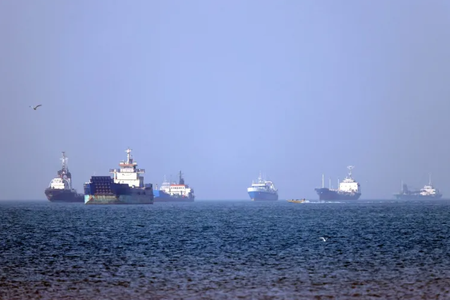
Z. Gjergj! Është ndoshta më mirë kur superfuqitë ulen dhe bëjnë "pazare" se sa kur përplasin brirët me njeri tjetrin. "Pazari" i parë do jetë me siguri Tajvani dhe rrugkalimi detar i hapur për të gjithë. Paqësisht. "Pazari" i dytë do jetë "Hormuzi". I hapur për të gjithë. "Pazari" i tretë do jetë një paketë për rrugkalimet detare kudo në botë. "Pazari"i katërt do jetë 'konkurencë' dhe zgjidhje e mosmarrëveshjeve me marrëveshje. "Pazari"i pestë do jetë reformimi i organizatave ndërkombëtare OKB dhe Këshilli i Sigurimit. "Pazari"i gjashtë do jetë rinovimi i marrëveshjeve mbi armët bërthamore, kimike, biologjike dhe armët konvencionale. "Pazari" i shtatë ndikim i ndërsjelltë për bashkimin e dy Koreve. Për pika të tjera "nuk kam informacion".