


 Shkruar nga Antonello Caporale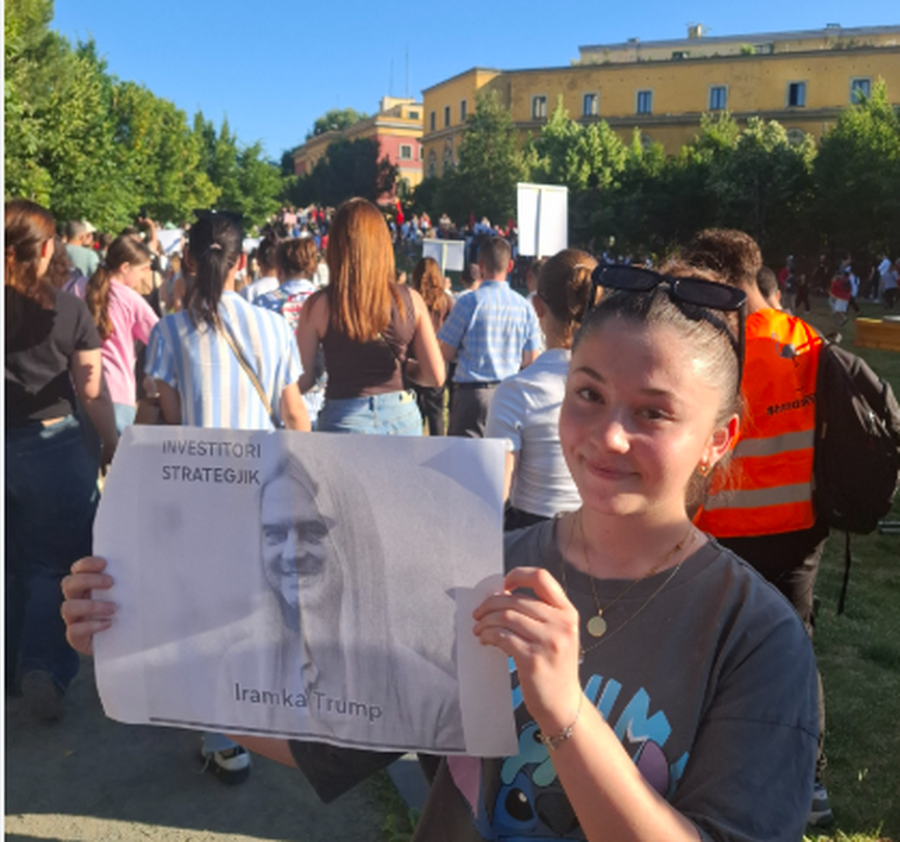
A new wave of revolt is sweeping Eastern Europe, where young people under the age of thirty are taking control of their countries' destinies, openly challenging the corruption of political elites and the clientelistic agreements that undermine democracy in Serbia and Albania.
A new wind is blowing from the East, bringing a hope that seemed lost: the determined political engagement of Generation Z. In Belgrade for two years and in Tirana for a few weeks, large protests - often led and organized by girls and boys under the age of thirty - are filling the squares of Serbia and Albania.
With the slogan "Corruption kills", Serbs initially forced the resignation of Prime Minister Miloš Vučević and now expect the President of the Republic, Aleksandar Vučić, a right-wing populist and pro-Russian politician, to also step down, called to account for a series of events that, according to accusations, have built a dark system of power, linked to clientelistic interests and far from any democratic openness in decision-making processes.
It all started on November 1, 2024, when the roof of a newly renovated railway station collapsed in Novi Sad, in the north of the country. According to protesters, the tragedy was the result of corruption and abuses in public procurement procedures. The accident caused the deaths of 16 people.
From there, the wave of protests began. From Novi Sad, Generation Z - young people who in Western Europe often seem distant or uninterested in politics - began to organize and fill the squares.
Within a few weeks of mobilization, an unexpected result was achieved. Prime Minister Vučević resigned, while President Vučić continued to resist, remaining at the center of a system accused of lack of transparency and clientelism.
More than a million people gathered at Slavija Square, the largest in Belgrade, in March. In May, the number doubled, prompting Vučić to announce early elections.
However, his removal from power still seems far from final.
Many see this as a tactical move, an attempt to reorganize his control by merging the presidential and parliamentary elections, after the prime minister's post remained vacant.
Further south, in Albania, the march of protesters - young and not only - has started from another symbolic story: the granting for development of the island of Sazan, in the Vjosa-Narta protected area, to a company linked to Donald Trump's son-in-law.
The island, an exceptional natural area known for the presence of flamingos, was given to Affinity Partners, the American private equity firm controlled by Jared Kushner, the son-in-law of the current US president.
It is about an investment of four billion dollars for the construction of a tourist resort with thousands of beds, which aims to transform the area into a kind of "Maldives of Europe", in the words of Albanian Prime Minister Edi Rama.
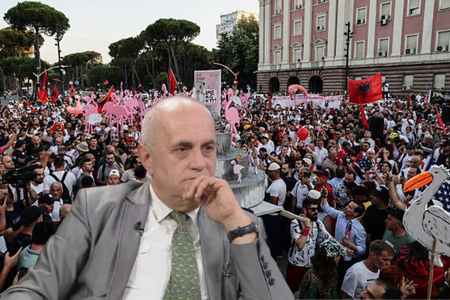
Protests have erupted in both Belgrade and Tirana. In both Serbia and Albania, the squares are filled with people. The reason is the same: corruption, lack of transparency, the great occult power of the political apparatus, widespread clientelistic networks, and a moral issue that permeates the entire public system.
Even in Tirana, the protests have already brought visible political consequences.
Meanwhile, Prime Minister Edi Rama, in his direct and often provocative style, has responded to the protesters who call him "The Godfather" with a blunt expression, given during an interview with the British daily Financial Times: "Go to hell!" / Pamphlet from "Il Fatto Quotidiano"




Lini një Përgjigje