


 Shkruar nga Gjergj Zefi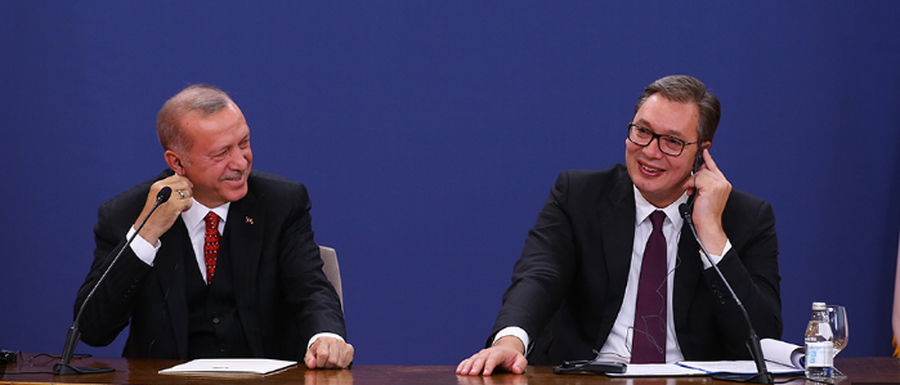
Aleksandar Vučić's choice of Turkey to articulate the warning against Albania, Croatia and Kosovo was not a protocol coincidence, but cold diplomatic calculation...
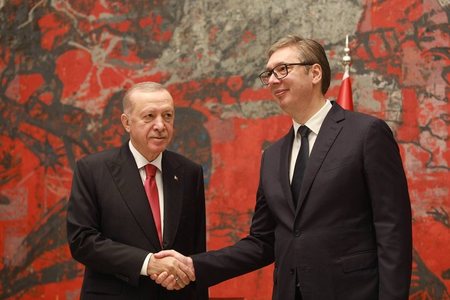
Serbian President Aleksandar Vučić's statement from Ankara was neither spontaneous nor accidental. Speaking about "potential threats" from military cooperation between Albania, Croatia and Kosovo right in the capital of Turkey, alongside President Recep Tayyip Erdogan, is an act with a multiple message. It was not just a signal to Serbian public opinion; it was a coded message to the West, to the region and to Turkey itself as a growing actor in the Balkans.
Vučić is well aware that Turkey is a NATO power with direct influence in Bosnia, Kosovo and Albania, with an increased economic and military presence in the region. By articulating his concern in Ankara, he gives the statement an international dimension and not just a Balkan one. He shifts the narrative from a potential regional conflict to a European security issue, casting Serbia as the victim of a strategic encirclement. This is a familiar tactic of his: dramatizing to increase negotiating leverage.
Domestically, the rhetoric of “external threat” serves to consolidate the electorate and justify investments in armaments, while Serbia declares military neutrality. But Belgrade’s neutrality is always relative: Serbia cooperates with NATO through the Partnership for Peace, maintains strong ties with Moscow and Beijing, and now seeks to deepen strategic relations with Turkey. This is the balancing diplomacy that Vučić has carefully constructed; a game on several tables at once.
Why Ankara?
Because Turkey is the bridge between East and West, a power that is not completely aligned with Brussels, but not against it either. Speaking from there, Vučić also sends a message to the EU that Serbia has alternatives, that it is not isolated and that it can articulate security concerns in forums where it is heard. It is a form of indirect pressure on the European Union: if the EU does not guarantee stability and equal treatment for Serbia, Belgrade will look for other partners.
But in essence, the statement aims to relativize the normal cooperation of the states of the region within the Euro-Atlantic architecture. Albania and Croatia are members of NATO; Kosovo has strong Western support. Their cooperation is not offensive in itself, but part of a broader integration into Euro-Atlantic structures. By presenting it as a threat, Vučić is trying to create a new security equation where Serbia emerges as a threatened party and not as an actor that often uses destabilizing rhetoric.
Regionally, this move increases symbolic tension, but not necessarily real danger. It is more a battle of rhetoric than a warning of conflict. However, in a Europe shaken by the war in Ukraine and with its security architecture under review, any such statement carries weight. Vučić is positioning Serbia as an indispensable factor in any discussion about the stability of the Balkans, increasing the diplomatic price of cooperation with it.
In the end, Ankara's choice was symbolic and strategic: an international stage, a wide audience, and a multifaceted message. Vučić didn't just talk about security; he talked about Serbia's role in a region being reshaped by great powers. And in this game, words are weapons as much as tanks./ Pamphlet



Ne se Turqia nuk do te zoteronte Ngushticen e Dardaneleve do e kishin shqyer me kohe si kurve kopilin.