


 Shkruar nga Pamfleti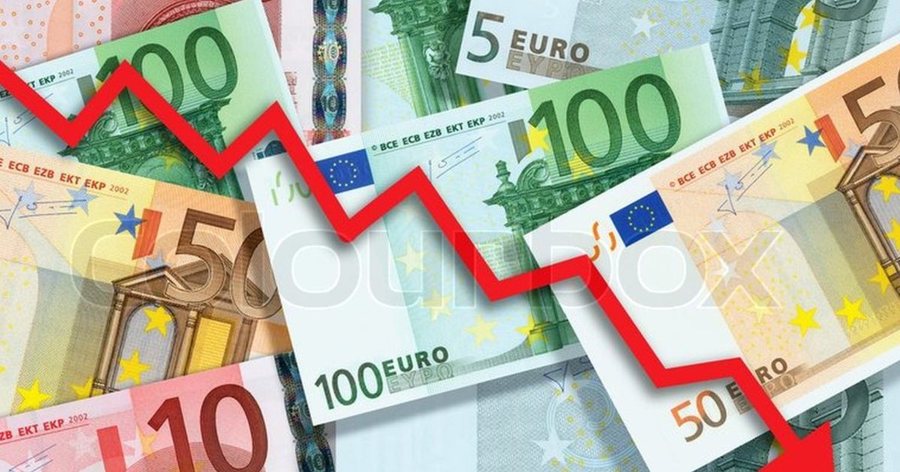
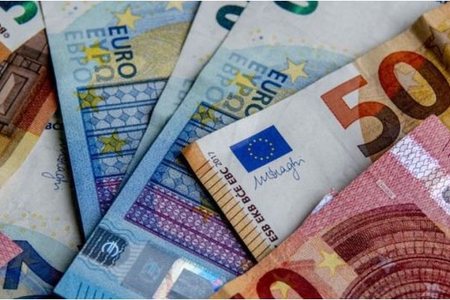
Since January 2002, when it was put into circulation for the first time as a physical currency, the euro has been considered a strong currency. Today it is just not like that. In the last two years, its devaluation has been at a strong and unstoppable pace, creating at certain moments even panic among some businesses and citizens.
But what has happened to the foreign exchange market and especially to the euro?
The European currency has suffered continuous declines in recent years, which have accelerated especially after 2021. In the last three years alone, the euro has lost more than 23 ALL, or over 20% of its value.
Experts explain that the amount of euros in circulation, or what is otherwise known as supply, is much higher than the demand, or need for euros. An imbalance that has brought down the European currency.
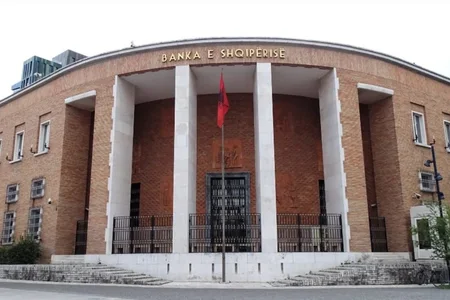
During the months of July-August, which is also the peak of the tourist season, the Bank of Albania intervened many times in the foreign exchange market to withdraw part of the euro, in an effort to prevent it from falling below the quota of 100 lek, considered as a psychological boundary.
A red line that has already been crossed and that signals every day for new falls in the value of the euro.
But it is not only official sources that have made the euro's descent unstoppable. This is despite the fact that there has been an increase in foreign exchange flows from official channels, such as income from tourism, foreign investments and remittances or otherwise remittances from immigrants. But the informal channels are the ones that have significantly added euros to the market, although their amount remains measurable.
The euro below the quota of 99 lek is now the new normal. This means that economic agents, such as businesses and citizens, must reorient financial plans and decisions with a weak euro at these levels or even below.
The rapid and strong fall of the euro has a tremendous impact on the Albanian economy. This is because the euro is the second most used currency in the country after the lek. Or more precisely, our economy uses two currencies at almost similar levels: the official one, the lek and the euro.
The euro is used today as a currency in many internal transactions in important sectors of the Albanian economy, such as the financial sector, where a significant part of deposits and loans are in this currency; in the real estate market in the sale and lease of properties; in tourism, but also in some services. We buy in stores with euros, we pay in restaurants, and recently even in the supermarket.
A situation that has significant risks for the economy. As such a high degree of Euroization exposes the economy, citizens and businesses to exchange rate fluctuations, as is already happening. On the other hand, it makes it impossible to extend the effects of the decisions and policies undertaken by the Bank of Albania to the entire economy, limiting this impact only to the part of the economy that uses the Lek as currency.
But why is the euro used so much in the Albanian economy? In fact, there are several reasons. The love of Albanians for foreign currencies is already known. Until the 2000s, it was strongly linked to the dollar, which was then replaced by the euro.
Lack of confidence in the local currency; the difference between the interest rate of the euro and the lek; the high level of remittances in euros; wrong macroeconomic policies; close ties with important economic poles of the euro, such as banks whose mother is a country of the European Union or even commercial integration, which leads to such an orientation in the use of currencies.
Seeing the high level of use of the euro in the economy, the Bank of Albania undertook in 2017 an initiative for deuroization, which did not give the expected results. This initiative has recently been reactivated, triggered by exchange rate shocks.
The mass use of the euro in the economy has its losers and its beneficiaries from the strong devaluation of the European currency.
Those who have lost are mainly the exporters, whose activity is in euros and expenses in lek; individuals who have their salary or other income in euros have lost; families who receive money from immigrant relatives, as well as those who have bank deposits in this currency. While those who have loans in euros have benefited, as they will pay less for monthly installments; importers who will buy goods and services more cheaply, as well as the government, who will pay less for foreign debt.
The fall of the euro has mainly affected Albanian exports. This is because all the activity of this sector takes place in euros, while all expenses, from salaries to taxes, are in lek. The fall of the euro causes this business to suffer huge losses.
The data show that for the 8th month of this year, exports reached the value of 225 billion ALL, with a decrease of 74.6 billion ALL or 14.9% compared to the same period a year ago.
While the decline has been particularly significant after 2022, when the euro took an unstoppable descent. Exports suffered an annual decrease of more than 40 billion ALL, signaling a strong crisis in the sector, which is simultaneously suffering from the increase in the costs of raw materials, the lack of labor force, and the not at all favorable international conjuncture.
Experts recommend taking some measures so that the exchange rate and the euro are not left in free fall.
In the conditions of the market and the economy, no one can make predictions about the exchange rate. It does not even say when the fall of the euro will stop, or at what values it will reach.
What is already known for sure is that the so-called strong currency is no longer strong and that its decline is now the new normal./ A2CNN


Lini një Përgjigje