


 Shkruar nga Edel Strazimiri
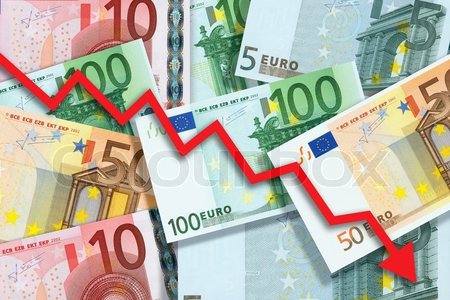
The euro fell to its lowest level since August 13 against the US dollar after the release of the minutes of the Federal Reserve meeting on Wednesday. The minutes revealed that Federal Reserve officials were split on whether a 0.5% rate cut was necessary, signaling a slower pace of future rate cuts, which in turn strengthened the US dollar.
Since the end of September, the euro has fallen 2.3% against the dollar, falling from 1.12 to just above 1.09. The euro's weakness is expected to continue ahead of next week's ECB policy meeting, where the bank is expected to deliver its third rate cut this year.
The recent strength of the euro against the dollar has been influenced more by the decisions of the Federal Reserve than by the ECB. In September, the Federal Reserve kicked off its easing cycle with a significant rate cut, undercutting the US dollar and pushing the euro to a near three-month high. However, in October, this trend reversed as market participants began to anticipate a softer rate cut from the Fed and a more dovish stance from the ECB.
This shift in expectations for future Fed and ECB rate paths is likely to keep the euro under pressure. The Fed's 0.5% rate cut, which was in response to a slowdown in the US labor market, may have been overstated. Non-farm payrolls data had shown slower employment growth and a rising unemployment rate.
However, September's jobs report eased concerns as job creation beat expectations and unemployment fell. The Fed used the term "recalibration" in the minutes of the meeting, suggesting that the big rate cut was partly a response to delayed decisions compared to other central banks.
The minutes also noted: "Some participants noted that they would have preferred a 25 basis point reduction in the target range at this meeting, and some others indicated that they might have supported such a decision." Fed funds futures now show a quarter-percentage-point cut is expected at the November and December meetings, rather than a half-percentage-point cut.
After the meeting, US government bond yields rose, with the benchmark 10-year Treasury yield rising to 4.07%, the highest seen in July, which is likely to continue fueling the uptrend. of the dollar. Dilin Wu, research strategist at Pepperstone, said: "Combined with rising US Treasury yields and a widening rate differential with G10 peers, this supports dollar strength." Conversely, the ECB may adopt a more dovish tone due to weakening economic data and cooling inflation. Wu added: "The ECB seems more likely to take a dodgy stance while remaining data-driven."
According to Eurostat's flash estimate, the Eurozone Consumer Price Index (CPI) fell to 1.8% year-on-year in September, below the ECB's 2% target and from 2.2% in August. Germany, the Eurozone's largest economy, continues to struggle with a drop in output, as shown by the sharp drop in ZEW Economic Sentiment, which fell to 3.6 in September, the lowest since October 2023.
"The economic outlook looks increasingly fragile," she said, referring to the eurozone's economic outlook. While the ECB implemented a tough rate cut in September and stated that it was "not pre-committing to a particular rate path", recent weak data has led to market expectations shifting towards a more likely cut. quarterly rate next week, than not. change.
The ongoing conflict in the Middle East could also weigh heavily on the euro due to the potential for higher energy prices. Since Russia invaded Ukraine, the Eurozone has faced a rising cost of living and economic stagnation. A similar scenario could unfold if the conflict in the Middle East escalates into a wider regional war. Meanwhile, the US dollar is likely to be seen as a safe-haven asset, given the US's geographical distance from the conflict zone, along with its resilient economy.
The European Union is also facing internal political uncertainty, with the rise of far-right movements in France and Germany. Additionally, tensions with China over tariffs on Chinese electric vehicles and possible retaliatory measures pose further challenges to the region's economy. As a result, the euro is likely to remain under pressure for the foreseeable future0./ SCAN TV .






Lini një Përgjigje