


 Shkruar nga Prof.dr. Skënder Asani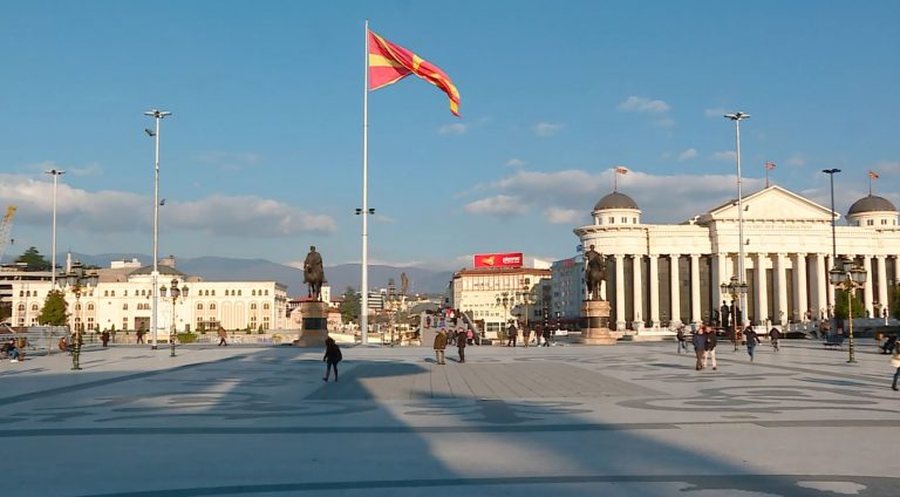
Reflections on cultural architecture in North Macedonia
Throughout modern Balkan history, there has been a continuous effort to build stable states through the articulation of inclusive national identities. North Macedonia is no exception to this process, where a social order that promotes equality and multiculturalism has been formally established. However, the gap between the reality written on paper and what is experienced in practice, particularly for the indigenous ethnic groups, remains deep and complex.
In this interspace between the written word and concrete action, Albanians continue to experience a particular form of cultural exclusion – a quiet, silent, but ongoing process that can be characterized as institutional deculturalization. This process manifests itself not through direct denial, but through the lack of equal inclusion, the lack of institutional infrastructure, and often through the distortion of the historical narrative itself.
The Albanian territories within the current borders of North Macedonia are among the richest in terms of cultural, archaeological and historical heritage. These spaces are not simply current settlements, but evidence of an uninterrupted autochthonousness since antiquity. The language of ancient stones, Illyrian toponymy and popular memory testify to a continuity that history has not been able to erase. Albanians are a people about whom history itself speaks – a people that has preserved its cultural identity even in conditions when it has not been institutionally recognized.
However, instead of supporting the cultivation and conservation of this heritage, the opposite is often encountered: the lack of a genuine museum of Albanian ethnoculture, which cannot be justified by a lack of resources, but by a lack of institutional will. In some cases, this phenomenon goes even further – towards the deformation, denial or even appropriation of Albanian material heritage, especially that with Illyrian and Arbëro roots. This selective treatment of history is not only problematic from a cultural perspective, but also endangers social harmony.
The Ministry of Culture, as a key institution in building the state narrative, often fails to include Albanian cultural identity as part of the shared mosaic. Albanian representation in this institution is minimal and often only symbolic. Albanian cultural projects are financed in an uncertain and uncontrolled manner, without a long-term strategy and outside a consolidated state framework. This lack of equality in access directly affects the construction of a comprehensive collective memory.
Ironically, the Ohrid Agreement, the document that was supposed to mark a new era of interethnic coexistence, contains at its core the principle of protecting and cultivating the cultural heritage of communities, including Albanians. This principle, guaranteed by the international community, is conceived as an element of stability and mutual respect. For only when the language, history and heritage of a community are treated with dignity and inclusion can a state be built that enjoys the trust and loyalty of all.
Unfortunately, practically the opposite is happening. Albanians are excluded not only from cultural policies, but also from the very infrastructure necessary for the preservation and development of their heritage. They are underrepresented in state budgets for culture, in decision-making and in strategic planning for the construction of state identity. This is no longer simple negligence – it is a sophisticated form of institutional ethnocide, which strikes deeply at the spiritual foundation of a community.
On the other hand, responsibility cannot remain solely with state institutions. Even Albanian political entities themselves, in over three decades of their participation in parliamentary and governmental life, have failed to articulate and implement a sustainable strategy for the protection of Albanian cultural heritage in an institutional manner. Political fragmentation, focus on temporary issues and the lack of a long-term vision have meant that even legitimate demands remain unaddressed.
Against this complex backdrop, it is imperative to articulate a new vision and a sustainable strategy that places Albanian culture at the core of building an inclusive statehood. This requires not only real representation in cultural institutions and equal budgetary support, but also the establishment of special structures that ensure the conservation, promotion and documentation of Albanian heritage. It is time to move from the shadows of memory to the light of statehood – where every community, including Albanians, feels itself an equal and honored part of the common mosaic of state identity.



Lini një Përgjigje