


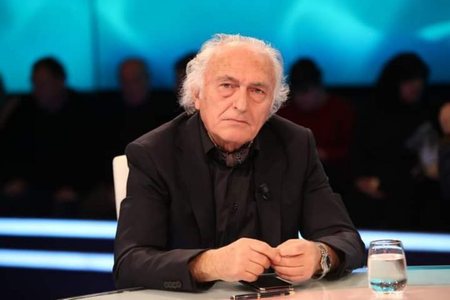
 Shkruar nga Lutfi Dervishi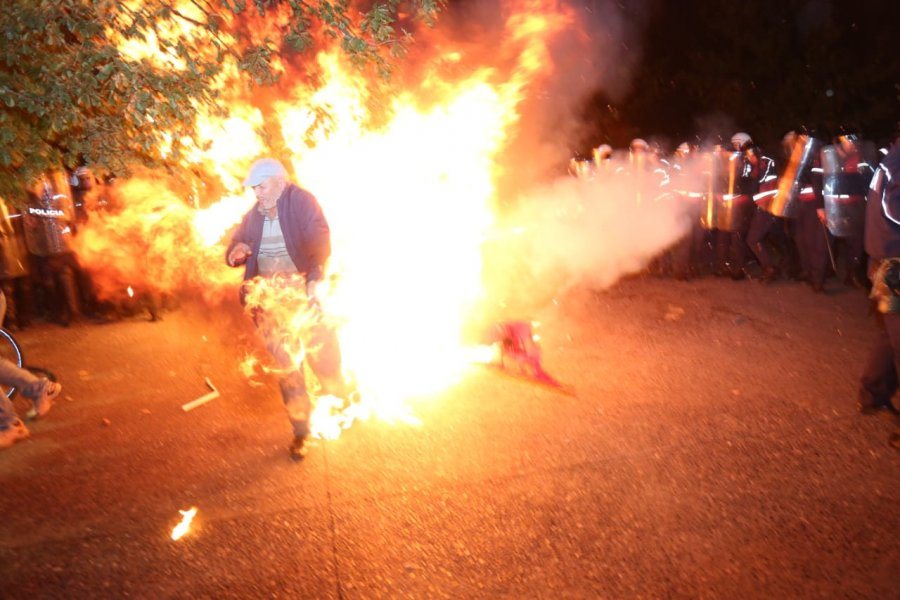
The protests so far do not create that mass feeling of resistance that could shake the government...
The opposition held another protest which, according to warnings, would be full of secrets and surprises.
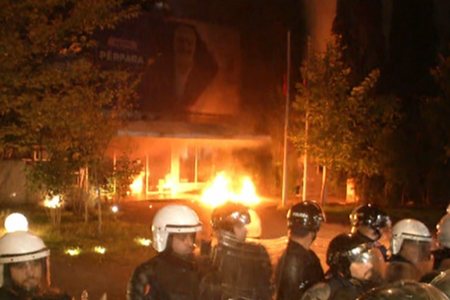
But the march offered nothing new except to expand the list of buildings hit with Molotov cocktails.
Was that a surprise?
In the classic theory of civil resistance, (the Gandhi case), resistance is peaceful.
The main aim is to defy the opponent by not obeying him, even when his demands are legitimate.
This is a form of protest which builds legitimacy for its cause through peaceful and mass action.
Massification is an essential; only when there is mobilization does civil disobedience achieve the desired effect.
This is the form of resistance that has historically been successful in confronting governments.
But the success of civil disobedience depends not only on the organization of the protesters, but also on the nature of the opponent.
As Gandhi himself emphasized, his success was achieved because he faced an opponent with institutional integrity, such as the British Empire, which was susceptible to moral and political pressure.
In the Albanian context, this factor takes on a special importance when you consider who is in front of you.
Currently, the country faces numerous challenges that directly affect the lives of citizens, and in a normal country protests should be organized by the affected, interest groups, or unions and not by parties.
The high cost of living is felt on the backs of every family, causing many disaffected to take the path of emigration.
This permanent exodus has emptied cities and villages, with serious consequences for today and tomorrow.
Today, university auditoriums were emptier than ever before.
It seems that the country is suffering more from demography than from democracy.
The government, instead of facing this demographic crisis and applying policies that promote the stay of young people in the country, seems to be focused on mass propaganda and the development of large projects, "Albania 2030".
In this context, the opposition is expected to offer solutions and be a bed to make room for growing discontent.
The protests so far do not create the kind of mass resistance that could shake the government.
Although discontent is on the rise, this does not translate into increased support for the opposition, as it is simply not convincing the disaffected.
Those dissatisfied with the government probably need to see new portraits, new people (not necessarily our age) and new ideas.
Citizens face constant price increases, pensions that are not enough to survive, and a general sense of pessimism about the country's future.
However, opposition protests seem to remain at a desperate level, oriented more towards spectacular acts than building a clear political platform that can convince the masses or an action that paralyzes and imposes.
Civil disobedience, to be effective, requires the opposition to be aligned with the disaffected, to pursue causes that directly affect them.
Without this connection, the protests turn into the next show in an endless cycle of political crisis.
If the opposition wants to be effective in front of the government, it should stop and listen better to the voices of the citizens, get out of the spectacle game and offer solutions that address the daily problems.
Without this kind of approach, every molotov thrown might produce a front-page photo, but it does nothing but further damage public confidence in the opposition.






Lini një Përgjigje