


 Shkruar nga Paolo Rossetti
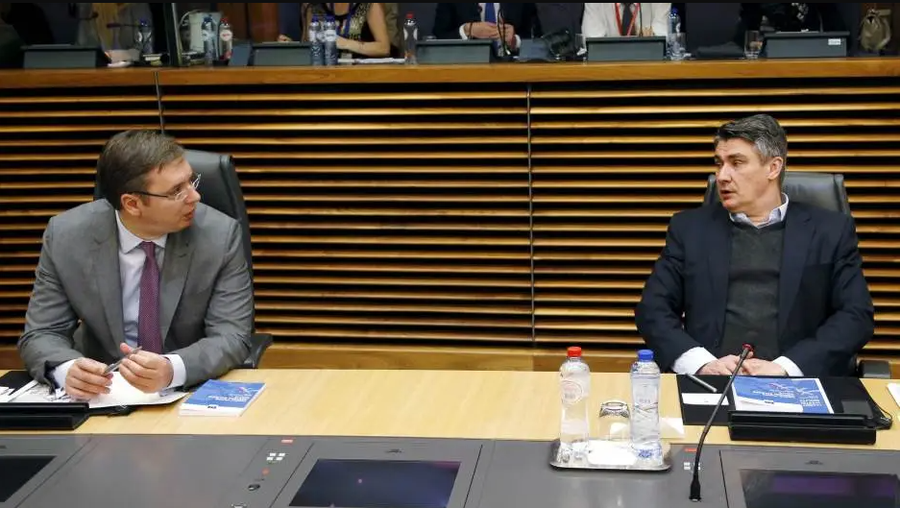
How the social crisis is being hidden behind the noise about armaments. The nationalist rhetoric of Zagreb and Belgrade is serving as a political tool to divert attention from poverty and internal economic failures...
Military recruitment, arms purchases, postponed institutional meetings. Croatia and Serbia appear to be in conflict, and some speculate that the tension could erupt into a clash with unimaginable consequences.
But in reality, explains Azra Nuhefendic, a Bosnian journalist and writer who collaborates with the Trieste daily, "Il Piccolo", both countries are so economically weak that they cannot even afford the support of soldiers, who fear they will be used as cannon fodder.
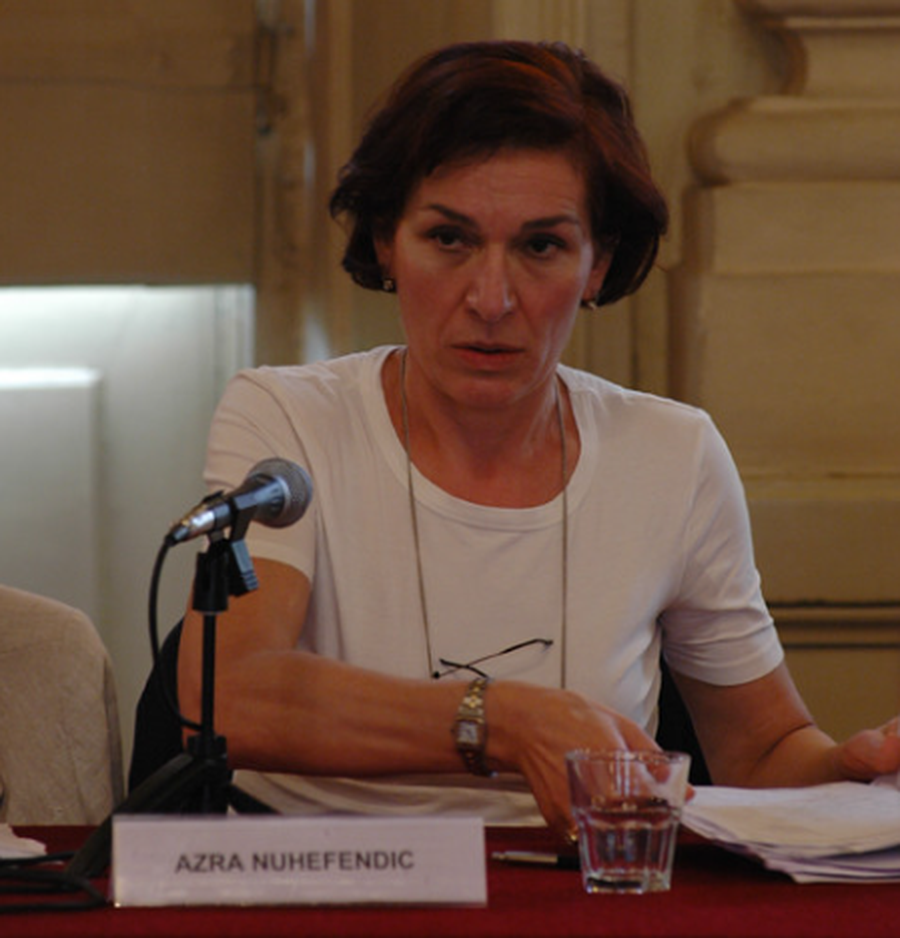
They are only trying to gain credibility with their public opinion in the name of extreme nationalism, behind which are hidden the serious social and economic problems of the two territorial realities that are being depopulated.
Meanwhile, Serbia and Croatia continue to interfere in Bosnian affairs, trying to persuade those parts of the population that are most similar to them in culture and religion.
Croatian President Milanovic has canceled planned meetings with Serbia. Is tension rising in the Balkans? And if so, to what extent?
It's all a sham. Neither country has the strength to do anything. They are "spitting" in their neighbor's yard, but without entering it. They can't do anything and they don't intend to do anything.
Everything they say is just for their public consumption. Both countries are in a difficult political situation, they are hyper-nationalistic, and this does not help boost the economy or create new jobs.
However, both countries are buying weapons. Isn't this a worrying sign?
The same thing is happening in Europe, even if there is no war. Europeans do not need the 800 billion euros in weapons and defense spending that the EU has planned. Behind this are lobbyists who promote rampant arms purchases according to 19th-century logic.
However, Croatia buys second-hand goods from other NATO countries. A country like Croatia, a member of the Atlantic Alliance and the EU, cannot attack Serbia, which in turn cannot afford to attack the Croats, given that they are members of these international organizations.
So, the disputes between Croats and Serbs are just for show?
They are showing the power of their populations, not to mention the fact that things are bad in these countries. Croatia and Serbia are depopulating because people can no longer live there, especially young people.
Serbia has experienced two years of very justified student demonstrations. But nothing happened. President Vučić still feels comfortable in power because he controls all the media; now he is trying to take control of the only media outlet that offers any kind of opposition, the N1 network.
Some time ago, conversations were intercepted between a Vučić loyalist and the owner of this network, where they discussed how to silence this last voice of opposition. This is the last media outlet not controlled by the president.
Is there a ruling class problem in the Balkans?
It is important to remember that many Serbian politicians had a hand in the war in Bosnia and Herzegovina, participated in the war in Croatia, and then converted from hardline communists to turbonationalists. However, Milanovic cannot deny Serbian tourists the right to visit the Croatian coast, because he needs them.
Meanwhile, some analysts have also expressed alarm because both countries have reinstated compulsory military service. Isn't this also a worrying sign?
They wouldn't know what weapons to give these soldiers, where to hide them, or how to feed them. It's all a ploy to distract from the real problems: there's no money, no jobs, no justice. In these countries, you have to fight the state. Basic rights are lacking, all systems are broken, and corruption is rampant.
Is the entire Balkans a disaster? When the world turns its attention away from the wars in Ukraine and the Middle East, will it finally realize that there is a depressed area of Europe?
Economically, they are selling everything. They did it with industry, and now with water, forests and land. Trump's eldest son recently visited Banja Luka, in the Republika Srpska of Bosnia. And he didn't go to lay flowers at the war memorial.
He had tried earlier in Belgrade to buy what was left of the former Yugoslav headquarters in the city center, and the people rebelled. Who knows what they will offer him this time? In these countries, the political class has been discredited, relying on the ideological apparatus of nationalism, on the Catholic Church in Croatia and the Orthodox Church in Serbia. But these are nations destined to crumble.
But isn't there a risk of a clash between Croatia and Serbia?
Serbia cannot do anything to Croatia and vice versa, yet both have never given up on the partition of Bosnia and Herzegovina. They interfere in Bosnia's internal politics, targeting the Orthodox population to undermine Bosnian institutions. Zagreb does the same with Catholics. But Serbs, Orthodox, Catholics and Muslims are all citizens of Bosnia. / Pamphlet from "Il Sussidiario"





Lini një Përgjigje