


 Shkruar nga Çapajev Gjokutaj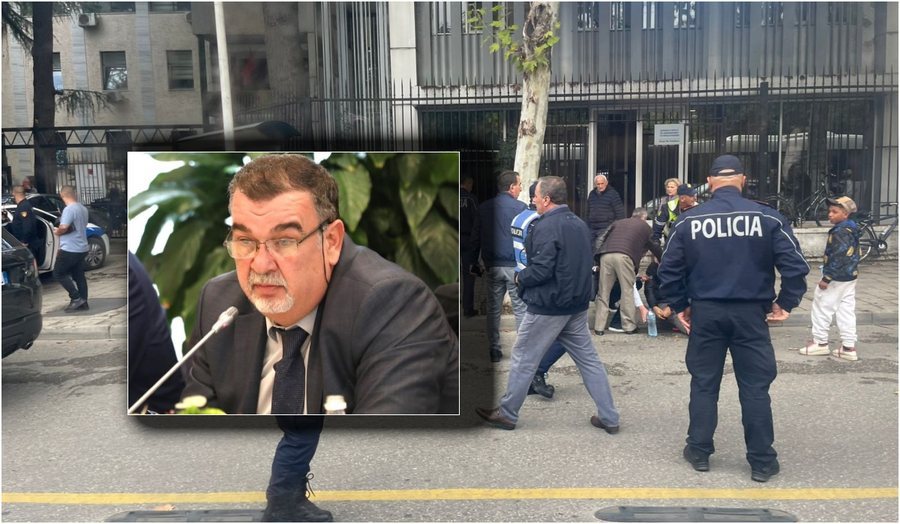
The murder of Judge Kalaja also testifies to another social scourge: the tendency of some young people to seek easy profits, without effort, without work, without creation. Instead of building values with sweat, they dream of inheritance, ready-made wealth, quick solutions.
The metal detector at the entrance to the Court of Appeals signaled the presence of the weapon that would be used to kill Judge Astrit Kalaja. But the security guard, instead of taking action, chose not to worry. This detail does not simply prove a technical negligence, it is also a painful metaphor that conveys the message that no matter how modern the technology is, no matter how well designed institutional reforms are, they do not achieve results without healing some flaws and fighting some vices on the social level.
In the discussions that followed the event, emphasis was rightly placed on the problems of the justice system: the lack of security in the courts, the overload of work, the endless delays, the wandering of citizens, the decline in trust in the judiciary as a result of the crisis of authority and the dubious practices of some judges, prosecutors and lawyers. All of these are acute problems that, if not addressed with seriousness and urgency, risk atrophying the judicial system and turning justice into an illusion. However, a significant shortcoming is noticeable: the almost complete ignoring of problems that are not related to institutional reforms, but to civic culture and social behavior. The murderer's act is not only a criminal offense, it is also a symptom of a deeper disease: self-justification as a way of thinking and acting.
The young age of the author proves that this trend is no longer fueled only by the Kanun or customary law, but by current factors such as: lack of trust in institutions, the hype of judicial processes by politicians and the media, the creation of “popular courts” in the media and social networks, where everyone dispenses justice according to emotions and not according to the law. This climate creates the idea that the law does not work, that institutions are incompetent and that justice should be dealt with according to the principle of “two hands for one head”. The murder of Judge Kalaja also proves another social wound: the tendency of a part of the youth to seek easy profits, without effort, without work, without creation. Instead of building values with sweat, they dream of inheritance, ready-made wealth, quick solutions. The work culture has faded, while formalism and drudgery are becoming the norm. The detector employee who ignores the signal is not simply a careless individual, he is a product and symbol of a society that does not value work, that does not reward dedication, that does not see merit as the foundation of institutional functioning. A society that does not value work also risks losing justice.
It sounds scandalous that on social networks a good part of the commentators, openly or implicitly, try to justify the murderer. The main argument is the prolongation of judicial processes, especially those for property. This approach, in addition to being dangerous, is indicative of a deep-rooted tendency to relativize violence when it seems like an “understandable reaction”. In this way, the weaknesses of the justice system are spoken of loudly, but a blind eye is turned and crime is amnestied. This is a silent form of moral complicity. In a country where many young people dream of inheritance, not creation; where work is seen as hardship, not dignity; where justice is sought with bribery or violence and not with legal arguments; where the law is good only when it gives us justice, – so in such a country not only the state has failed. The society that has tolerated this mindset, that has nurtured it with indifference, with justifications, with normalization of evil, has also failed. The state has the responsibility to guarantee security, to build functional institutions, to reform justice and to make it accessible and delivered on time, because justice delayed is justice denied. But society has the responsibility not to relativize violence, not to justify self-justification, not to see crime as an act of protest. When a murder in the courtroom is seen as an “understandable reaction”, then we have entered a dangerous zone where public morality has faded and risks turning into fertilizer that feeds vices, injustice and crimes. Therefore, it is not enough to seek technical and institutional reforms. A cultural change is also needed that aims at respect for the law, for work, for the institution.








Shikoni një pjesë nga deklarata e gjyqtarëve në takimin e datës 9 tetor: “Shteti nuk mund të kërkojë drejtësi të pavarur, nëse nuk garanton kushtet minimale për ushtrimin e saj”. Domethënë, nëse kushtet e punës dhe të sigurisë nuk janë të mira, gjyqtarët janë të justifikuar të japin vendime të padrejta. Deklaratë kjo e miratuar dhe e duartrokitur nga qindra gjykatës dhe drejtues gjykatash dhe cuditërisht e anashkaluar nga gjithollogët e paneleve të darkës. Wtf!