


 Shkruar nga Pamfleti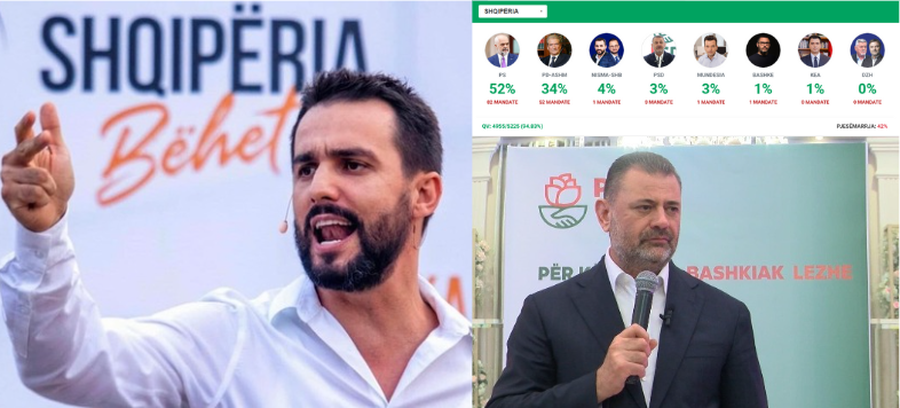
In the parliamentary elections of May 11, 2025 in Albania, it resulted that Adriatik Lapaj, leader of the Nisma Shqipëria Bëhet party, won only one mandate as a deputy with 3.65% of the national vote, while Tom Doshi, chairman of the PSD, secured three mandates with a lower percentage of votes, 3.42%.
This result has sparked renewed debate on the Albanian electoral system, which is based on regional proportional representation and uses the D'Hondt method for distributing mandates.
Although Albania Becomes, led by lawyer Adriatik Lapaj, managed to secure 3.65% of the votes nationally, so far this party has only been able to secure one mandate as a deputy in the Albanian Parliament. Meanwhile, the PSD, led by Tom Doshi, managed to be represented with three mandates, although it had a lower percentage at the national level, 3.42%.
And here begins the paradox of the system.
Regional proportional system and D'Hondt method, how does distribution work?
In 2008, the two political leaders, Edi Rama and Sali Berisha, reached an agreement and established the current electoral system known as regional proportional representation. The number of MPs in this system is determined according to a formula invented by Victor D'Hondt.
The formula is very simple. The number of votes received by each party is divided first by 1, then by 2, by 3, and so on until the number of mandates determined for the electoral zone is met. For example, in the Kukës Region, the votes of each party are divided by 1, by 2, and by 3. The result of the divisions is ordered from the highest number to the lowest number. The parties are allocated mandates according to the results of these divisions.
In Albania, the allocation of seats is based on districts and not on a single national list. Each district has a certain number of seats depending on its population and registered voters. This means that it is not only the total number of votes that is decisive, but also where those votes were cast.
The PSD, for example, had a high concentration of votes in several key districts such as Shkodra and Tirana, enabling it to cross the threshold in those areas and therefore win more seats. In contrast, the votes for Lapaj were spread across many districts, failing to cross the threshold to win seats in most of them – a clear disadvantage in a system where regional concentration is essential.
Reactions and demands for reform
Following the announcement of the results, many voices have begun to call for a review of the Rama-Berisha electoral system. Critics point out that the current model does not fully reflect the real will of voters at the national level, while favoring parties that have a consolidated base in certain specific regions.
Adriatik Lapaj himself has stated that this result is an indication of an injustice being done to the citizens' vote. He has emphasized that he will continue to fight for a more representative system, which gives value to every vote, regardless of where it is cast.
This is not the first time that the need for electoral reform has been raised in Albania. For years, political parties have promised changes, but so far there has been no consensus on substantive reforms that would make the system fairer and more proportional./ Pamphlet





Lini një Përgjigje