


 Shkruar nga Bella Barda Bareket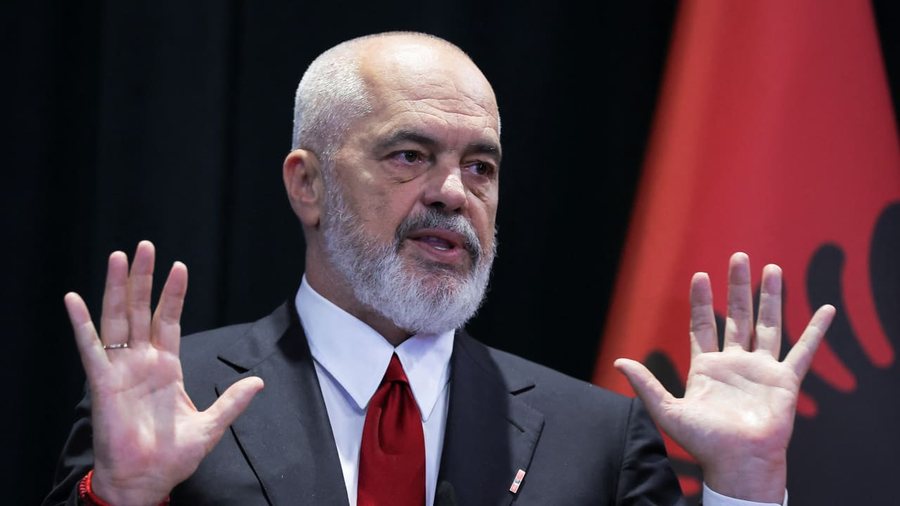
Albania's vision of a state run by codes stems from high levels of corruption, nepotism, patronage, and entrenched political networks...
At a time when public trust in leaders is eroding, Albania has unveiled a vision that sounds more like a proposal from Stanford's computer science department than from the corridors of Tirana, to become the first country where ministries are run by artificial intelligence.
Prime Minister Edi Rama suggests, half jokingly but half seriously, that government portfolios can be entrusted to algorithms, tireless functionaries who do not ask for a salary, have no ambition and, most importantly, cannot put envelopes in their pockets.
This vision stems from a very local wound: decades of corruption, nepotism, patronage, and entrenched political networks. If human beings have failed, perhaps machines can succeed. Supporters imagine a sterile, almost antiseptic reality: no favors, no collusion, no cousins who should win the tender. The algorithm, unlike the minister, does not ask for votes; it asks for formulas that produce results.
What is the source of corruption?
However, here the deeper question arises: Is corruption simply the sum of individual acts, or is it an entire social system embedded in a nation's political history?
Even if a minister of artificial intelligence were to operate with perfect efficiency, who would decide on the priorities? Who would set the parameters?
After all, behind every code stands a human programmer, with interests, worldviews, and prejudices.
In this sense, the algorithm is not an incorruptible oracle, but rather a digital mirror reflecting the mind of its creator.
To understand the Albanian experiment, we can turn to the ideas of Curtis Yarvin, the controversial political technologist who years ago proposed running a country like a technology firm. For him, a state is not an ideological battleground, but an operating system, with a CEO with absolute authority, a board of directors for oversight, and citizens as customers who expect quality service. Not a noisy parliament or endless party squabbles, just improved corporate efficiency.
The Albanian vision as a philosophical experiment
Albania, in some ways, pushes this logic further: not just a “starter state,” but a state where some leaders are no longer people at all, just code. An algorithm as deputy minister, or even as acting CEO. It sounds like a leap towards efficiency, but also a leap into uncharted danger. If the state is a company and the leaders are machines, then who owns the copyright to the code? Who controls the servers? Who holds the master keys to governance?
We can imagine Albania as a bold geopolitical startup, a small country trying to overcome the limitations of history and geography through technological revolution. However, as every startup knows, scaling is risky. If the algorithm fails, the failure is not personal, but systemic, and in a country, systemic failure can be catastrophic.
The Albanian vision is not simply a technological experiment. It is a philosophical experiment, examining the very nature of governance. Do we really want to transfer the levers of power from the human to the post-human? Is this the path to democratic salvation, or a slippery slope to digital dictatorship, where citizens no longer elect leaders, but download the latest version of governance software?
Ultimately, the answer will lie not in the algorithm itself, but in the society that chooses how to use it. Perhaps the real question was never who sits in the ministerial chair, but how we design institutions so that, regardless of who sits there, they serve the public.
Apparently, Albania has simply put this issue squarely on the table for the future. / Adapted from Jerusalem Post /







Lini një Përgjigje