


 Shkruar nga Pamfleti
The European envoy for the Kosovo-Serbia talks, Miroslav Lajcak, said on Thursday in Brussels that there is progress in the process of implementing some agreements reached in the talks, underlining that without the normalization of relations neither side can progress on the European path.
He made these comments during a debate on the expansion of the European bloc of the non-governmental organization "Friends of Europe", in which it was said that the normalization of relations between Kosovo and Serbia is of strategic importance.
"Without this normalization we cannot even dream of the European future. We have made progress recently in this direction. We will soon close the energy file, there is progress in the issue of license plates, in the issue of missing persons, in the issue of local elections in the north and in the implementation of the agreement on the road to the normalization of relations", said Mr. Lajçak, referring to the agreement reached on February 27 in Brussels and the agreement on March 18 in Ohrid on the ways of its implementation.
Next week, the European Union is expected to debate the enlargement policies, and within the discussions, the approval of the conclusions is expected, which has been warned that they will include the request that the European Commission make the Ohrid agreement part of the negotiations for Serbia's membership in the bloc, namely Chapter 35 of negotiations.
The conclusions are expected to be approved by the foreign ministers of the member countries in a meeting on December 12 and then by the European Council, in a meeting of leaders that will carry out the work on December 14 and 15.
The Serbian President, Aleksandar Vucic, said on Wednesday that there is a possibility that the Ohrid Agreement will become part of the membership negotiations.
The agreement requires good neighborly relations between Kosovo and Serbia, recognition of documents and symbols and respect for each other's sovereignty and territorial integrity. It requires that the parties do not hinder each other in the integration processes, but it does not require mutual recognition. The plan also envisages the fulfillment of all agreements previously reached in talks mediated by the European Union.
But Serbian President Vucic reiterated that for Serbia it is unacceptable for Kosovo to "join the United Nations".
"I have met with the French, the Germans, the Italians, all the Europeans, the Americans, about this. Everyone knows this", said the Serbian president in an interview for the exclusive Serbian magazine, NIN. According to him, if all the points of the agreement are included in the conclusions of the block, "the doors of the EU for Serbia will be closed".
Since the beginning of talks on the normalization of relations between Kosovo and Serbia in 2011, the West has emphasized that this is a condition for European integration.
A spokesperson for the US State Department told VOA that the United States continues to strongly support EU-facilitated talks as the only way to achieve a peaceful relationship between Kosovo and Serbia.
"For this reason, we repeat our calls to the governments of Kosovo and Serbia to make concrete progress in the commitments they have made under the normalization agreement and we expect both countries to fully implement all their obligations under the Basic Agreement and the annex of its implementation", it is stated in the response of the DASH spokesperson, which reiterates the commitment of the United States to support Serbia, Kosovo and all the countries of the Western Balkans to fulfill their aspirations for European integration and membership in the institutions Euro-Atlantic.
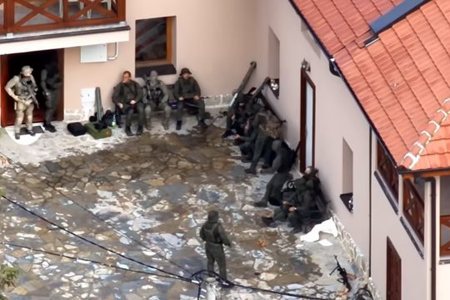
But the Ohrid agreement did not reduce tensions between the parties, which worsened at the end of September after an attack on the Kosovo police by a group of armed Serbs, in which a police officer was killed.
In the project of the conclusions of the meeting of the EU member states, Serbia is requested to bring to justice the perpetrators of the September 24 attack, the responsibility for which was taken by Milan Radoicic, former vice-president of the Serbian List, the main party of the Serbs in Kosovo. which enjoys the support of Serbia. Belgrade has so far denied any connection with the attack.
The Minister for Communities and Return in the Government of Kosovo, Nenad Rashiç, said on Thursday that the name of Milan Radoiçiç is on the list of wanted by the International Police (Interpol). According to him, the request was made through the United Nations Mission, since Kosovo is not part of Interpol due to the opposition of its independence from Serbia and its ally Russia.
The events of September 24 were followed by an increase in the presence of peacekeeping forces in Kosovo, but also an increase in Western efforts to urge the parties to accelerate the normalization of relations, amid concerns that Russia may try to foment conflict in the Balkans, to avoid attention from its aggression in Ukraine.
On October 26, the highest European leaders asked Kosovo to start the procedure for the establishment of the Association of Municipalities with a Serbian majority, while Serbia to recognize the de-facto citizenship of Kosovo.
They told both sides that in the absence of progress on the normalization of relations, they risk losing important opportunities in the first place for European integration.
Serbia has announced these integrations as its goal, but has refused to join Western sanctions against Russia due to its aggression in Ukraine, primarily due to the Kremlin's support of Serbian claims to Kosovo.
The American ambassador to Serbia, Christopher Hill, said on Thursday in Brussels that the European Union must prove that this time the possibility for integration is real, while underlining that Serbia is doing a lot in the reform process as well as in its aid to Ukraine.
"Serbia is doing a lot for Ukraine, but please don't make a big deal out of it, because it wouldn't be in the interest of everyone in Serbia", said Ambassador Hill, without giving more details about what kind of aid it is./ VOA


Lini një Përgjigje