


 Shkruar nga Pamfleti
Among the major European countries, none currently seems more open to this process than Spain...
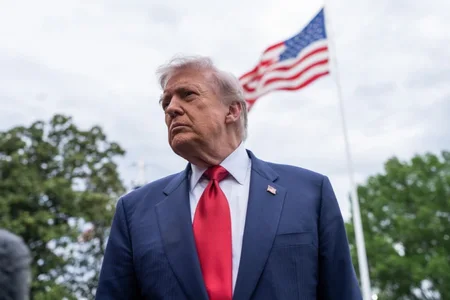
The summit between Xi Jinping and Donald Trump in Beijing risks producing a paradoxical consequence for Europe. The more Washington tightens its market in response to China's industrial overcapacity, the more Beijing is interested in consolidating its manufacturing presence directly within the European Union. And among the major European countries, none currently seems more open to this process than Spain.
The issue has come up strongly in recent weeks, even in the American debate. The risk is that the US's tough measures against Chinese electric cars will ultimately turn Europe into China's main industrial hub. This dynamic is mainly about electric vehicle production, batteries and green supply chains, but it has much broader implications: technological dependence, economic influence and strategic penetration.
In this context, Spain is taking on an increasingly central and increasingly controversial role. For years, China has tried to build political influence within the European Union through the 17+1 format, focusing mainly on Central and Eastern Europe. This project has now largely failed. In the wake of the pandemic, the war in Ukraine and the intensification of geopolitical confrontation, many Eastern European countries have drastically reduced their enthusiasm for Beijing. The Baltic countries have withdrawn from the format, the European political climate has become much more Atlanticist and China’s room for maneuver has shrunk. But the relative failure of the 17+1 does not mean that Beijing has given up exploiting Europe’s internal differences. It has simply changed its approach.
The new leverage is no longer primarily diplomatic. It is industrial. China is no longer simply looking for favorable political interlocutors. It is looking for countries willing to absorb Chinese capital, production facilities, supply chains and technological presence within the European single market. And this is where Spain comes into play. In recent years, Pedro Sánchez's government has progressively adopted a much more open stance towards China than other major European economies. Madrid has increased its contacts with Beijing, supported industrial partnerships in the green sector and welcomed Chinese investment in strategic sectors such as batteries, electric cars and logistics. CATL, Chery, Leapmotor: the list of Chinese groups investing or planning production in Spain continues to grow. The logic is clear. While the United States is becoming an increasingly hostile market, Europe remains the main Western space accessible to Chinese industry. And producing directly within the European Union allows it to bypass tariffs, trade tensions and some geopolitical pressures.
Spain offers exactly what Beijing is looking for: relatively competitive costs, a need for reindustrialization, and a government that politically supports attracting foreign investment as part of the green transition. The problem is that this openness is taking on dimensions that are starting to raise not only economic but also strategic questions.
The most emblematic case is perhaps that of the CATL-Stellantis gigafactory in Aragon. In recent weeks, the Spanish press has reported on a story that, outside of Spain, has received far less attention than it deserves: the expected arrival of approximately 2,200 Chinese workers to support the launch of the industrial project. For a small area near Zaragoza, this represents a major impact, almost an unexpected demographic transformation directly linked to a Chinese investment. But the most politically important factor is another: the level of operational and technological dependence embedded in these projects. Because importing Chinese labor in such large numbers signals that this is not simply foreign capital integrating into a European ecosystem. This means that Beijing is exporting entire segments of its industrial structure: management, knowledge, supply chains and specialized personnel. This is precisely the point of growing concern in Brussels and several European capitals.
The issue is not just about trade. It is about controlling the industrial supply chains of Europe’s energy transition. China currently maintains a structural advantage in batteries, the refining of critical materials, and the production of electric vehicles. If this advantage translates not only into exports but also into manufacturing roots within Europe, the risk is that the continent will develop new forms of strategic dependencies as it seeks to reduce existing ones, from Russia for gas to the United States for security.
And this is where the European debate is increasingly divided. On one side are France and part of the European Commission, which see China's industrial overcapacity as a strategic risk and are pushing for more aggressive protectionist measures. On the other, there are developing countries that consider greater industrial integration with China inevitable, or even desirable, especially to accelerate the green transition at lower costs. Spain is increasingly placing itself in this second group.
This does not mean that Madrid has become a geopolitical ally of Beijing in the Hungarian sense of the term. Spain remains fully within the Euro-Atlantic framework, supports common European positions, and has not developed the ideological relationship with China that characterizes the Orbán model. But this very difference risks making the Spanish case even more significant.
Because the issue is not the emergence of openly pro-China governments within the Union. The issue is the normalization of the growing industrial dependence on China within Europe's major economies, presented as simple economic pragmatism. In this sense, Spain could become something more sophisticated than a political Trojan horse. It could become a laboratory for Chinese industrial penetration, which is much harder to counter because it is integrated into Europe's very green transition.
And this is perhaps the real strategic implication of the Xi-Trump summit. The more the clash between Washington and Beijing intensifies, the more Europe risks becoming the playground where China indirectly consolidates its industrial presence in the Western world. And today, more than any other major European country, Spain is the place where this dynamic is becoming apparent./ Adapted by “Pamphlet” from “Linkiesta”




Lini një Përgjigje