


 Shkruar nga Pamfleti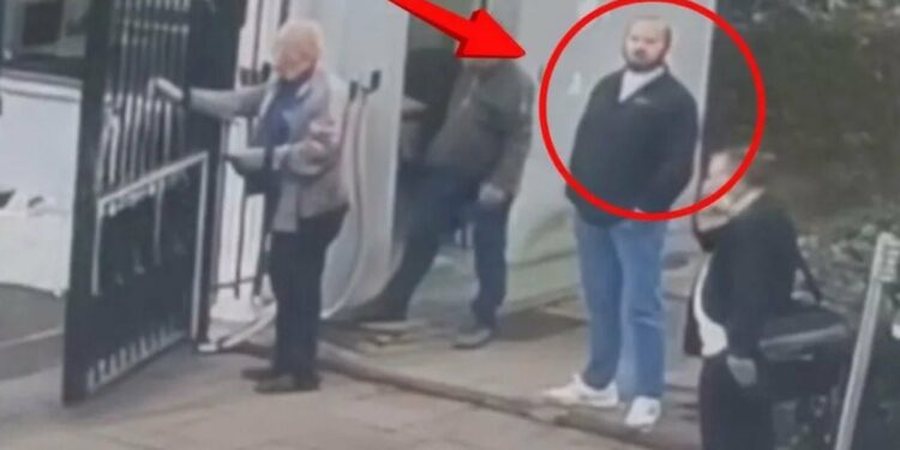
It all started as a normal civil hearing. Elvis Shkambi, with a cold look, entered the Court of Appeals building at around 3:10 PM.
The security check at the entrance was formal. The metal detector gave signals that the person in question had metal objects, but the security guard, due to the workload in that institution, neglected...
Neglected, as the Court of Appeals detector signals for most of the people passing by, where someone has a belt, another a bag handle, and someone various metal accessories.
The security guard, Banush Koxhaj, did not perform a physical search, even though the flashing lights indicated the presence of metal, without realizing that Elvis had not only put the belt on his belt, but also a Beretta pistol.
There were about 10 people in the courtroom: the late Judge Kalaja, the parties in the process, the legal representatives, and the bailiff. After the presence of the parties, at around 3:30 PM, Judge Astrit Kalaja announced the preliminary decision to dismiss the Shkambës' request for a stay of execution.
It was a technical, temporary decision.
Essentially, it was not a decision that decided on property. But, for the Shkambi family, it was synonymous with loss and the continuation of the ordeal. At the moment when the judge was reading the reasoning, Elvis Shkambi, sitting in the back bench, placed his hand on his belt.
No one noticed. At one point, he stood up and walked forward, as if he wanted to speak. After he had taken three steps closer, the first shot was heard. A bullet hit the judge in the left side of the chest.
"The moment the decision was announced, I felt bad, my vision went dark. I took out the pistol I had with me and shot. My patience was exhausted. This was the final act after the injustices that were being committed with the property that my family and I owned," said Shkambi.
Witnesses say that the judge fell on the table, while a white file was stained with blood. The perpetrator was not satisfied with that, but shot again. This time towards the plaintiffs, father and son, Ervis and Rakip Kurtaj. The 45-year-old son, after leaving the courtroom with his father, instinctively covers the latter with his body to protect him from the bullets. At this moment, the perpetrator lowers the gun, stops shooting. He heads towards the security guard and calmly hands him the pistol, as if he had done nothing.
"I continued shooting again. I didn't use up all the bullets, I still had 3 bullets left. At the moment I was shooting, I realized what I was doing, that's when I stopped shooting and went and handed the pistol to the security guard, went outside and waited for the police to come so I could surrender," said Shkambi.
The first patrol arrived at the scene 6 minutes later. Elvis Shkambi was still in the yard, standing, waiting for the blue uniforms. Not only did he not resist, but he was calling out to the disoriented police officers to arrest him, since he was the perpetrator of the crime.
He was handcuffed together with his uncle John, who was talking on the phone with someone at the time. Eyewitnesses say that after the shooting, everything turned into chaos, with no one understanding what had happened.
According to witnesses, in the cramped corridor, terrified lawyers, parties to other trials, and administrative staff rushed out of the courtroom. Others entered the waiting room.
The testimony of the perpetrator of the serious act before the Tirana judicial police officers is shocking. When asked about the crime weapon, he said that he had been carrying it with him for a long time. More shocking is the fact that this was not the first time he entered the courtroom armed.
"I've had the gun for a long time. I keep it because I have some of my own business with it. I have entered the courthouse premises armed on other occasions, this is not the first time. In most cases, I have had the gun with me," Shkambi said in his testimony.
At first, the event seemed like a sudden outburst of anger, an emotional reaction to a court decision. But the investigation that followed revealed a chain of failures and responsibilities that led to the extreme act. Not towards the late judge, but towards the system. He was the unfortunate victim of the system. There was not just one perpetrator in that courtroom. It was an entire system that didn’t work.
"The target, I am convinced, was the system, the frustration it may have produced. I think this weapon was also aimed at the court, because the execution was carried out at the most solemn moment. When the court speaks, the parties must remain silent. They did not remain silent, but were shot and took a life, a life that is sacrificed for the sins of the entire system," said Gerti Shella, director of INFOCIP.
"This story of negligence shows that the crime and leaving judges and prosecutors at the mercy of fate is not a new story that is being revealed now that Astrit Kalaja was murdered, which from all the dynamics revealed, shows that the access control system had failed, as long as even the justice system itself admitted two years ago that there were problems," said journalist Anila Hoxha.
According to the prosecution's investigations, Elvis Shkambi did not accidentally enter the courthouse with a weapon. The fact that the perpetrator had entered the courthouse armed on other occasions leads to reasonable suspicion that everything was planned, together with his uncle, Gjon Shkambi, who is also the representative of the Shkambi family in all court proceedings. Gjon, who was also present at the hearing, is accused of collaboration in the events. He is being investigated for the murder of public officials in collaboration and for murder in other qualifying circumstances. /TCH






Ngushellime familjes se gjyqtarit. Prokuroria fuhet te hetoje ne thellesi te ceshtjes. Cilat ishin arsyet qe cuan kete djale te ri ne kete akt? A kemi te bejme me shtet apo nje bande kriminale brenda struktures se shtetit sepse ne cdo vend te botes eshte jashte cdo llogjike qe pronaret te sorrollaten 30 vite neper gjyqe.