


 Shkruar nga Pamfleti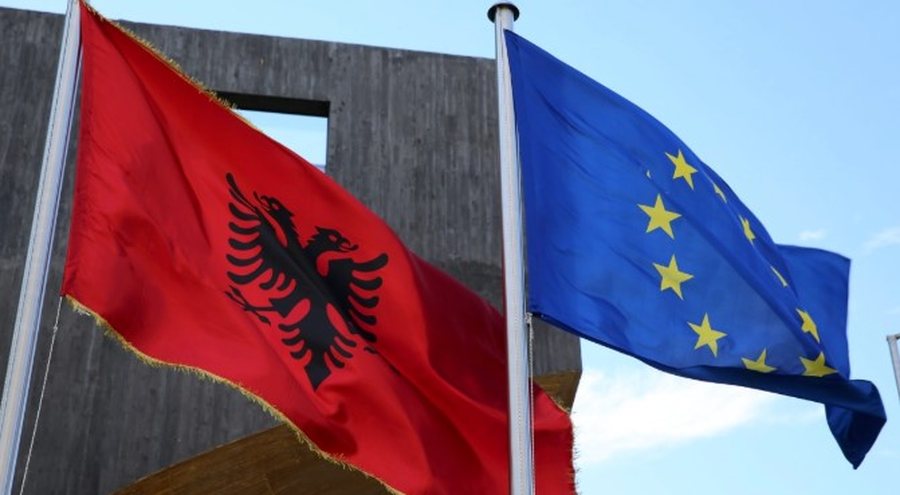
Albania may open de facto negotiations this fall, while it is expected to secede from North Macedonia, which has stalled on the path to integration following Bulgarian demands for changes to its constitution and the messy domestic situation in Sofia.
This is what journalist Alexandra Brzozowski of Euroactiv writes.
Analysis by Alexandra Brzozowski:
For most EU hopefuls, in addition to their reform and approximation efforts, the next five years will depend on how the European Commission and member states decide to approach enlargement. Next week may provide some answers.
The outgoing EU executive will still be responsible for presenting the final reports on the extension of this mandate in mid-October, according to sources familiar with the matter.
These usually extensive and detailed technical reports can, this time, show which EU candidates have made significant progress moving forward in the next institutional cycle.
While the expectation is that the language will be positive for Ukraine and Moldova, whose review of national legislation is due to be completed in early 2025, some Western Balkan countries may also see a move in their progress this fall.
Montenegro can hope to close several chapters of negotiations after its new government provided momentum and perspective towards domestic reforms.
Albania could begin de facto accession talks this fall, EU officials say, breaking away from North Macedonia, which remains held back by Bulgarian demands for changes to its constitution and Sofia's messy domestic situation. .
Georgia, meanwhile, is heading for crucial parliamentary elections on October 26 that could either put it back on track with the EU or further fray ties with the bloc after Brussels froze high-level visits and military aid to Tbilisi due to of the adoption of the controversial law on "foreign agents".
The new Commissioner of Extension.
As Euroactiv reported a few months ago, the post is expected to be upgraded to reflect the greater political importance of the portfolio, with the division of enlargement and neighborhood policies.
The latest leaks ahead of European Commission President Ursula von der Leyen's announcement next week suggest the portfolio will be titled "Enlargement and Reconstruction of Ukraine".
Latvian Valdis Dombrovskis is currently a front-runner for the post, according to sources familiar with the matter, due to his technocrat skills, patience and his country's staunch support for the bloc's eastern neighbour. His extensive economic background can be useful in tackling the problems of reconstruction, which is expected to be a mammoth task for years to come.
The commissioner-designate's mission letter, which outlines von der Leyen's chosen task, could indicate when the next EU enlargement might take place.
Senior EU officials have, over the past two and a half years, argued that the current geopolitical situation meant it was necessary to speed up the procedures, which the previous Juncker Commission essentially stopped, resulting in almost a decade of stagnation.
Beyond who will be the next head of enlargement, the bloc faces a key challenge for the next five years: how to match its ambitions with reality as it expands and admits new members.
This will affect negotiations on the EU's next long-term budget in the autumn, and talk about political reforms and how to operate the potentially 35-member bloc plus one day, which is expected in the coming years.
Perhaps, a radical change in the way the EU works is needed.
Enter two former Italian technocrat prime ministers who have teased providing at least some solutions to these issues.
With some EU member states and sectors likely to be more exposed than others from future rounds of EU enlargement, Enrico Letta proposed earlier this year that a new fund is needed to offset the imbalances ./ EUROACTIVE .






Lini një Përgjigje