


 Shkruar nga Pamfleti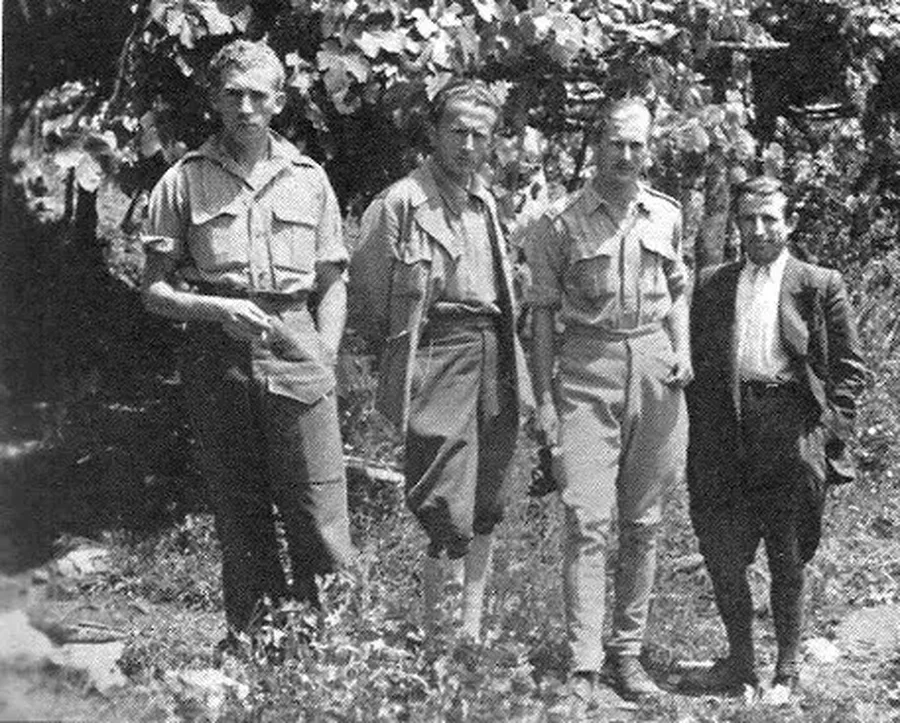
Mustafa Gjinishi was an outstanding and special personality of the Albanian progressive left, in the struggle for liberation and national unity. He became such, as a result of the patriotic and democratic tradition of the Peqin region and the Gjinishi family, a product of his time, qualities and unusual will. The Gjinishi family influenced the formation of young Mustafa. His father, Ademi, took an active part in raising the national flag on November 26, 1912 in Peqin. He was a Peqin delegate, in the Lushnja Congress, in 1920 and a supporter of the democratic wing. He was killed by the people of Shefqet Vërlac, in 1923.
Enver Hoxha himself and the General National-Liberation Council had appointed Mustafa as a coordinator and translator with the British, who were our allies in the Anti-Fascist War. It was Enver Hoxha's diabolism, malice, contempt, rivalry and fear of Mustafa, capable, open, intransigent, popular, admired by the Allies. The British officers who were in Albania at that time, without exception, appreciated Mustafa Gjinish.
Xjulian Emeri wrote: "From the meetings we had with Albanian leaders, Mustafa Gjinishi, whom we all knew, had knowledge of international developments"! (Julian Emeri, Book "Sons of Shqipe").
While Hibbert, in the book "Bitter Victory", writes: "If you use communist terms, 'Gjinishi was an opportunist' with extensive contacts with many nationalists and sectors of Albanian life, expressed himself in favor of extensive national efforts against the invaders, was popular in the partisan forces, had the desire and ability to work constructively with foreigners from the West and determined to be the initiator of national reconciliation"!
The head of the English Mission, General Davis, describes him like this: "He spoke English well, which gave him an advantage in relations with us, but raised suspicions. When we got to know him, we agreed to cooperate and talk with him, as he was a reasonable person. Also, he had a nice sense of humor. If Mustafa were to lead the state instead of Enver, he would hardly become a toy in the hands of Russia." (General Deavis, "Illyrian Adventure").
The head of the Allied Section for Albania, lieutenant colonel Filip Lik, who had come to Albania on May 10, to see the situation for himself, refused Enver Hoxha's invitation to participate in the Përmet Congress. According to him and the British government, it was an illegal congress, which committed the National Liberation Army to take power before the end of the war, unlike what was decided before and excluded all other political factors, which, according to Hoxha, should to be destroyed, etc.
The Allies did not recognize the congress and the government (Committee) that emerged from it and declared that; "they would not recognize any government that would be elected by the force of the army, but only by popular elections after the war". (FO 371/43554 PRO)
The British colonel, with his adjutant, sent a letter to Mustafa Gjinishi, where he explained the reasons why he did not participate in the Përmet Congress. Enver Hoxha presents this fact in front of the Yugoslav colonel, Stoinič, in Berat: "We saw when the colonel sent the letter to Mustafa and he sings it and returns the answer with an envelope. Miladin approached Mustafa and said: 'What is that letter about?' It's nothing, Mustafaj tells him.
'You are the man of the English, Miladini tells him in Albanian. Mustafa answered him; I am not a traitor" (AQSH, Fund 14, D.2, Year 1944) In this dialogue, one of the tragic truths of the National Liberation War is synthesized. At the head of the Albanian Communist Party and the National Liberation War were Miladin Popovici and Dushan Mugozha, from whom Enver Hoxha took orders.
"Who has led our Party? Our party was led in work by 'Aliu' (Miladin Popovici's war nickname), in the leadership was 'Aliu', Enver's right hand" - says the member of the Central Committee of the KPSH, Liri Gega. Here's what Enver Hoxha himself says: "The main ones were 'Ali' and Dushan. Everything that 'Ali' said, was finished. The terrorist streak is strong in Dushan, who killed more than Mehmet. Ke 'Ali' was on the moon. At this point, I was Ali's mirror, that is, when he said that he is doing this, then we decided to kill him...! We didn't weigh anything! Slogans; o with us, o against us', was on the agenda...! As for Mustafa Gjinishi, it was different. We think it should have been done….”! (CSO, P.14, d.2, Plenum of Berat).
Enver Hoxha was conscious and determined to kill Mustafa. "It had to be done" - he confesses. It is clear, Hoxha was a professional terrorist, who raised his career on the murders, not only of political opponents, but also of the closest and most precious friends of the Anti-Fascist War. Enver Hoxha was a model, who surpasses even the Usta and his idol, Stalin, for the crimes he committed.
Yesterday's and today's insidious attempt to manipulate that Enver Hoxha was "bad", after the War and "good", during the War, is a deviation from the true story, a fraud and a miserable attempt to rehabilitate him. Enver Hoxha committed the biggest crimes during the war, political crimes and crimes against humanity, such as the crime against Mustafa Gjinishi.
Precisely, in Përmet, the physical elimination of Mustafa Gjinishi was decided by Miladin Popovici and Enver Hoxha. But its annihilation was planned long before. In the letter that Enver Hoxha wrote to Nako Spiru, he said: "We don't like Mustafa's work, the issue of Mukje, as well as the message of Radio-London about 'Tafari', etc. His connections and movements must be controlled.
Me Mustafanë duhet të lozim një lodër me shumë kujdes…! Mua nuk më mbushet mendja dhe po më bëhet një ide fikse, çështja e Mustafait. Prandaj duhet t’i hetosh mirë lëvizjet e tij…”! (Letër dërguar Nako Spirut, më 4 tetor 1943). Po kështu Enver Hoxha i jep porosi Liri Gegës, për survejimin e Gjinishit në Dibër.
Nga ana tjetër, Miladin Popoviçi kërkonte kokën e Mustafait, sepse ky shtronte zgjidhjen e drejtë të çështjes së Kosovës dhe kundërshtonte politikën “përça e sundo” të emisarëve jugosllavë. Miladini i shkruante Koço Tashkos: “Në qoftë se kërkohet se kush e ka bërë pyetjen; ‘Si qëndron çështja e Kosovës’, po jua them se e kanë bërë ‘Dinoja’ (Koço Tashko, shën.im, U.B.) dhe ‘Tafari’ (Mustafa Gjinishi, shënimi im, U.B.), tue thanë se e tanë Shqipnia. asht e preokupueme prej këtij problemi.
Të gjitha çështjet, vijnë prëj idenave jo të qarta e të errëta, që i kombinon ti, shoku ‘Dino’ me ‘Tafarin’, për çështjen nacionale. Ju kini mbërritur shumë larg në hipoteza dhe e kini shtrue çështjen e Kosovës shumë tragjike dhe si çështjen më aktuale në Shqipëri”.
Miladini sulmonte Koço Tashkon: “Akuza ‘përça e sundo’ që shkruan ti për mua, është thënie e ‘Tafarit’, që e don aq fort ti dhe e merr hua me aq vullnet. Vetëm se ai do të përgjigjet për këtë, një ditë”. Por kërcënimin me jetë e ka për Mustafa Gjjinishin, që e vuri në zbatim bashkë me Enver Hoxhën.
Vetë Mustafai e kishte nuhatur që do ta eliminonin. “Kanë frikë nga unë se kam shumë simpati në popull, – thotë Mustafai. – Kanë frikë nga unë, pse kam simpati për anglezët. Kohët e fundit kam pasur një bashkëfjalim me Enverin, me të cilin jam grindur shumë”! (Informacion i Gogo Nushit, për Mustafa Gjinishin, 23 gusht 1944)
Edhe e motra e Mustafait, Xhemilja, që rrinte në shtëpinë e Myslym Pezës, tregon: “Më çojnë në Veri për të më vrarë, i tha Mustafai Babë Myslimit. – ‘Ikë jashtë shtetit’,- i tha Baba. ‘Jo, më mirë të vritem, sesa të iki si dezertor nga Shqipëria. Unë s’kam ba ndonjë faj!- ia ktheu Mustafai. – ‘Për ty do ta çoj gjakun, në gju të kalit’! i tha babë Myslimi”.
E transferuan Gjinishin nga Peza në Dibër dhe përgatitën skenarin për ta vrarë. Zbatimin ia ngarkuan Liri Gegës dhe Shefqet Peçit. Kur grupi i përbërë prej Liri Gegës, e dërguara e Komitetit Qendror në Korparmatën e I-rë, Mustafa Gjinishit, i dërguar i Këshilli i Përgjithshëm Nacional-Çlirimtar dhe majori britanik, Smith, pranë asaj Korparmate, si edhe shoqëruesit e tyre, po kalonte nga Peshkopia në Slatinë, atij i ishte bërë një pritë, e organizuar nga Liri Gega dhe Shefqet Peçi.
Kaloi pararoja, kaloi edhe Liria me shoqëruesit, ndërkohë që para pritës u shfaq Mustafa Gjinishi dhe majori Smith mbi kuaj, u godit me dy të shtëna vetëm Mustafai, që ra i vdekur përtokë. Majori Smith, u kthye pas për në Peshkopi. Ishte data 23 gusht 1944. Siç tregon shoqëruesi i Mustafait, Fadil Thartori, prita ishte përgatitur, qysh më parë, për të vrarë Mustafanë.
"He was shot with two bullets in the forehead and in the heart. Shaking and crying, I started checking my pockets. The passport and other documents were pierced from the front, that is, that Mustafa was not shot from behind, as was said later. You handed over Mustafa's documents and weaponry to Liri Gega in Slatina. No one asked me when this murder happened".
Liri Gega immediately informed Enver Hoxha by telegram. Here is the content of the first telegram:
Telegram. Reserves...! Secret code (for Enver).
Everything was done according to your order. Wait for the next radiogram.
"Muzhiku" (pseudonym of Liri Gega)
Enver Hoxha himself accepts the contents of the telegram: "The telegram said; 'The job was successful'. This was Mustafa's work". (AQSH., Fund 14 D.2, Year 1944).
Enver accepts this murder, because it became known by everyone, even in the press of the time, even by the British. He also accepts it as a threat to others. However, initially, Hoxha tried to cover it up, like many other political murders. On August 26, 1944, that is, after three days of silence, only when he received a radiogram from the Allied General Headquarters about the murder of Mustafa Gjinishi, he declared him a hero, fallen in the war against the Germans. What ridiculous hypocrisy.
What does Sejfulla Malëshova say?
"For the first time I found out about Mustafa Gjinishi's work and I don't know why. One of the two: Either he has been a traitor to the Party and the people, today when we are at war and then, we should have taken the steps, or he has made a mistake and people are not killed for mistakes. In addition, on the one hand, they kill Mustafa Gjinish, on the other hand, they call him a hero in front of the people and organizations. These Jesuit methods have nothing to do with the Communist Party..."!
This is how Gogo Nushi conveys the experience of Myslim Peza:
"...Last night we learned from Radio-Bari about the murder of Mustafa Gjinishi. We informed Myslim Peza, who was very upset and did not say a word. After a few hours, he started drinking brandy in front of more than 50-60 people, he started talking: 'Mustafa was killed by his friends, because he was better than them.
I asked him to come to Peza, both Mustafa and Hasan (Reçin), but they did not let Ramadan Çitaku, whose mustache I cut off. Mustafa, before leaving Përmet, told me that; they send me to Diber and there they will exterminate me...! My friend Enver told me about Mustafa, that he should be shot"! (From the letter of Gogo Nushi, sent to the Central Committee of the ALP, F1. 4, D 44).
The body of Mustafa Gjinishi was buried with honors in the Martyrs' Cemetery of Peshkopia. A few days later, by order from above, his bones were exhumed at night and thrown into a stream, so that he would take them with him and not even the traces of the grave would remain. This happened 80 years ago. What about now?! Today, people talk and write about the Anti-Fascist War, about Peza, about the Allies, about Enver Hoxha and those who killed Mustafa Gjinish, but not a word about Mustafa Gjinish?!/ Memorie.al


Lini një Përgjigje