


 Shkruar nga Dashnor Kaloçi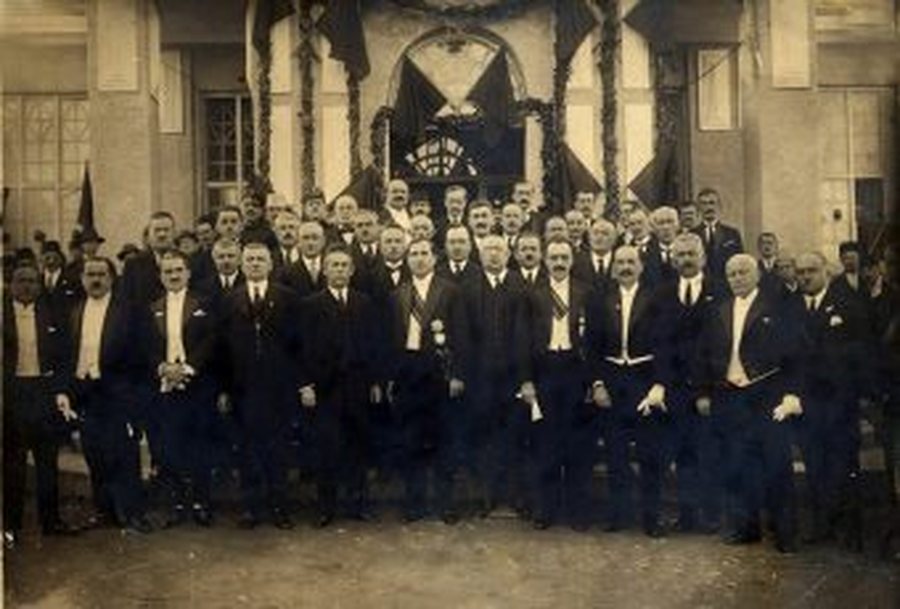
The history of parliamentary elections in our country, or rather attempts at elections, dates back to the time of Ottoman rule, when Albania was part of the Turkish Empire. One of the first Albanian deputies elected to the first Parliament of Turkey, which opened its work in December 1877, was Abdyl Frashëri. But that parliament did not last long, as it was dissolved by the Sultan himself, due to the start of the Russo-Turkish War. After the dissolution of the first Parliament of Turkey, there were several other attempts at elections, but all of them failed for various reasons. The first and regular elections in Albania were held only in 1908, when the Young Turks came to power in Turkey. Those elections were not direct, but with representation, or as they are otherwise known; with second electors.
The first parliament of Turkey opened on December 10, 1908, and out of 266 deputies, 27 of them were Albanians elected in the four vilayets of Albania. At that time, the members of the “Union-Progress” Committee in Turkey, which included many Albanians, were divided and grouped into three political groups. The first group was “Union-Progress” (the Turkish-Macedonian party) with 164 deputies, of which 130 were Turks, 5 Arabs, 1 Greek and 15 Albanians, who were led by Hasan Prishtina, a deputy from Kosovo.
In the second group called: “Liberal Union”, (Greek-Albanian party) which included 45 deputies, there were 12 Albanians who were led by Ismail Qemali. Among the other Albanian deputies that the Turkish Parliament had at that time, were Esad Pasha Toptani, Nexhip Draga, Rexhep Pasha Mati, etc. After 1908, there were several other elections where Albanians continued to vote for their representatives in the Turkish Parliament and that lasted until November 1912 when Independence was declared and Ismail Qemali was elected Prime Minister.
The first parliamentary elections in Albania took place in the spring of 1921, as they had not been held until then due to World War I, in which Albania was also involved. The first Albanian Parliament opened on April 21 of that year and the first building of the Albanian Parliament was where the Academy of Sciences is today, and 76 deputies participated in that parliament, who were elected after a relatively regular process from the nine prefectures of the country, such as: Berat, Durrës, Elbasan, Gjirokastra, Korça, Kosovo, Shkodra, Vlora and that of the Albanian colony of the USA.
As in the past, those elections were held with a representation system, or as they are otherwise known with second-past-the-post system, where based on the territorial division, representatives of each province had the right to elect their deputy. The above, as well as a brief history of parliamentary elections in Albania, from that period until 1991, Memorie.al has published in previous issues, here we are publishing the full Fundamental Statute of the Albanian Republic (Constitution) of 1925, where a special place is also occupied by the legislation of parliamentary elections of that time, as well as the regulation of the Parliament, with the rights and duties of deputies, which was published by the “NIKAJ” Printing House, in 1925.
Continued from the previous issue
The Fundamental Statute of the Albanian Republic (1925)
(Tirana, “Nikaj” Printing House 1925)
Captain II.
Various provisions
Art. 108. The Albanian State neither recognizes nor grants titles of nobility.
Art. 109. The authentic suspension of laws belongs to the legislative power.
Art. 110. No State organization may be established or changed except by law.
No office may be created except by law.
Administrative, judicial, military and any other branch of government, as well as changes in their centers, are regulated only by law.
Art. 111. Military service is mandatory for all Albanian citizens, as per the law, except for the exceptions specified therein.
Art. 112. No right, whatever it may be and to whomever it may belong, can be created or extinguished except by laws.
Art. 113. Everyone contributes in proportion to their wealth to the financial needs of the State. No salary or tax may be imposed or collected except by law; only when a customs tax is imposed or added, which may be collected from the day of the presentation before the Chamber of Deputies of the relative project, which must be voted on within the session in which it was presented.
Art. 114. No privilege may be granted to anyone with regard to salaries and taxes.
Any dismissal or relief will result from a law.
Art. 115. No expenditure may be incurred without an authorizing law.
Art. 116. No salary, remuneration or pension at the expense of the public treasury may be attached to or granted to anyone except in accordance with the law.
Art. 117. No item of the immovable property of the State may be alienated or leased for a period longer than twenty years, except by law.
Art. 118. No loan may be contracted for the benefit of the State without an authorizing law.
Art. 119. State debts are guaranteed.
Any debt of the State towards its creditors is inviolable.
Art. 120. The State recognizes legal entities created according to law.
Art. 121. No foreign armed force may enter Albanian territory except by special law.
Art. 122. Available civil servants are prohibited for all branches of the Administration, except in the army and the Ministry of Foreign Affairs.
Art. 123. Gjendja juridike e nëpunësvet të Shtetit, rregullohet vetëm me ligjë.
Kaptinë III.
Të drejtat e qytetasvet
Art. 124. Të gjithë pa ndryshim shtetsije, janë të barasuem përpara ligjës dhe gëzojnë baras të drejtat civile; por mbi tokat ryrale në Shqipni, me ç’do titull, kanë të drejtë pronësije vetëm shtetasit dhe personat morale Shqiptare. Të huejët kanë vetëm të drejtën e shitjes të tokavet ryrale dhe të drejtën e pronësis, vetëm mbi ato toka ryrale të nevojshme për ngrefjen e fabrikavet dhe rregullimin e komunikacionit.
Art. 125. Të gjithë shtetasit gëzojnë baras të drejtat politike dhe pranohen në të gjitha nëpunsit civile e ushtrijake, përveç përjashtimevet të caktueme prej ligjës.
Art. 126. Lirija personale asht e garantueme. Askush nuk mund të ndiqet, t’arrestohet, të burgoset, të dërgohet në gjyq ose në ç’do mënyrë të pengohet nga lirija, veçse në rasat e parapame prej ligjës dhe në formën e caktueme prej saj.
Art. 127. Banimi asht i padhunueshëm.
Asnji e hyme pahirë, nuk mund të bahet veç kur dhe si urdhënon ligja.
Art. 128. Lirija e fjalës dhe e shtypit, asht e garantueme. Censura preventive, asht e ndalueme.
Konfiskimi i shtypshkrimevet, rregullohet me ligjë.
Vetëm shtetas shqiptarë mund të nxjerrin gazeta, si mbas ligjës së posaçme.
Art. 129. E drejta e pronësis, pa përjashtim, asht e padhunëshme, veçse kur interesi botuer ligjorisht i vërtetuem e kërkon dhe kundrejt nji damshpërblimi t’arsyeshëm si mbas ligjës, të paguem në dorë (peshin).
Art. 130. Toka asht pronë e thjeshtë (mylq), por dispozitat ligjore deri tash në fuqi mbi tokat, janë në veprim deri sa të ndrrohen me ligjë të posaçme.
Pasunija minerare asht e ndame në dy klasë; Miniere e Gurore; të parat janë pronë e Shtetit dhe të dytat pronë e zotnuesvet të sipërfaqes së tokës.
Shfrytzimi i tyne, bahet si mbas ligjës për-përkatëse.
Art. 131. E drejta e shoqnimit dhe e drejta e mbledhjes paqësisht dhe pa armë, janë të garantueme, në konformitet me ligjët.
Shoqënit kurr nuk mund të përndahen për kundravajtje në ligjët, veçse me vendim gjygji.
Vetëm në mbledhjet botore, mund të ndodhet policija.
Vetëm mbledhjet përjashta në vend të hapun mund të ndalohen, në qoftë se prej mbledhjes, lind rreziku i prishjes së qetsis botore.
Art. 132. Fshetësija postare asht e padhunueshme dhe rregullohet me ligjë.
Art. 133. Vetëm shtetas shqiptar pranohen si zyrtarë e nëpunës të Shtetit, për veç përjashtimevet të caktueme me ligjë të posaçme.
Art. 134. Ligjët penale s’mund të kenë fuqi prapa-vepruese në favor të të pandehunit.
Art. 135. Ç’do mandim trupi (torture), asht krejt e ndalueme.
Art. 136. As nji shtetas shqiptar, nuk mund të ekspulsohet t’internohet ase të shkufizohet, veç se me ligjë.
Art. 137. Konfiskimi asht i ndaluem dhe s’mund të bahet veçse mbas ligjës me vendim gjykate.
Art. 138. Each person or several together have the right, while respecting the laws of the State, to address themselves in writing or orally to the competent authorities, who are obliged to act promptly and to respond in writing to the person addressed.
Art. 139. Since human freedom is sacred, in Albania no one is bought or sold; no one is bought or sold as a slave, but as soon as he sets foot on Albanian soil, he is free.
Chapter IV.
Final provisions
Art. 140. Any law or decree-law contrary to the letter and spirit of this Statute is unconstitutional and invalid.
Art. 141. The two legislative bodies, upon the proposal of the President of the Republic, or of the Councils that compose them, have the right, in their special meetings, to take decisions by two-thirds majority to amend the provisions of the Statute, declaring the need for the amendment.
The two legislative bodies, after each has made this particular decision, meet together and proceed with the amendments.
Decisions on changes to the Statutory Ordinances are made by a two-thirds vote of all the Members who constitute the joint meeting.
In this way, the authentic interpretation of the Statute is also made.
The Republican form of state cannot be changed in any way.
Art. 142. This Statute enters into force on the day of its publication./ Memorie.al




Lini një Përgjigje