


 Shkruar nga Pamfleti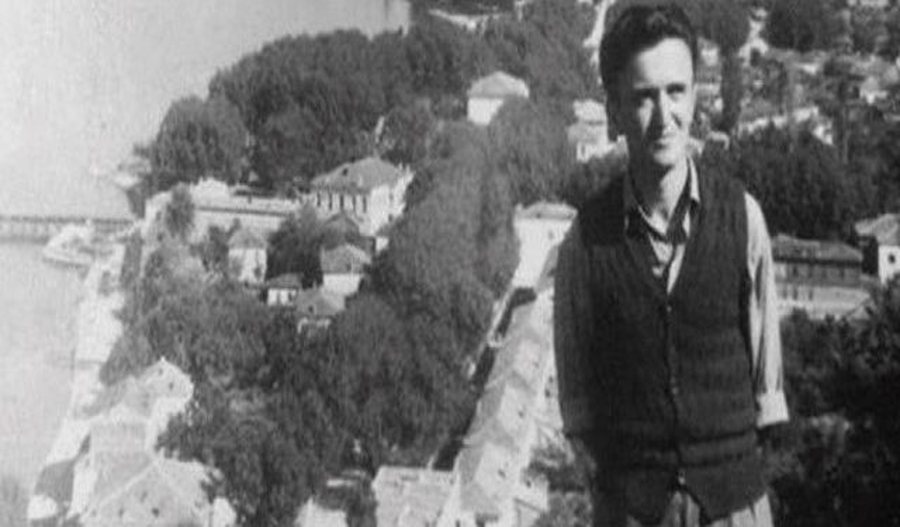
- When I asked Lasgushi, with tears in his eyes he said: "How can I come to Poradec and not meet Qania, not see her with my eyes, not hear her voice..."?!
Qaniu had studied geology engineering in Leningrad for three years, but abandoned them because his passion was literature. He returned to Albania and completed his four-year studies in Albanian Language and Literature (so much desired by him) in two years. When I was appointed as an English teacher in Korça, Qaniu was sent to work in the deep areas of Mokra, in Velçan and Osnat, where she was intercepted and spied on by the school director and the local Security operative. He would summarize the miserable state of the socialist village in a few words, saying that; "Now in the village there are more small Lula than in the time of Migjen".
And so came the year 1968, when the so-called "revolutionization of the school" began with great fanfare. Henceforth everything would be included in the triangle; "Learning, work, tempering", everything would be crossed by the bright "red thread" of socialism, everything would be painted with red paint, not only the slogans, the corners of the pioneer, but also the teachers, these educators of the generation ri, who were supposed to be "red commissioners", of the life-giving light of the Party.
Now the teacher would turn into a robot of the programmatic speeches of Enver Hoxha and other idiots. And precisely at this very critical moment, Qani Çollaku acted, because he was born and raised in a family of patriots, being a true intellectual, he immediately understood that the pickaxe and rifle, which they would use as symbols in the lessons, were not they were just weapons that would kill and destroy from the foundations, all the hard work and sweat that generations of teachers had poured into education in Albania.
Therefore, in the article addressed to the newspaper "Voice of the People" "Warrior artisans of art", he presented his views. The writing was never published and yet, Qani Çollaku was arrested and sentenced to seven years of imprisonment, bringing such charges as;
"He wrote to raise the people to their feet", "the accused is connected to foreign espionage" (alluding to Soviet espionage), they even called him "Little Dubcek", and further mentioned the name of the poet Anna Ahmatova, as if all the evils of humanity had come from her.
As always the infallible men of the Security, they were precise to shoot on target, hitting the best, the wisest, the bravest. And one of them was Qani Collaku, the brother of the "People's Hero", Reshit Collaku and the brave martyr, Muharrem Collaku.
And this was not done without a purpose, let all the teachers and other intellectuals learn that until one member of the Çollak family is spared, guess what can happen to others, in a word, let the lesson become the lesson , to sow fear and terror, so that no one would dare to rise up.
Nexhmije Hoxha in her book "Betrayed Friendship" slyly explains to us that a letter from Mehmet Shehu to Enver Hoxha sank Qani Çollak and here is its content:
Qani Çollak's "article" is a wild, unrestrained and open attack against the party line in art and literature and against the Party itself. Qani Collaku is a known enemy of the Party. He was a teacher, he was unmasked and dismissed from his job as a teacher in Berat, but now he is still a teacher in Pogradec! It is said that he voted against the Front in the last elections.
I request that, using this material, we gather the teachers of Pogradec, unmask him to the end and take him to court (with closed doors), because with this material, I will eat him up to 15 years in prison, or deport him to the farm of Lushnjas, where to work with a pickaxe. It's extremely mean! (And as the people say: "Whoever digs a hole for another, falls in it himself".)
Qaniu's trial took place in Korça, in May 1968. In the first days of June, I met Lasgushin in Tirana and asked him if he had heard about Qaniu's sentence. "Yes" - he said, he continued in a low voice, because at that time even the walls had ears: "How can I come to Poradec and not meet Qania, not see her with my eyes, not listen to her?" the voice…"?! and Lasgush's eyes filled with tears.
After finishing his sentence and coming out of prison, Qaniu was himself again, the first Qaniu: quiet, taciturn, bubbly; he had changed only in one thing: when he went out on the streets, he didn't mix with anyone, but he always walked alone, he didn't confess anything about his years in prison, he just called him a joke; "University". And he was so big-hearted and generous in spirit that he even forgave the people who became witnesses in the trial.
As soon as he got out of prison, he learned English and Italian. They appointed him to do menial jobs in construction and later as a storekeeper of stones and bricks. He had once made a request to return to the teaching profession, which he loved very much. Kudret Kokoshi, the uncle of Myzejen, Reshit's eternal fiancee, also came to Pogradec in the summer. Kudret was a patriot, poet, literary critic, translator, who spent twenty years in prison and was left in the shadows.
Qani invited Kudreti and Lasgushi for dinner, so that the three of them could be in the poetic heights. Kudret Kokoshi hoped that a better day would come, therefore he gave his manuscripts, as well as translations of some others, written in beautiful script, to Qaniu, with the hope that he could make it in time, to brought to light.
If Qaniu could face many waves of life, Tixja, a wise, wise, devoted wife, was always by his side. But in 1982, Tixja, Qaniu's wife, fell seriously ill and had a heart operation, I can see in front of my eyes how worried and worried he was, in those days when her life hung in the balance.
But, unexpectedly, in the summer of 1983, Nafija, Lasgushi's wife, died, that night dawning August 4 at midnight, after Qani had calmed her down and laid Lasgushi to sleep, up in his tower, we both sat in the veranda of that house and it was the first time that Qaniu told me about the communist prison of Spaçi, not so much about the torture, hard work, barbed wire, dogs, policemen, but we talked about the poets, writers, painters, artists, who were there inside the prisons of Albania.
Valbona, Qaniu's only daughter, was born while her father was in prison and, when he was released from prison, she attended the first grade of primary school, together with my daughter, in the same class. In the spring of 1984, Qaniu fell ill, the doctors could not determine the diagnosis, so he continued for two or three months from one hospital to another, finally in Tirana in surgery.
The operation confirmed the diagnosis: pancreatic cancer. Qaniu passed away on November 24, 1984, in the morning. His mother, Minja, mourned him: "Son, oh son, I'm gone like a bullet"! That the Collaks have always run away from the lead from this life.
At the funeral, Qaniu was accompanied by a large crowd of people, although a former political prisoner was being buried, but the Çollak family had extended relatives and friends. I have something left in my mind from that sad Sunday afternoon, as the sun was about to set: while they were taking the coffin out of the black car, my eye caught a kurbat (Roma, in the Korčar dialect), big, who wept with great tears, his tears dripping to the ground, opening holes in the dust of the cemetery. It was early winter.
The communist revenge continued, they never wanted to give Valbona a right to higher studies, the authorities responded to her insistence; that the same fate awaited him. Tixja, her mother, could no longer afford life, she did not manage to enjoy the 90s, when Valbona finished her studies and has now created a happy family.
On November 24 of every year, it is the anniversary since the day when the police officer Qani Çollaku closed his eyes forever. I can call the time that we lived as the time of unparalleled deafness and dumbness, and yet in this time there were people who strongly opposed the red violence with the manly strength of their intellect, one of them was Qani Çollaku. He has been honored with the honorable titles: "Teacher of the People" and "Honorary Citizen of Korça District"./Memorie.al



Lini një Përgjigje