


 Shkruar nga Pamfleti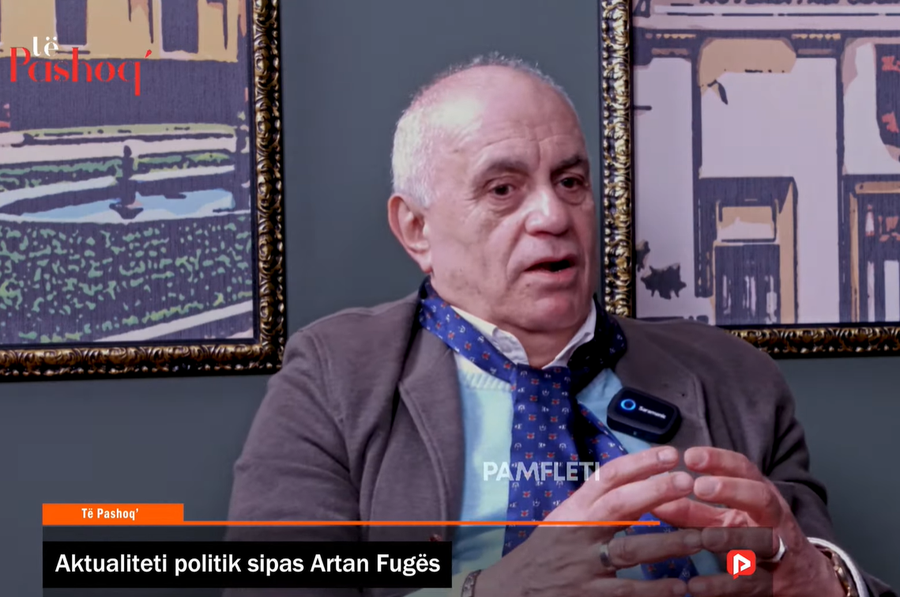
Academic Artan Fuga has made a deep and critical analysis of the opposition situation in the country, stating that it no longer constitutes a real political factor in Albania. Invited to the show “Të Pashoq” on the “Pamflet” YouTube channel, Fuga argued that this finding comes as a result of one of three factors that have reduced its role and influence on the political scene.
According to the academic, the main reason for this de-factorization is the lack of numbers in the Albanian Parliament. This numerical impossibility means that the words of opposition MPs cannot be translated into concrete political action. According to him, the current opposition produces only “rhetoric without politics”, as it fails to generate events or influence the law-making process.
Another critical point raised by Fuga is the tendency of opposition figures to blame others for its failures. He stressed that it is a big mistake when the opposition blames the people, intellectuals or citizens who do not participate in rallies. According to him, an unorganized people and without guaranteed rights cannot be an active engine of political change.
The third problem identified by academic Fuga is the incoherence and contradictions in the opposition’s political discourse. He listed the unclear strategic moves: from the demand for a caretaker government, to participation in the elections with the claim of victory, and then accusations of vote theft. Fuga pointed out the contradiction of labeling the regime as a “narco-state” that cannot be overthrown by a vote, while the same opposition continues to function as an electoral party and participate in the institutions that emerged from those same elections. This lack of coherence, according to him, seriously damages the credibility and effectiveness of the opposition’s action.
Excerpts from the studio interview:
-If I take a look at your writings, public reactions of various forms, we notice every day more and more the deepening despair, the deepening dissatisfaction, first of all towards the opposition's approach, to what should be the healthiest alternative, as an indicator of democracy as such. Is this an accurate observation?
Artan Fuga: Thank you for following. Your impression is correct. Your impression is correct, the observation is correct. Of course, one is careful when articulating a critical opinion towards the opposition. Not for reasons of gentleness or nobility, but also for that, but uh, of course I also stand by what if there is a need for criticism and for civic courage and for courage, not in the psychological sense, but in the intellectual, mental sense, it is primarily towards politics. And from this point of view, when politics are criticized, I myself feel freer, more liberated, more calm. And when uh, how to say, you have a critical comment towards the opposition, of course I am careful not to be too open, harsh and direct. But in any case, critical opinion is necessary. And you have the correct observation. Let's be clear, this often leads to misunderstandings. The misunderstanding is that, look, when you criticize the opposition, you are doing the work of the government. That's the first. The second, uh, the second prejudice is that uh, in a way uh, don't get confused that if there is a responsibility for governance, the government has it, the opposition doesn't.
-Absolutely yes, we take it for granted that there are 1001 problems. I had the question in this context. Not that it is the opposition's fault.
Artan Fuga: Por, por ndjen një fajësi. Ndjen një fajësi që duhet të kesh besimin dhe sinqeritetin me veten për të thënë jo mo nuk është kështu. Sepse sigurisht përgjegjësinë për qeverisjen e ka pushteti, por përgjegjësinë për kritikën dhe përgjegjësinë për t'i bërë presionin që duhet, dhe në fund të fundit që ky presion fillon që tek artikulimi ligjor dhe i politikave deri te një rotacion politik që është pjesë e një sistemi të shëndetshëm demokratik, nëse kjo s'ndodh, ëh, përgjegjësia është e opozitës. Ëh, dua të them një gjë meqënëse jam në studion tuaj dhe shpeshherë përdoret termi opozitë e opozitës. Dhe deputetë të opozitës apo figura të saj thonë, a ça po bën? Po bën opozitën e opozitës. Dua të them që i pari që e ka formuluar këtë koncept kam qenë unë. Dhe e kam formuluar në një moment të caktuar kur ka qenë ndofta viti 1998 për mua, dhe e kam formuluar këtë koncept sepse disa OJF të asaj kohe, organizata joqeveritare, të cilat për mua në atë kohë po dhe tani janë menaxhuese projektesh dhe nuk përfaqësojnë shoqërinë civile, thoshin që ne jemi opozita e pushtetit. Dhe unë aty në atë mbledhje, në atë mbledhje publike, kam thënë, më falni, ju jeni sot opozita e opozitës. Pra, ju bëni atë që duhet, përfaqësoni shoqërinë civile, po nuk jeni ju për të zëvendësuar opozitën politike. Opozitën politike të asaj kohe. Dhe kur unë përdora opozitë e opozitës, mediat e morën dhe e nxorën nga konteksti. Jam detyruar në atë kohë po në gazetën Rilindja Demokratike që dilte në atë kohë, të bëj një shkrim për t'u shpjeguar. Pra, dua të them termi opozitë e opozitës nuk është një term i turpshëm. Të kritikosh opozitën, është një detyrë qytetare. Nuk mund të merret opozita dhe të ndërtojë, të viktimizojë vetveten dhe të thotë që shiko, unë jam e pakritikueshme. Kush më kritikon mua, është hipokrit, bën një lojë tjetër. Jo. Çfarë mendoj unë? Pse më shqetëson dhe pse jam bërë shumë pesimist? Sepse sot opozita nuk është një faktor politik. Më vjen keq, është një formulim që ndofta si çdo formulim shumë i prerë, mundet edhe të mos gëlltitet si duhet. Pse nuk është faktor politik? Se s'ka numrat në Kuvendin e Shqipërisë. Që do të thotë, fjala e deputetëve të opozitës sot në Kuvendin e Shqipërisë nuk përkthehet dot në veprim politik. Pse?
Sepse veprimi i opozitës nuk është vetëm të kritikojë atje, të marrë fjalën, të bëjë lojë fjalësh apo ku di unë se çfarë, por është që të ndikojë, të ndikojë me fuqinë e saj, me veprimin e saj, me numrat e saj, të krijojë ekuilibra të tillë politikë që ta, ta ushtrojë një presion ndaj qeverisjes, të ushtrojë një presion për bërjen e ligjeve e kështu me radhë.
Is this only the fault of the opposition? No. Is the opposition, so to speak, solely responsible for the situation it is in? Not at all. Has it suffered blows and injustices from the government? Yes, it has. But I am talking about the fact. I do not need as a citizen or as a researcher where the reasons come from. I want to say that according to an X-ray, in quotes, the group of opposition deputies in parliament no longer has a political dimension. In what sense? In the sense that it does not produce political events. It produces rhetoric without politics. Why? Because of the numbers.
This is the first. Second, what do I see in some opposition figures? They are blaming the people. The biggest mistake they make is blaming the people, blaming the intellectuals, who according to them do not speak, blaming those who do not go to the rally. And it is one thing to have sadness, another thing to ask for civic engagement, another thing to say that this people, if they want to improve their lives, improve their status, and get out of a crisis, which I think is a crisis neither of the government nor of the state, but it is a crisis apart from these, of Albanian civilization, of Albanian civilisation, and this interests me more, you cannot blame the people. For the reason that it is not, it is not the people who can actively act, uh, because in every country a people that has turned, so to speak, into a crowd for which there is no justice, and justice does not function, that does not have individual rights secured, that is unorganized in communities and in socio-professional or socio-political groups, such a people in no place in history has been able to act. And it cannot act. The Albanian nation today and the Albanians today, so to speak, with the peaceful life that they develop at a time when civil justice does not function, for me is one, it is one, it is a historical monument. A historical monument, to leave one of the European countries with civil court cases of five years, seven years, six years, all in a row like we are, would have become a quagmire. No, the Albanian endures. Why does he endure? It is not that he has any qualities. Yes, there are some essential structures that maintain this society, they are beyond politics. This is the second, so blaming the people.
And the third is the incoherence in the opposition's political discourse. Once a technical government, then we enter the elections, we enter the elections because we will win, then because they have been stolen from us, then they have been stolen from us, but because this regime is a narco-state, a narco-regime. Yes, a narco-regime that cannot be thrown out, so to speak, to, so to speak, to be removed or toppled according to its formulation through elections. But in the meantime, it remains an electoral party and is part of institutions that are elected, on the one hand.


Lini një Përgjigje