


 Shkruar nga Pamfleti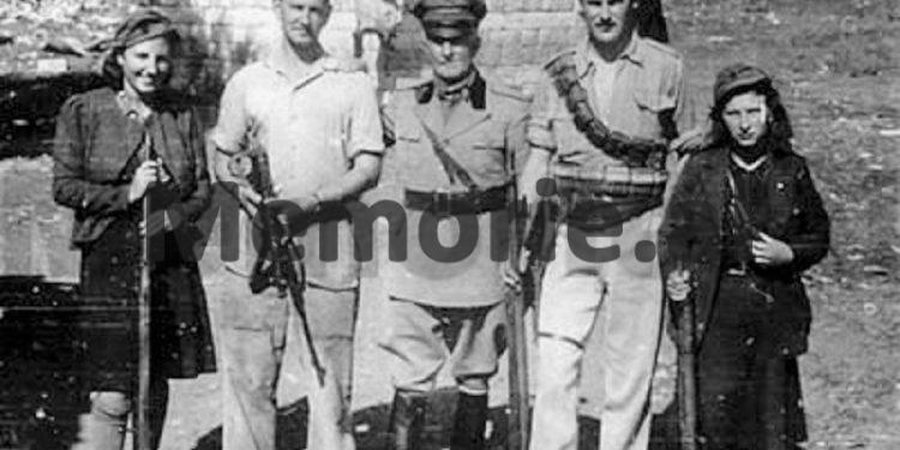
British liaison officers (SOE) who participated in World War II in Albania have produced a documentation of tens of thousands of pages, which is currently all open in the British Archives. Many of the officers had the opportunity to work during the war with the leader of the First Brigade, Mehmet Shehu, documenting many of his crimes during the war, but also after it. The British officers who had contact and collaborated with Mehmet Shehu were numerous during the war. In general, they shared the same opinion that he was the most important military man in Albania, but at the same time also the most cruel, committing numerous crimes.
The archival documentation is extremely voluminous, numbering over 40 thousand pages, while this publication presents several documents from the months leading up to and following the liberation, at the beginning of 1945.
But aware that they had lost their influence in Albania, the British did not recognize the government of Enver Hoxha. Some British officers thought that Mehmet Shehu could be an alternative leader in the event of an internal overthrow of Hoxha. They hoped that Mehmet Shehu might hold an opportunity to get closer to the British. Even in an official profile submitted to the British Foreign Office in April 1945, some of the officers who recognized him believed that Shehu could rival Enver Hoxha.
But in this situation, they analyzed that using Mehmet Shehu to quell any resistance in Shkodra and the North of the country, smoothed the cold relationship between him and Enver Hoxha. It seems that the tense relationship between Hoxha and Shehu had begun after the Congress of Përmet, where Mehmet Shehu was not promoted to general and lost several military command roles in the war. Afterwards, he did not take any important role in the newly created government by Enver Hoxha and according to the British, Mehmet Shehu sought the Ministry of Defense.
TERROR IN NEWLY LIBERATED TIRANA
The British officer Oliver, who was responsible for coordinating the war for the liberation of Tirana, describes in a long document his relationship with Mehmet Shehu. According to him, the siege of Tirana lasted for 20 days, while Mehmet Shehu was irritated and made a request to the British. He asked the British that the Allied aviation bomb the interior of Tirana and in particular its center, which was being guarded by German forces, without counting the civilians. “He asked me what help would come from air support for the Balkans”? “I told him that such an operation would be useful after a coordinated infantry attack and I asked him when he intended to do it”.
He replied: 'You bomb the targets we asked you to and as for the infantry attack, that is none of your business.' I replied by saying that his answer was not convincing and that seeing that the enemy forces in Tirana are so small in number, it is difficult to convince my headquarters in Bari to carry out an air attack which is very costly and I did not believe it would be worth it without a guarantee that the partisans would make good use of this advantage", - reported the British Major Oliver in early November 1944. But with the capture of Tirana, the British officers who were near Mehmet Shehu's headquarters, reported on the major retaliation that was taking place by Mehmet Shehu's troops in Tirana.
In a secret document dated November 22, 1944, another British major, Thornton, reported that the situation was becoming dramatic due to the terror that had begun against alleged political opponents. “House to house is being visited and in draconian ways the inhabitants are being asked to attend Party meetings. A campaign is being whispered in favor of Russia and against the Western allies. There is a fierce military control with curfews and seizure of property, except for those with partisan papers. This can be the case in any capital a week after the Germans leave,” Thornton reported on November 22, 1944.
Meanwhile, in another report to the British headquarters in Bari, the major sent another report the day before the overthrow of Enver Hoxha’s government in Tirana. “Arrests continue. The prisons are full with a number that may be greater than 1200 people. They are being treated inappropriately in many cases. Dali Ndreu admitted that many of them have been imprisoned because of Independence Day, November 28, and will be released later. This type of policy will make the democratic elements, who are still at large, leaderless and insignificant. Anti-British behavior is reported. The movements of the 12th Brigade in the South are important,” Thornton reported on November 22, 1944.
MURDER IN SHKODAR
The British also established a headquarters of 3 officers in Shkodra, after its liberation, who remained until the end of January 1945. They reported to their command that Mehmet Shehu came to Shkodra on December 20 and did not spare reprisals against the civilian population. Below, some reports sent by the British officer from Shkodra.
CAPTAIN DURCAN, JANUARY 11, 1945 (SHKODAR)
“Uniformed partisans go from house to house indiscriminately demanding money, food, radios, clothes, typewriters, cars, tools and various work machines. These measures are destroying the privacy of families, increasing their cost of living and not leaving them alone. I spoke in the city with a painter, a shopkeeper, a nun, a worker, a doctor, a school principal, a hotelier, a bookkeeper and a tailor. They told me: 'We can't go on like this! Why don't the British come? We can't live like this!'”
CAPTAIN DURCAN, JANUARY 26, 1945 (SHKODAR)
“Atmosfera është elektrizuese. Ka fjalë në qytet. Ka pasur edhe 200 arrestime dhe janë parë shtëpitë plot me civilë që i ruajnë ato. Marashi po lufton në zonën e Koplikut. Hasan Isufi dhe Jup Kazazi kanë një numër të madh njerëzish edhe në zonën problematike të Pukës. Në Mirditë ata kërkojnë nga një burrë për shtëpi”.
KAPITENI DURCAN DHE ANDREWS, DATA 1 SHKURT 1945
“Nuk ka dyshim që partizanët po pastrojnë zonën e Shkodrës. Në mënyrë që të ndalonin vëzhgues të ndryshëm e të paanshëm në zonë, Misionit Britanik iu kërkua me ngulm të ikë nga Shkodra dhe atyre iu bë çdo lloj presioni për të lënë Shkodrën, çka bëri që misioni të largohet më 31 Janar 1945. Kapiteni Durcan e përshkruan atmosferën në Shkodër si ‘elektrizuese’. Burgu është duke shpërthyer nga të burgosurit e shumtë politikë, ndërsa sistemi i partizanëve ka bërë që çdo familje në Shkodër të mbajë dhe ushqejë një ose dy partizanë.
Kjo ka ndikuar në një rritje të madhe të pakënaqësisë, çka ka ndaluar familjet të kenë privatësinë më të vogël. Në mënyrë që t’i imponohet popullatës atje me regjimin e tyre, 8 të burgosur të kapur nga forcat opozitare në Koplik u sollën në Shkodër dhe u pushkatuan. Trupat e tyre u ekspozuan në rrugët e qytetit për disa ditë dhe një listë e emrave të tyre u vendosën në çdo rrugicë të lagjeve të qytetit. Tregtarët janë tepër të pakënaqur me partizanët me taksën e tyre të drejtpërdrejtë për kapitalin e tyre dhe madje me ngulm u kërkohet që t’u japin banim dhe ushqim falas partizanëve”.
MARRËDHËNIA E HOXHËS DHE SHEHUT PAS LUFTËS
Sipas një raporti të oficerëve britanikë që ndodheshin ende në Shqipëri, Enver Hoxha dhe Mehmet Shehu patën një kompromis të heshtur. Hoxha përdori brutalitetin e Shehut për të eliminuar çdo kundërshtar të mundshëm të regjimit në Veri të vendit, ndërsa Shehu garantoi mbijetesën e vet politike. “Që qeveria në Tiranë e konsideron situatën atje si tepër serioze e tregoi me faktin që dërgoi gjeneral Mehmet Shehun, ndoshta ushtarakun më të mirë në Shqipëri, i cili mori drejtimin e Shkodrës dhe të të gjithë zonës.
Gjeneral Mehmet Shehu, i cili mendohet si gjenerali më i aftë tek partizanët nga disa qarqe, mendohet se ai është njeriu i vetëm që ka një numër mbështetësish që mund të rrezikojnë Enver Hoxhën, të cilët mund të shfaqin pakënaqësi. Me dërgimin e Mehmet Shehut në Shkodër, Hoxha jo vetëm që dërgoi një person kompetent për një situatë të vështirë, por në rast të ngjarjeve të papranueshme për regjimin, përgjegjësia dhe urrejtja ndaj masave të egra do të bien mbi Shehun dhe jo mbi Enver Hoxhën”, raportuan oficerët britanikë në datën 1 shkurt 1945.
PËRSHKRIMI I MEHMET SHEHUT NGA OFICERËT BRITANIKË
Shtabi i Force 399 CMF REF: F/399/101/G/6
13 nëntor 1944
Mehmet Shehu: Commander of the first division. A vain man with personal ambitions, who has been kept in the shadows by the party for some time. He is undoubtedly the most respected and important military figure in the movement. He has recently been placed under the command of Dali Ndreu, commander of the First Corps. He is a communist, but personal ambition outweighs loyalty to the party.
MAJOR OLIVER
Mehmet Shehu: Arrogant and brutal (this is due to his ambition and inferiority complex). Someone tells me that Shehu is a dissatisfied man and that the government, knowing his immense desire to stay close to the army, placed him in his current position (perhaps he wanted to be Minister of Defense). Now, far from direct contact with the people, he will sink into the background and will have very few chances to become a leader in the rank he wants. A valuable commander in the field, tough and with prestige that he also gained from German posters.
MAJOR SMITH
Mehmet Shehu: Quite young (around 30-35 years old), very active and without a doubt the best commander of the National Liberation War. He fought in Spain as a member of the international brigade and does not forget this. An outstanding personality and is respected or feared by everyone for several reasons. As commander of the First Brigade he fought well and his brigade remained the “soul of the troops”, which is the fundamental reason for his success.
His appointment as second-in-command of the first division was a shock to anyone who expected his appointment as commander. The primary role of the First Brigade was almost a purge in the North, and it is further possible that Mehmet Shehu will emerge as the real commander, bypassing the established commander for political purposes.
MAJOR RE RIDDELL AND CAPTAIN HA HIBBERT
Mehmet Shehu: The most involved personality is Mehmet Shehu, who is already clear that the Central Committee is afraid of his military power and is using every opportunity to keep him as insignificant. It is difficult to say whether there will be any open conflict between them. Shehu is proud and powerful and idealistic.
Will the appearance of a communist and a fighter allow him to accept a small role in the future of this country? If Enver Hoxha is so conscientious and plays his cards well, he may have Mehmet as his strongest supporter. If not, only the future will tell what is in store for Mehmet and what situation the country will have./ Memorie.al



Lini një Përgjigje