


 Shkruar nga Pamfleti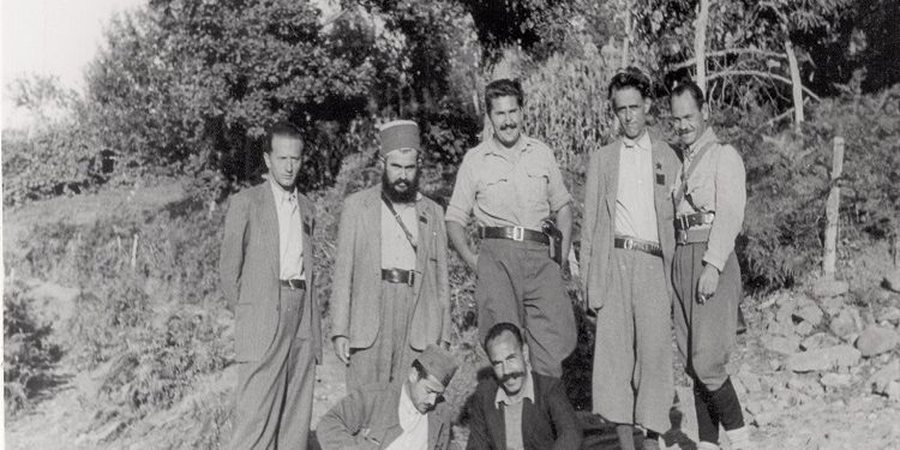
During the years of communist rule in Albania, the Communist Party ruled the country under the guise of the Democratic Front of Albania, which was the successor to the National Liberation Front, which was born in 1942 at the Peza Conference. In all elections for the People's Assembly, the Communist Party of Albania (after 1948 the Party of Labor) presented itself as the leader of the anti-fascist coalition called the Democratic Front, at the head of which, after 1945 and until 1989, was the First Secretary of the Albanian People's Party. Since the Front was a "big name", or rather, a big disguise for the AKP, its history remains more of a hidden history and treated according to the wishes of the party that ruled the country for more than 50 years.
What was the Peza meeting really like in 1942?
The starting point of the National Liberation Front is the Peza meeting, commonly called the Peza Conference. As in other cases, the Labor Party has falsified the entire history of the creation and other developments regarding this organization. The truth begins in the first months of 1942 and has as its first character, Myslim Peza's brother, Shyqyri. The latter, in February 1942, accepted the fascist compromise, according to which, in Peza, the only force that would act to maintain order would be an armed group under his (Shyqyri's) orders.
Myslim did not accept this compromise, but in fact, he benefited greatly from it (see Koço Tashko's letter to the Comintern in autumn 1942, in “Enver Hoxha's Anti-National Policy, Second Plenum of Berat”, Tirana 1995, pages 191-192). In this safe environment, the Peza Conference was held. The main participants in it were Abaz Kupi, Myslim Peza, Haxhi Lleshi, Mustafa Xhani, Ndoc Çoba, Ramazan Jarani, Halim Begeja, Ismail Petrela, Skënder Muço, Azis Çami and Skënder Jegeni, while from the AKP; Ymer Dishnica, Mustafa Gjinishi, Koço Tashko, Enver Hoxha, Nako Spiru and Nexhmije Xhuglini (later Hoxha) participated. Ndoc Çoba was elected chairman of the conference and Mustafa Gjinishi was elected secretary.
The conference discussed the organization of forces in a joint war against the occupier, an organization that later took the name of the National Liberation Front. The attendees entered into debates regarding communist symbols, such as the red star, etc., which were not accepted by non-communists.
A resolution was adopted, stating that the representatives of all nationalist tendencies, the AKP, the Communist Youth, the Nationalist Youth and the Popular Women's Youth, approved the relevant declaration, which supported the coalition against the Axis, severely accused Mustafa Kruja and supported the war of those chetas that had fought until that moment, giving importance, on the other hand, to the issue of the national liberation councils. (“Enver Hoxha's Anti-National Policy”, pages 174-179).
The conference elected the National General Council, composed of Kamber Qafmolla (chairman), Mustafa Gjinishi (secretary), Ndoc Çoba, Myslim Peza, Abaz Kupi, Enver Hoxha, Ymer Dishnica (members). After Kamber Qafmolla's removal, Omer Nishani began to be recognized as the leader of the Front. In this capacity, the latter also headed the Front's delegation at the Mukje meeting, while the National Front was led by Mit'hat Frashëri.
The transformation of the Front into a facade of the Communist Party
After the Mukje Agreement was torn up in August 1943, in September 1943, the AKP finally settled accounts with those it considered its political opponents. Yugoslav communist emissaries played a key role, even after the Mukje Agreement. The Second National Liberation Conference, held on 4-9 September 1943, in Labinot, Elbasan (the first was called the one held in Peza, on 16 September 1942), dealt mainly with the issue of power and, in particular, that of the popular councils, which were said to be “the only power of the people in Albania”.
Also, its main goal was to denounce the Mukje agreement, which seriously damaged Slavic interests in Albania. The main role here was played by Miladin Popovic and Dusan Mugosha. As a result, the Yugoslav model was copied and acted upon.
On November 26, 1942, Tito organized the First Meeting of the Antifascist National Liberation Council (AVNOJ) in Bihac, Bosnia, where he decided to create the Yugoslav National Liberation Army. Here, for the first time, it was predicted what the third Yugoslavia would be like. Following the example of this meeting, the meeting in question was held in Labinot.
The Labinot Conference elected the General National Liberation Council, consisting of 62 members (up from 7 previously) and a presidency consisting of 16 members. The presidency, which was put in the role of an illegal presidency, consisted of the following persons: Omer Nishani, Mustafa Xhani, Myslim Peza, Enver Hoxha, Kostë Boshnjaku, Ymer Dishnica, Ollga Plumbi, Liri Gega, Haxhi Lleshi, Fetah Ekmeçiu, Medar Shtylla, Nako Spiru, Sejfulla Malëshova, Ramadan Çitaku, Abaz Kupi and Spiro Moisiu (Enver Hoxha “Kur u hodhën temelet e Shqipëria së re”, Tirana 1984, page 329). After this conference, the civil war began. The Secretariat of the National Liberation Front consisted of Omer Nishani (president), Koçi Xoxe, Sejfulla Malëshova, Medar Shtylla (vice-presidents), Nako Spiru (secretary), Shefqet Beja (general secretary) (according to "Bashkimi", August 7, 1945).
Riorganizimi i Frontit, pas lufte, Omer Nishani ia le vendin Enver Hoxhës
Pas lufte, roli i Frontit ishte maska më e mirë për PKSH‑në, e cila nuk guxoi të dilte hapur si forcë udhëheqëse. Më 5 gusht 1945, u mbajt kongresi i I-rë Frontit, ku u shpall se organizata do të vazhdonte të ishte një forcë antifashiste. I pranishëm ishte ministri jugosllav në Tiranë, Velimir Stojniç. Të njëjtën ditë filloi edhe kongresi i Frontit Nacional Çlirimtar të Jugosllavisë, madje Koçi Xoxe propozoi që t’i dërgohej një telegram atyre, gjë që u pranua me kënaqësi e duartrokitje prej të pranishmëve (“Bashkimi” 7 gusht 1945), ndërsa u dha e plotë fjala e Titos në këtë kongres (“Bashkimi” 8 gusht 1945). Një ditë më vonë, kryetari i Frontit Nacional-Çlirimtar Omer Nishani, propozoi që president i ardhshëm i Frontit të ishte Enver Hoxha (“Bashkimi” 9 gusht 1945).
Ky propozim u shoqërua me britma nga delegatët, aq sa në një çast, ato e morën në krahë Enver Hoxhën. Pas kësaj, Nishani brohoriti për Enver Hoxhën, Frontin, PKSH‑në, Rininë Antifashiste, Gruan Antifashiste, Sindikatat e popullin shqiptar. Duke zbuluar edhe planin e ardhshëm, Nishani tha; në “konformitet me dëshirën e shfaqur prej të gjithëve”: “Rroftë Republika Demokratike shqiptare!”. Sipas kësaj, u duk qartë që zgjedhjet që do të zhvilloheshin do të ishin krejt kot, sepse tashmë edhe forma e regjimit ishte vendosur.
Më 10 gusht 1946, gazeta “Bashkimi” doli me logon “organ i Frontit Demokratik”, siç do të ishte emri i ri i organizatës këtej e tutje. Pas kësaj date u paraqit një program prej 7 pikash, që kishte të bënte me realizimin e unitetit të të gjithë popullit, mbrojtjen e pavarësisë e sovranitetit, përkrahjen e pushtetit të ri popullor, organizimin politik të popullit shqiptar, reforma të gjera ekonomike e sociale dhe bashkëpunim ballkanik e më gjerë, për të forcuar linjën antifashiste.
Në sekretariatin e Frontit u zgjodhën:
Gjen ‑ kol. Enver Hoxha ‑ president
Gjen ‑ leit. Koçi Xoxe ‑ n/president
Medar Shtylla ‑ n/president
Shefqet Beja ‑ n/president
Sejfulla Malëshova ‑ sekretar i përgjithshëm
Behar Shtylla ‑ sekretar
Fadil Paçrami ‑ anëtar
Kolë Kuqali ‑ anëtar
Selaudin Toto ‑ anëtar
Nga këta, u shpallën tradhtarë në kohë të ndryshme, Koçi Xoxe, Shefqet Beja, Sejfulla Malëshova, Selaudin Toto, Kolë Kuqali dhe Fadil Paçrami. Mbetën “besnikë” vetëm Enver Hoxha dhe Medar Shtylla. Madje 4 prej “tradhtarëve” u dënuan me vdekje.
Në Komitetin Ekzekutiv, veç anëtarëve të sekretariatit, ishin zgjedhur edhe:
‑ Gjen. maj. Bedri Spahiu
‑ Ymer Dishnica
‑ Nako Spiru
‑ Manol Konomi
‑ Kol. Kristo Themelko
‑ Naxhije Dume
‑ Pandi Kristo
‑ Dom Luigj Pici
‑ Siri Shapllo
‑ Gjergj Kokoshi
‑ Abdyl Këllezi
It is a unique case that all of them were declared traitors, giving the most typical example for the years of the communist regime. In the Front's resolution of the meeting in question, the Constituent Assembly was also mentioned, and the recognition of the communist government of Albania by the Yugoslav one was appreciated. On April 9, 1946, at the 2nd meeting of the General Council of the Front, the statute and regulations of the Front were approved.
Because the first deviations and removals had begun, the Secretariat of the latter was reformulated, according to this composition: Enver Hoxha - president, Koçi Xoxe - vice-president, Medar Shtylla - vice-president, Hysni Kapo - general secretary, Tuk Jakova, Gogo Nushi, Gaqo Tashko, Liri Belishova. Of these, other "traitors" were declared, both Tuk Jakova and Liri Belishova.
Meanwhile, the Executive Committee (which also included members of the secretariat) was reformulated as follows: Nako Spiru, Pandi Kristo, Kristo Themelko, Naxhije Dume, Bedri Spahiu, Fadil Paçrami, Abdyl Këllezi, Ymer Dishnica, Manol Konomi, Kadri Baboçi, Nexhmije Hoxha, Haxhi Lleshi, Kiço Ngjela (“Bashkimi” September 25, 1946).
The main speech of the meeting in question was delivered by Koçi Xoxe. The statute adopted on this occasion stated that the National Liberation Front was “a political organization of the masses, which gathers within its fold all democratic and anti-fascist organizations and elements”, which had been born and had “led the masses of the Albanian people in the ANÇ War and is today the main force for preserving the victories of the LANÇ and the construction of a new Albania”.
The General Council was the governing body, which elected the Executive Committee and the latter the secretariat. The Congress was held every two years and all citizens were members of the Front. At this meeting of the Front, Hysni Peja, Dom Luigj Pici, Kolë Rodhe, Suat Asllani and Dan Kaloshi were expelled from its ranks, who were accused of having worked against the Front (“Bashkimi” 8-10 April 1945).
Nexhmije Hoxha, the penultimate leader of the Front
Enver Hoxha continued to be the chairman of the Democratic Throne until 1985, when he died. His successor, not in vain, but in a symbolic and meaningful way, passed this function on to Nexhmije Hoxha. On the threshold of major democratic changes, Nexhmije Hoxha resigned for "age reasons" and this task was taken by the "younger" almost 70-year-old Adil Çarçani, who also closed the almost 50-year history of what was called the Democratic Front of Albania./ Memorie.al



Lini një Përgjigje