


 Shkruar nga Pamfleti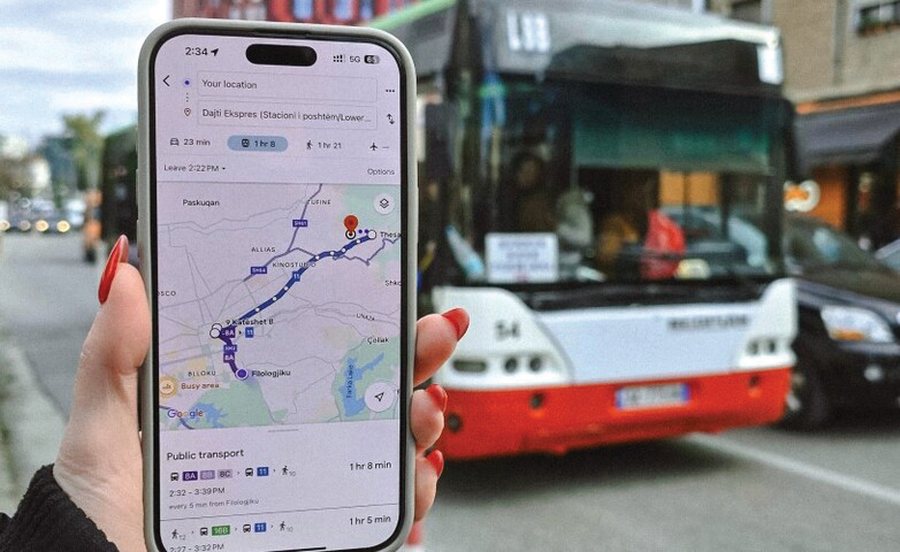
The Chairman of the Urban and Intercity Transport Association, Dashnor Memaj, predicts that the public transport sector in 2026 will face an increase in the number of passengers, mainly due to the influx of tourists.
"For 2026, the public transport sector is expected to record an increase in the number of passengers, mainly due to the influx of tourists.
The impact is expected to be greatest on urban transport, where last summer usage was higher than usual between June and September, due to school holidays and the closure of some work sectors. The influx of tourists meant that operators did not reduce the number of vehicles in circulation.
Meanwhile, intercity transport is expected to have a limited impact, excluding some coastal routes with tourist influx. He estimates that the number of users will be higher than in 2025.
Mr. Memaj also emphasizes that fuel and energy prices remain a major factor in operating costs.
The increase in wages and the indexation of personal expenses are expected to increase the pressure on the salary increases of drivers, mechanics and staff for 2026 and the cost for passenger transport companies.
“Fuel prices and energy costs remain key drivers of operating costs for buses. Although prices fluctuate, energy volatility and global fluctuations increase the likelihood of costs increasing.
Increasing salaries and indexing personal expenses, as foreseen in the draft budgets and state announcements for 2026, increases pressure on the salaries of drivers, mechanics, and staff.
Public sector wage increases often also affect private wages in areas such as transportation, as has previously happened in the construction sector, where taxes published wage lists by profession.
In November 2025, the Municipality of Kamza approved the increase in ticket prices for two urban lines, from 40 to 50 lekë, as well as the increase in line subscriptions.
The President of the Urban and Intercity Transport Association, Dashnor Memaj, says that this decision came after the lack of subsidies that operators have continuously requested.
Unlike Kamza, the Municipality of Tirana has been subsidizing urban transport for more than two years, while Kamza has not given any signals of support.
The Chairman of the Urban and Intercity Transport Association emphasizes that the price and subscription increase is not fair, as only two lines are affected, while the others remain without support.
He says that national operators have not made unified requests for price increases for 2026.
"If subsidies for urban lines continue, there will be no request for an increase. While for intercity lines, a request for support or indexation of ticket prices can only be made in the event of a significant increase in costs."
From September 2026, the company "MobAI", with 100% state capital, will take care of the organization and maintenance of the infrastructure for the functioning of public road transport, including the bus fleet, electric vehicle charging points, and the electronic ticket system.
With a decision approved in 2025 by the Council of Ministers, the joint-stock company with 100% state capital "MobAl", sh.a., was established, with the aim of organizing and operating the public road transport service in Albania.
The new company will operate as a public structure, under the authority of the Ministry of Infrastructure and Energy, which will represent the state as the sole shareholder.
But according to the president of the Urban and Intercity Transport Association, its role and functioning are still not clear, as none of the interest groups have been part of the discussions and no opinion has been given on the way it functions.
"Currently, the 'e-Transport' platform from e-Albania operates for intercity lines, where applications for certification and licensing are made. It is not known why the creation of a state-owned company to manage this part of transport was considered," he says./Monitor



Lini një Përgjigje