


 Shkruar nga Pamfleti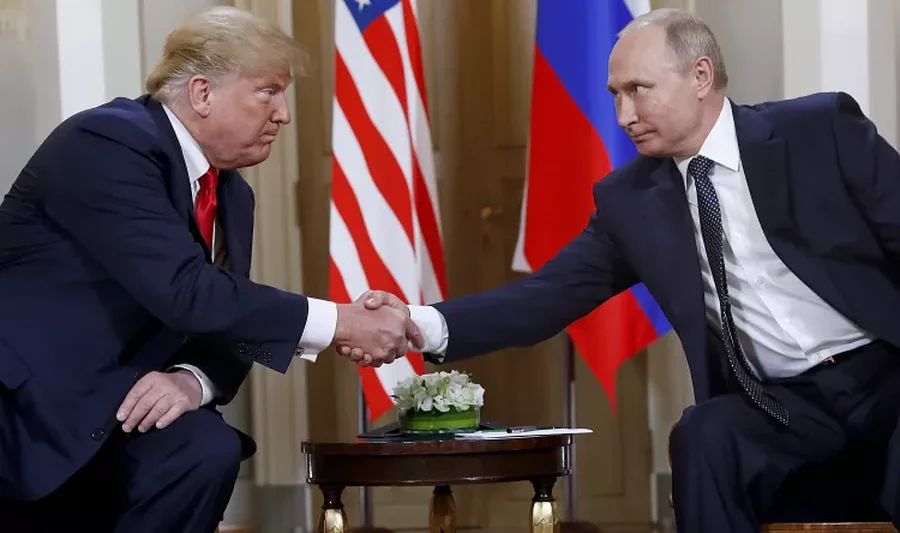
With less than four months until the US presidential election, the government in Berlin is preparing for the possibility of a Trump victory. How can his return to the White House affect Germany and the EU?
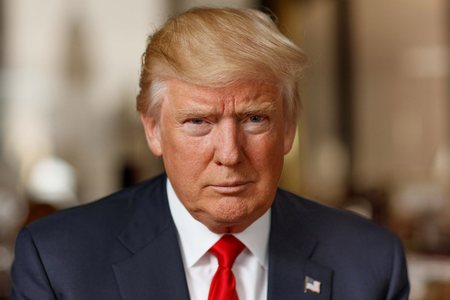
While the election of Donald Trump in 2016 surprised much of the world, this time around, Europe – and Germany in particular – is already bracing for the possibility of a major policy shift in Washington this November.
"Ultimately, it is a difficult situation to remain partners with such a difficult administration as under Trump. Germany has shown that it can somehow work, as it did last time when Trump was president," said political scientist Dr Antonios Souris for Euronews.
"Although we must say that the new administration is not yet in power, it is still a delicate situation," he added.
The world was a different place in 2016 when Trump was last elected—former Chancellor Angela Merkel was still in power, the pandemic hadn't engulfed the globe, and Russia hadn't yet launched its full-scale invasion of Ukraine.
If Trump is re-elected, he will have to face a coalition government led by Chancellor Olaf Scholz - though possibly for less than a year since German voters are expected to elect a new chancellor and parliament in October 2025. Polls the latest shows the conservative Christian Democratic Union (CDU) of the opposition is ahead.
What is Berlin doing?
The government is already boosting defense capabilities and working with partners to ensure Europe remains a major world economic power, regardless of who wins in the US in November, German Marshall Fund regional director Sudha David-Wilp told Euronews.
"Germany and its allies are preparing for every scenario," she said.
Transatlantic Coordinator and FDP Caucus Vice Chair Michael Link traveled to the US Republican Party convention in Milwaukee last week, where JD Vance was introduced as Trump's running mate. Link told Euronews that he has been preparing extensively for all scenarios for a long time.
"This includes, in relation to a possible second Trump presidency, strengthening contacts with American Republicans to identify where, despite all the differences, there are also important common interests," he said.
"I've been working on this for over two years. It also naturally involves expanding ongoing contacts with promising individuals on the US Democratic side for the future."
Experts are concerned after Trump said he would withdraw protections and encourage Russia to "do whatever the hell they want" to NATO members who failed to meet their spending targets of 2% of GDP in February.
On the subject of NATO, Link said, "the 2% goal remains Germany's central and decisive signal to the US, regardless of who is in the White House. This is in Germany's vital interest, and the federal government has decided already this with the medium-term financial planning of the federal budget until 2028."
But Link wasn't the only one who attended the Milwaukee convention. Opposition politicians from the CDU and former health minister Jens Spahn also appeared.
Souris says, "Spahn is a central figure within the CDU, an ambitious politician with leadership responsibilities, who is also known abroad."
What is Germany and the EU waiting for?
If Trump wins, the general sense is that he may turn his attention to protecting US interests from Beijing, not Moscow.
German Institute for International and Security Affairs (SWP) researcher Laura von Daniels told Euronews that JD Vance hinted at this at the Munich Security Conference in February.
"Ammunition suppliers to the US are simply not enough to support Ukraine anymore. These supplies are needed to protect the US against potential threats from the Pacific, from the Indo-Pacific, from China, basically," von Daniels recalled.
Researcher at the European Council on Foreign Relations Filip Medunic also thinks that the transatlantic relationship could affect US policy towards China.
"Trump has already shown in his first term, and again now, that security policy is no longer taken for granted, as it once was, for Europe and Germany as a close ally of the US. It has become clear that he is ready to demand costs that the allies have to bear", he added.
Von Daniels says Germany and Europe should increase defense and military spending regardless of whether the next US government is Democratic or Republican.
"I think there's a sense that with the Democrats it's more of a gradual process, whereas with Trump from day one, it would be bouts of aggression."
She also warns that Trump may choose Germany, as he did during his last term, "because everybody, at least in Germany, I think in the foreign policy community, is pretty sure that he has a problem with Germany in general .” adds von Daniels.
However, experts warn that the next few years in Europe could become more expensive, not only because of increased military spending, but also because of Trump's approach to transatlantic trade.
"I think Europe is in a tougher spot because not only will it face higher tariffs from a Trump administration, higher tariffs with the United States, but it will also face a flood of Chinese goods if the US continues a protectionist or even draconian trade policy under a Trump administration,” said David-Wilp.
Von Daniels also speculated that Trump could return to office "and from day one tell us that we still have a trade deficit with Europe and therefore we should stop exporting German luxury cars. And then there will be fee."
Although the German government is well prepared behind the scenes for a possible second term of Trump, his unpredictability is still worrying.
Trump is known for making quick and hasty decisions and deals in his own way, which could potentially change history not only for Ukraine and China, but also for the Middle East.
But will it be enough?
Although the German government is well prepared behind the scenes for a possible second term of Trump, his unpredictability is still worrying.
Trump is known for making quick and hasty decisions and deals in his own way, which could potentially change history not only for Ukraine and China, but also for the Middle East.
Medunic says that last time, Trump mixed up security policy, economic policy and foreign policy and is likely to do so again, despite the fact that they are traditionally kept separate.
"Trump will try to solve a lot of problems in his way, with a deal, which means he will quickly seek negotiations," he said.
He also says there is a risk "that Germany and also Europe will be on the sidelines".
"The biggest concern is really that Trump is serious about making a deal with Putin" without Germany, the EU or even Ukraine having a seat at the table, Von Daniels said.
And then they discuss the fate of Ukraine essentially without Ukraine having a say, and then [Germany] would be in this very isolated position where the US and Russia are discussing things that have immediate consequences for our security."
In addition, with Germany's federal elections just over a year away, both far-right and far-left parties are capitalizing on anti-war rhetoric./ Euronews



Lini një Përgjigje