


 Shkruar nga Pamfleti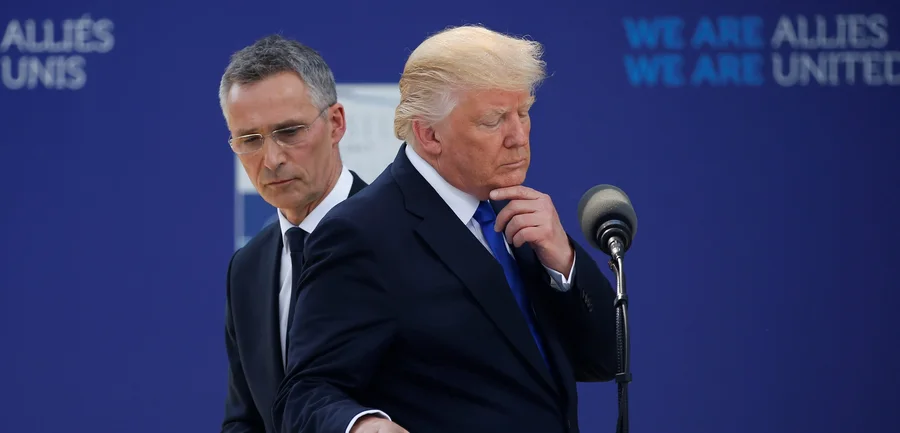
If, God forbid, Russian President Vladimir Putin attacked European members of NATO, why should American soldiers be expected to die to save European countries that shirked their responsibilities, weakened the alliance, and thus tempted Russian aggression?
Over the past month, Republican presidential front-runner Donald Trump has sparked controversy by saying that a second Trump administration may not protect allies who have no input into the NATO alliance.
He recounted a conversation with an unidentified NATO member in which he said: “You haven't paid? Are you delinquent? No, I wouldn't protect you. In fact, I would encourage them to do whatever they want. Must pay. You have to pay your bills.”
Trump's statement predictably drew widespread condemnation and left many Europeans panicking at the thought of a world without US protection.
However, the most constructive response to Trump's comments would be for NATO members to acknowledge that Trump has a point. For too long, many allies have failed to live up to their commitments, and they will need to step up and do much more if the free world is to deter China, Russia and other rivals and achieve peace and stability. in Europe and Asia.
Trump's criticisms are not entirely new. American leaders have protested insufficient European contributions to NATO for many years. In 2011, President Barack Obama's then-defense secretary, Robert Gates, gave a major speech in Brussels, warning of "serious NATO capability gaps where America continues to carry most of the burden in the alliance."
Unfortunately, Gates' warnings went largely unheeded. After Russia invaded Ukraine in 2014, NATO members unanimously agreed to spend at least 2 percent of their GDP on defense within a decade. Following Russia's further invasion of Ukraine in 2022, NATO Secretary General Jens Stoltenberg said 2 percent is increasingly a "floor, not a ceiling." However, by the end of 2023, only 11 of NATO's 31 members had met the 2 percent threshold. In 2024, this number is expected to rise to 18, but this means that more than a third of alliance members are shirking their responsibilities.
Ky nuk është një diskutim abstrakt. Shpenzimet e mbrojtjes përkthehen në aftësi konkrete të nevojshme për mbrojtjen transatlantike. Në vitin 2023, NATO ra dakord për “plane rajonale” të reja, sipas të cilave të gjithë anëtarëve iu dhanë objektiva specifike të aftësive, por shpenzimet e pamjaftueshme po rezultojnë në mangësi kapacitetesh. Me fjalë të tjera, komandanti suprem aleat i NATO-s nuk ka atë që i nevojitet për të mbrojtur siç duhet Evropën.
Shumë u zemëruan nga komentet e Trump, por është e egër që vendet të neglizhojnë detyrimet e tyre në NATO dhe të kërkojnë ende përfitimet e plota të anëtarësimit. Nëse dikush ndalon së paguari tarifat mujore të palestrës, do të priste që aksesi të ndërpritet pra mbrojtja evropiane duhet trajtuar me të paktën po aq seriozitet sa Zumba.
Nëse, Zoti na ruajt, presidenti rus Vladimir Putin sulmoi anëtarët evropianë të NATO-s, pse duhet të pritet që ushtarët amerikanë të vdesin për të shpëtuar vendet evropiane që shmangën përgjegjësitë e tyre, dobësuan aleancën dhe në këtë mënyrë tunduan agresionin rus?
Garancia e sigurisë e NATO-s e Nenit 5 është e rëndësishme, por po ashtu është edhe neni 3, në të cilin anëtarët premtojnë "të ruajnë dhe zhvillojnë kapacitetin e tyre individual dhe kolektiv për t'i rezistuar sulmeve të armatosura".
Ana e kundërt e deklaratës së Trump është se anëtarët e NATO-s që paguajnë faturat e tyre do të mbrohen. Prandaj, në vend që të dënohet Trump, rruga më konstruktive përpara do të ishte që të gjithë anëtarët e NATO-s thjesht të rriten dhe të përmbushin angazhimet e tyre të mbrojtjes.
Zyrtarët e zgjuar evropianë tashmë po ndjekin këtë skenar. Në Konferencën e Sigurisë së Mynihut, ministri gjerman i mbrojtjes Boris Pistorius dhe sekretari i jashtëm britanik në hije, David Lammy, ishin ndër ata që vërtetuan publikisht shqetësimet amerikane dhe pohuan se Evropa duhet të bëjë shumë më tepër.
Në bisedat private në Mynih, disa zyrtarë të lartë evropianë u shprehën se Trump ka të drejtë.
Në të vërtetë, aleatët e NATO-s po bëjnë një pazar. Shtetet e Bashkuara shpenzojnë 3.5 për qind të PBB-së së tyre për mbrojtjen dhe në këtë mënyrë përbëjnë më shumë se dy të tretat e të gjitha shpenzimeve të NATO-s për mbrojtjen. Është vlerësuar se për të përmbushur objektivat e aftësive të kërkuara në planet e reja rajonale, shpenzimet e mbrojtjes aleate do të duhet të rriten deri në 3 përqind. Gjatë Luftës së Ftohtë, Shtetet e Bashkuara dhe aleatët e saj shpenzonin shpesh më shumë se 3 për qind dhe ne rekomandojmë që NATO të shikojë të vendosë një kat të ri, më të lartë prej 3 për qind në një samit të ardhshëm.
Kjo nuk është vetëm një çështje drejtësie, por për përmbushjen e kërkesave për një strategji efektive të parandalimit dhe mbrojtjes globale. Shtetet e Bashkuara dhe aleatët e tyre po hyjnë në një luftë të re të ftohtë më të rrezikshme se e para. Ekziston një luftë e vazhdueshme në Evropë që mund të përhapet në një konflikt të drejtpërdrejtë NATO-Rusi.
The United States remains the world's leading military power, but it cannot do it all alone. Washington already lacks the defense industrial base, and perhaps the political will, to simultaneously provide arms to its allies in Ukraine, Israel and the Indo-Pacific.
The formula for an effective strategy of deterrence and defense of the free world, as one of us has argued in these pages, is threefold. First, the United States must increase defense spending and revitalize its defense industrial base. Second, as during the first Cold War, the United States must increase reliance on nuclear deterrence. And third, allies in Europe and the Indo-Pacific will have to grow a lot.
Trump's statements are scaring the free world. European countries now have at least three reasons to meet their defense spending commitments. First, it's the right thing to do. Second, they can tell a future President Trump that they are not free; they are doing their fair share and are worthy of protection. Third, in the highly unlikely event that the United States turns its back on NATO, it is better positioned to defend itself.
To be sure, the suggestion that the United States might "encourage" Russia to attack delinquent NATO members risks undermining deterrence, but advisers to the Trump campaign have said that was an offhand remark that shouldn't be taken as a literal political statement.
Salena Zito, a reporter at the Washington Examiner, famously wrote that we should take Trump "seriously, but not literally."
There is nothing more serious than preventing World War III. It's time to stop complaining about subtle political rhetoric and it's time to step up and protect the free world. / Excerpted from Foreign Policy


Lini një Përgjigje