


 Shkruar nga Federico Rampini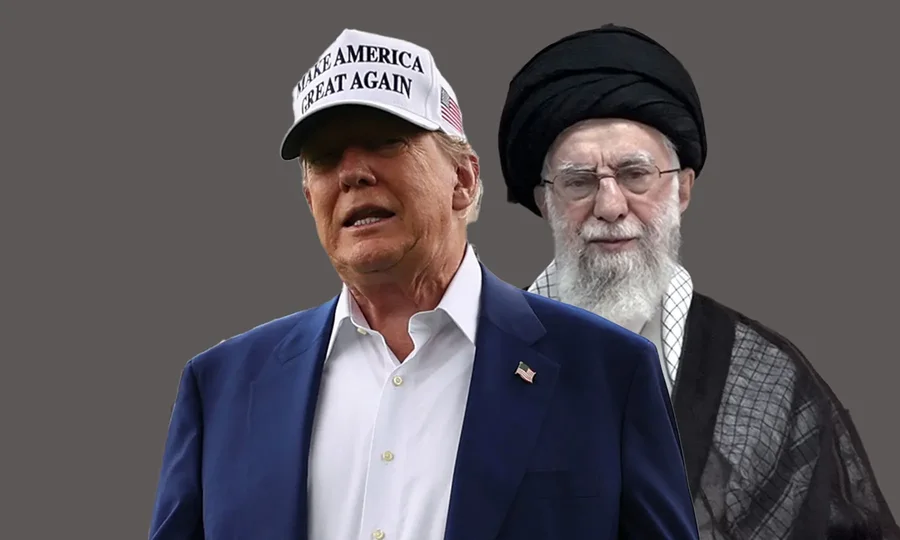
The US and Iranian leaders risk facing internal discontent...
“Your greatest enemy is your friends.” I have heard this phrase repeated by prominent American Middle East experts. They use it about two very different figures: Khamenei and Trump. The Ayatollah, who is the supreme leader of the Islamic Revolution, has more reason to fear his own people than Israel or America. The regime has betrayed all its promises (including that of internal security from aggression) and sooner or later it will have to pay a price.
The same phrase applies to Trump: the enemy within could be hiding in the Pentagon or the intelligence services, given how quickly some “deep mouths” have spread assessments of the consequences of the bombings in Iran that undermine, even ridicule, the president’s triumphalism. Or, according to another version, the “enemy within” is his ally Benjamin Netanyahu, who has once again shown that he is capable of influencing and even diverting American policy.
I am summarizing here some assessments that I have collected mainly among American generals, diplomats, and Middle Eastern scholars (some of whom are of Iranian origin), during a series of seminars organized by the Middle East Institute in Washington, a research center founded in 1946, the oldest in America that deals exclusively with this region. You can consult the full list of experts, including military ones, and the full transcripts of their testimonies on the website www.mei.edu. Here are the main points:
The Israel-Iran ceasefire is just that and nothing more: a very temporary pause in which each side prepares for the next phase of the war.
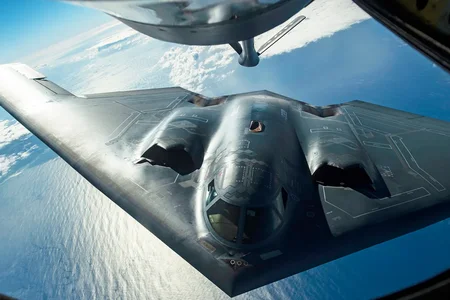
The extent of the destruction of nuclear facilities caused by the Israeli and US attacks is still largely unknown and will remain so for some time. In any case, it is unlikely to have put a definitive end to the Iranian nuclear program, unless it is Iran itself that puts this on the negotiating table. However, the fact that minimalist assessments of the impact of the bombings (perhaps premature, certainly hasty) immediately circulated in America shows that Trump, despite appointing many loyalists, is still surrounded by enemies within his armed forces and/or intelligence. Counter-power or Deep State, everyone can use the term they prefer, but the fact is that some oppose his foreign policy from within.
For now, Tehran's propaganda is focused on this message: we have resisted the powerful attacks of Israel and America, we are still standing, that is why we have won. In the short term, this is a justifiable claim in light of the (contradictory) statements coming from Tel Aviv and Washington about the overthrow of the regime. In the medium and long term, this is unlikely to stop the decline in the legitimacy of a regime that seems much more interested in its own survival than in protecting the Persian people from all kinds of suffering (from economic hardships exacerbated by corruption, to repression and human rights abuses, now including missiles over Tehran).
As long as the regime survives and this survival is seen as a kind of victory, it is highly unlikely that it will agree to negotiate on the terms set by Trump: complete abandonment of the nuclear program. From Tehran’s perspective, this condition amounts to capitulation. A hardline wing of the Shiite regime even accuses Khamenei of being too cautious in the past, and the “hawks’” argument is: “If we had the bomb already, we wouldn’t be at this point.”
Just 40 days earlier, from May 13 to 16, Trump had visited the Persian Gulf, with stops in Saudi Arabia, Qatar, and the United Arab Emirates. He had ignored Netanyahu, not including Tel Aviv in that tour that represented the launch of the 47th president's foreign policy. The alliance with the Sunni Arab powers of the Gulf seemed to dominate the Middle East policy of this Administration, in function of economic interests. Not coincidentally, immediately after that, Trump began negotiations with Iran, in accordance with the preferences of Saudi Prince Mohammed bin Salman (MbS).
With the attack on Iran, Netanyahu regained the upper hand and forced Trump to align himself with him again. Israel's ability to influence US decisions is much greater than the other way around. In the eyes of many Middle Eastern leaders, Netanyahu is now the dominant "alpha male," while Trump ends up following him.
After the worst defeat in its history on October 7, 2023, with its subsequent reactions, Israel has imposed itself indisputably as the hegemonic power of the entire Middle East. It has detached two important states, Lebanon and Syria, from Iran's sphere of influence. What it will do with this hegemony remains to be seen. America had its hegemonic phase in a unipolar world, after the fall of the Berlin Wall in 1989; it failed to use it well enough to extend its lifespan, and on September 11, 2001, that phase could be considered over.
Sunni and conservative Arab powers in and around the Persian Gulf have so far benefited from their policies of diplomatic engagement with Iran, having generally been spared reprisals and retaliation. At the same time, their military dependence on the United States for defense has been confirmed.
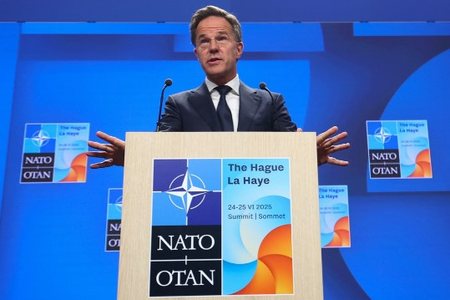
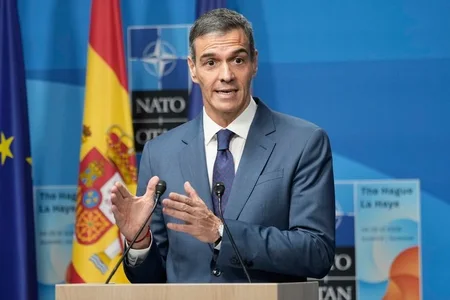
There is a lesson that applies to NATO's European arm as well. In the face of American unpredictability, more needs to be spent on defense; moreover, it needs to be spent more efficiently, by increasing coordination, cooperation, and integration among allies.
The triple effect of the actions taken by Iran (especially with its support for the Hamas massacre on October 7, 2023), Israel, and the United States is that of the disappearance of levels of trust of everyone in everyone. The Middle East has entered an era “according to Thomas Hobbes”, dominated by power relations.
This also applies to the issue of nuclear weapons. The era of non-proliferation treaties, accompanied by international inspection regimes, was already long obsolete. We have now entered an era where nuclear non-proliferation is pursued not through negotiations leading to agreements, but through the work of intelligence services, the discovery of secret plans, military intervention to destroy or block access to nuclear weapons. /Adapted from “Pamphlet” by “Corriere Della Sera”


Lini një Përgjigje