


 Shkruar nga Sune Engel Rasmussen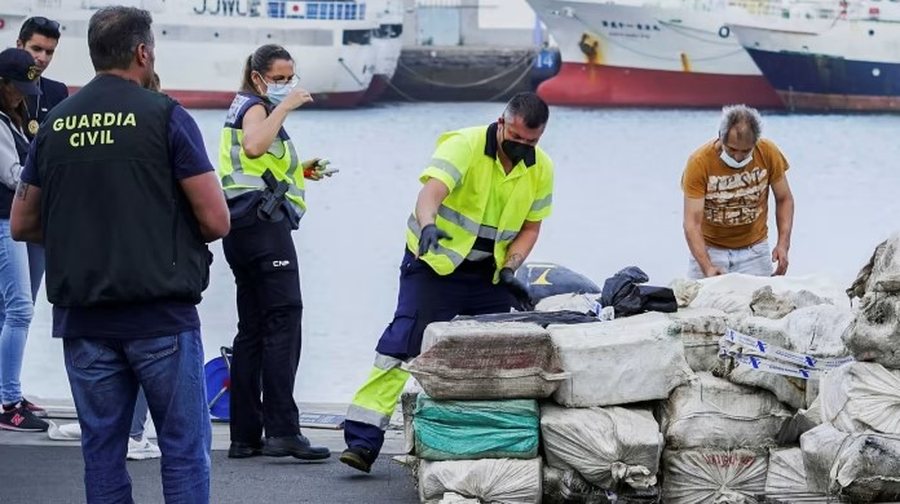
Dutch drug lord Ridouan Taghi is considered so dangerous that he was tried in a warehouse-turned-bunker in Amsterdam, guarded by hundreds of masked special forces, and drones hovering above the building to prevent a possible escape or attack.
Amsterdam - Organized crime has until recently been considered a distant threat in much of Western Europe. But now the relentless violence of criminal gangs is shaking the peace in some of the safest societies in the world. Sweden currently has the highest rate of gun homicides in Europe, while the Swedish army is helping the police fight street gangs.
In Denmark, residents of the Christiania municipality closed their famous outdoor cannabis market after it was overrun by violent gangs. In Belgium, the army has begun guarding trucks carrying seized cocaine, to prevent its theft by criminals.
One of the most alarming events, which shows what drug trafficking is causing on European societies since peaceful times at the beginning of the XXI century, happened at the beginning of this year in the Netherlands, a country long known for its tolerant attitude towards recreational drugs.
Dutch drug lord Ridouan Taghi is considered so dangerous that he was tried in a warehouse-turned-bunker in Amsterdam, guarded by hundreds of masked special forces, and drones hovering above the building to prevent a possible escape or attack. When the judges found him guilty of involvement in 5 murders and 2 attempted murders, their faces were hidden and their names were not revealed to the media.
" He has managed to instill fear in people's minds ," Dutch lawmaker Ulysse Ellian said of Tagh, who was sentenced to life in prison. During the 6-year trial that led to Tagh's conviction, 3 people related to the main witness were shot to death on the streets of Amsterdam: his brother, his lawyer, and a well-known tabloid journalist who had joined the defense the witness.
" We have had murders before. But Taghi is also targeting people who are not part of the underworld ," says Robby Roks, associate professor of criminology at Erasmus Law School in Rotterdam. This case raises the question of what these criminals with seemingly unlimited resources can do even from a prison cell.
Late last month, Taghi's 23-year-old son, Faissal, was extradited from the United Arab Emirates at the request of Dutch authorities, on suspicion of participating in a criminal organization involved in international drug trafficking, money laundering and the preparation of violent crimes. He is now in the same maximum security prison as his father.
Ellian, a young member of the Dutch parliament, is pushing for dangerous prisoners to be separated from other prisoners and people outside. Without quick action we risk a lot, he says. A recent report by Europol and the EMCDDA, the EU's drug agency, shows that some European countries are experiencing " unprecedented levels of drug-trafficking-related violence, including murder, torture, kidnapping and intimidation ".
The report identified 821 serious criminal networks active in the EU, with more than 25,000 members.
Now Brussels considers organized crime to be as big a threat to European societies as terrorism.
"Violence is destabilizing society and the social contract that we have known. It used to happen more at transit points, like airports, and between specific groups. Now it is spreading more and more on the streets, with the risk of harming innocent civilians ", says Europol spokesperson Claire Georges.
Europol explains this high level of violence with the globalization of drug trafficking, the increase of coca cultivation in Colombia and the fragmentation of the supply chain. The gangs have established a stronger foothold in major European ports, including Rotterdam in the Netherlands and Antwerp-Bruges in Belgium.
According to the United Nations Office on Drugs and Crime, in 2019, cocaine seizures in Europe surpassed those of North America for the first time. In 2021, the most recent year for which data is available, EU authorities seized more than 300 tonnes of cocaine, a record figure.
Taghi, 46, was born in Morocco and arrived in the Netherlands as a child. As a teenager, he joined a gang that operated in local malls. In the early 2000s, he lived between Dubai and Morocco, importing cannabis to the Netherlands.
The increase in cocaine consumption in Europe prompted the South American cartels to start moving into this market around 2008. Thus Taghi became involved in the global cocaine traffic. At one point, his gang managed to import about 1/3 of all the cocaine entering the Netherlands.
The Dutch economy has long depended on international trade, and the Port of Rotterdam is the largest in Europe. "Everything that makes the Netherlands attractive for the legal economy, makes it equally attractive for the illegal economy" - says Pieter Tops, professor at the University of Leiden, author of several books on the social effects of organized crime.
Since the 1970s, weak and contradictory drug laws have fueled underworld construction. The recreational use of cannabis is legal, but not its production. And this created space for organized crime groups. The gangs then expanded their activity into cocaine trafficking and the production of synthetic drugs such as ecstasy.
Dutch prosecutors say the murders for which Taghi was convicted began in 2015. He ordered the killing of a shop owner who had given police details of his transactions. A Black Chronicle journalist who had published Tagh's name was shot dead outside a club north of Amsterdam.
In 2016, Taghi moved to Dubai, where he used a Dutch passport under a false name and continued his criminal activity. But in 2017, his killers eliminated the wrong person, and the middleman who organized the killing turned himself in to Dutch police and offered to testify against Taghi.
In 2019, Dubai police arrested Taghi and sent him to the Netherlands. During the trial, the Dutch authorities took extreme security measures. Dutch Prime Minister Mark Rutte himself stopped cycling to work, while Dutch Princess Amalia canceled her first year at university due to kidnapping threats from Taghi's men.
A survey last year showed that half of all Dutch judges and prosecutors felt less secure in their jobs due to threats or intimidation, and nearly a third had changed their work routines, including replacing the name in the case files with a numerical code. / Adapted "Pamphlet" from "Wall Street Journal"






Lini një Përgjigje