


 Shkruar nga Makis Pollatos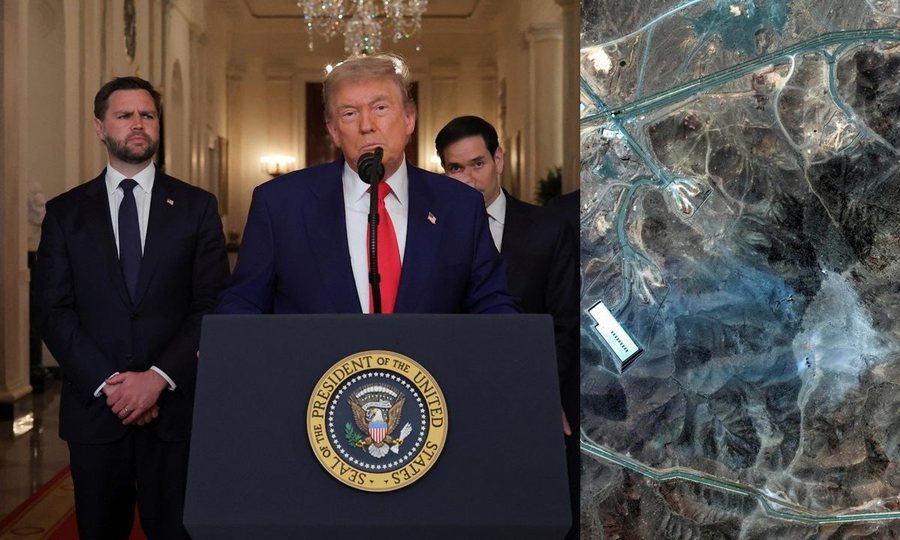
Why did the US president decide to strike Iran's nuclear facilities, despite guaranteeing a time frame for diplomatic negotiations?
The United States' surprise attack on Iran and the bombing of three nuclear facilities, even with 14-ton bombs, which were used operationally for the first time by the American B-2, leads us to two main conclusions.
The first conclusion is that there has been a reversal of Donald Trump's principle that he will not get involved in wars, his main commitment to the audience in the United States, and the second is that the American president seems to have backed down behind Israeli Prime Minister Benjamin Netanyahu, who for 10 days has launched a war against Iran with the aim of destroying Tehran's nuclear facilities in order to neutralize the ayatollahs' attempt to obtain nuclear weapons.
Donald Trump may often repeat the phrase "no one knows what I'm going to do," emphasizing that within 15 days the entire planet would learn his decision on Iran, but it took him no more than 48 hours to order his B-2 strategic bombers to take action and bomb Tehran's nuclear facilities at Fordow, Natanz, and Isfahan.
But why did he act this way? The obvious explanation is that the American president understood that the uncertainty could not last 15 days and that if he were to exhaust this period of time, the planet would consider that the leader of the most powerful state was reluctant to make a decision in an ongoing conflict.
It should not escape our attention that in parallel with the bombing of Iran's three most important nuclear facilities, Donald Trump, through diplomatic channels that remain open, sent Tehran the message that his goal is not to overthrow the Khamenei regime.
At the same time, when asked if Israel would try to eliminate Iran's supreme leader, Netanyahu replied simply: "We are doing everything we need to do."

How will Iran react?
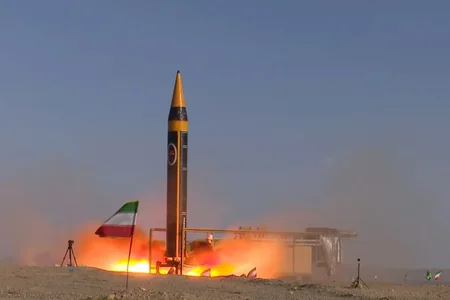
The ayatollahs in Tehran don't have much room to react to the US attack and the ongoing Israeli bombing. Ballistic missiles have hit targets in Israel, largely because Tel Aviv seems to choose which targets to defend by using its expensive anti-ballistic missiles wisely, but at this stage it seems unlikely to do the crazy thing, namely, try to use a "dirty" bomb.
One possible option for Tehran would be to close the Strait of Hormuz, through which millions of barrels of crude oil are transported by sea. Even worse, if they perceive that the survival of the theocratic regime is truly threatened, the Revolutionary Guard could undermine the Strait of Hormuz by laying thousands of mines of various types that have the potential to cause untold destruction and chaos in maritime transport.
What is not insignificant is that the oil supplied to China is transported through Hormuz. Perhaps the threat of closing the straits could be used by Iran to obtain significant military assistance from China. Tehran could demand from Beijing, in exchange for not closing the Strait of Hormuz, thereby cutting off the supply of extremely valuable oil to Chinese industry, advanced electronic warfare systems to blind Israeli fighter jets and reduce the high rate of successful bombing by the Israeli air force on Iranian targets of its choosing. In this scenario, through twists and turns, China could be actively involved in the war, with all the risks that this development could create for a possible expansion of the conflict.
Israel
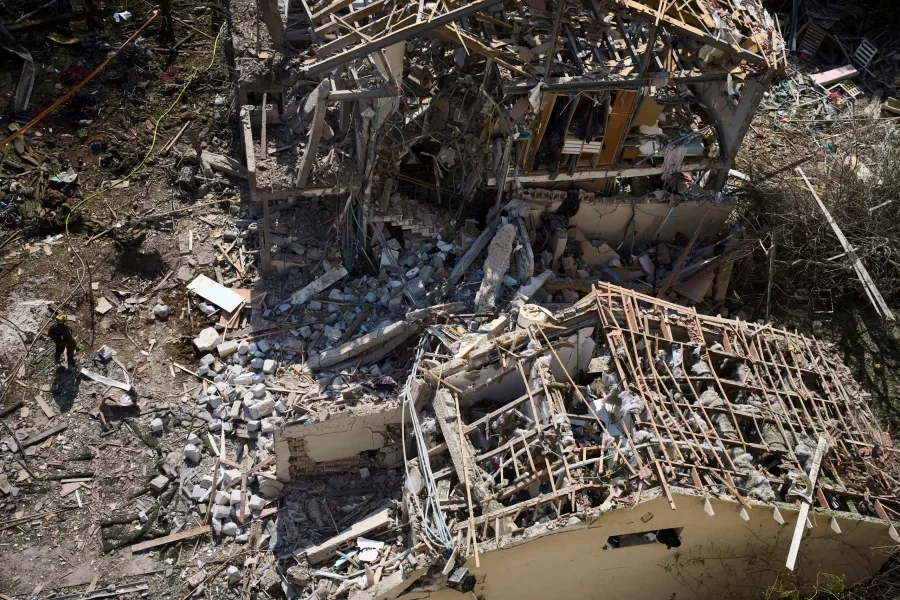
Following the Hamas attack on October 7, 2023 and the massacre of children, civilians, and rape of women that marked the greatest catastrophe for Israel since the Holocaust by the Nazis in World War II, the Netanyahu government destroyed Palestinian cities in the Gaza Strip, assassinated the Hamas leadership in the Palestinian territories, the leader of Hezbollah in Lebanon, and senior Iranian military figures who were theoretically sheltering in Tehran, showing that it is ready to protect the citizens of Israel at all costs.
If Israel crushes the Ayatollahs in Tehran, it gains supremacy in the wider region and imposes peace terms on all its neighboring countries. This also applies to Turkey, which will surely have already received the message of what happens to anyone who resists Israel, or considers them to be a threat to the state of Israel, as is the case with Khamenei, who declared 10 years ago that Tehran's goal is to eliminate Israel by 2040. Netanyahu, in the current circumstances, can impose his terms on Turkey by showcasing not only the sophisticated military systems it possesses and their lethal effectiveness, for Israel's enemies, but also the combat experience of the Israel Defense Forces, which seems insurmountable.
The Europe and EU factor
A day after British, German and French talks with the Iranian foreign minister in Geneva, Trump attacked Tehran's nuclear facilities. This action alone explains to a large extent how much the US administration considers the Europeans (and certainly the British), but especially the European Union. The head of Iranian diplomacy, who was in Istanbul for a possible meeting with American officials, left without doing anything, because he apparently still believes that there is nothing to negotiate with the aggressors. Instead of a meeting aimed at peace, Trump attacked the regime in Tehran, which still does not seem ready to admit defeat and capitulate.
Europeans will wait again on Tuesday and Wednesday, June 25, in The Hague to decipher any stance of Donald Trump at the NATO Summit, but the unpredictable US president who struck Iran without even receiving approval from Congress seems almost unlikely to want to co-decide on the war with the EU that he hated so much.
So the European Union will probably be further marginalized in the coming days, without ruling out a greater rupture in Euro-Atlantic relations if Donald Trump leaves the NATO Summit earlier than expected or has a diplomatic incident with a European leader. And all this despite the fact that Europe and the US are on Israel's side, since, as German Chancellor Merz said, "Israel does everyone's dirty work in Iran."
What remains? The inevitable possibility of some distant nuclear accident from the bombing of Iran's nuclear facilities and the secondary effects on the global economy.
If the Israel-Iran war is limited to three months and the price of oil rises to $10 to $15 per barrel, the consequences will be manageable. But if the conflict is prolonged or the unimaginable expands and becomes generalized, then uncertainties increase and we will have to run for supplies. / Adapted Pamphlet from Newsbomb.gr /





Lini një Përgjigje