


 Shkruar nga Pamfleti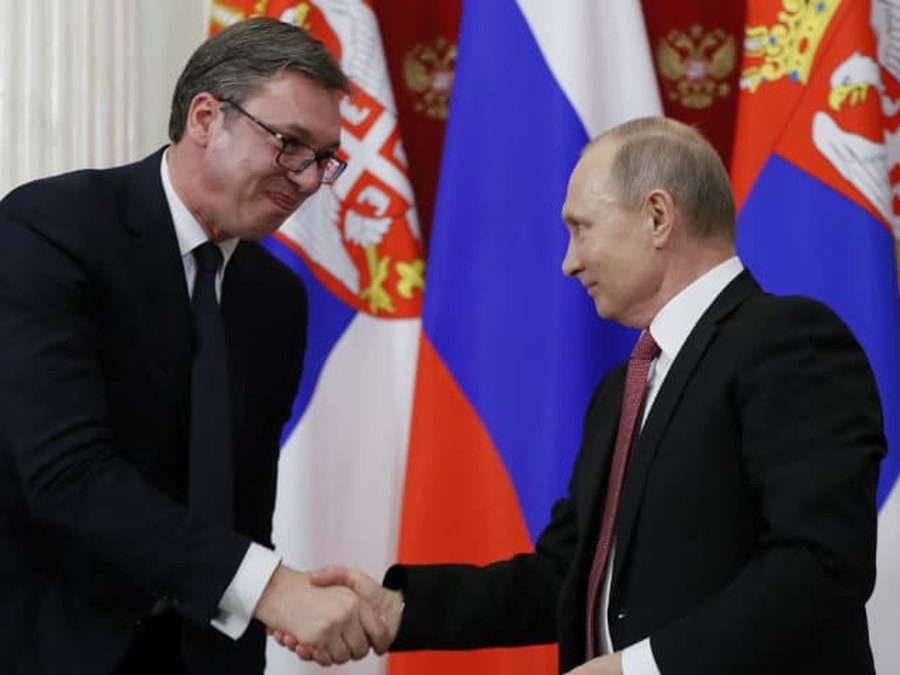
The latest warning came from European Commissioner for Enlargement, Marta Kos, who visited Belgrade at the end of April.
The much-anticipated visit of Serbian President Aleksandar Vučić to Moscow is being viewed with concern due to the potential consequences for Serbia's European path.
Vučić announced his decision to participate in the Victory Day parade against fascism on May 9 in early March, after a phone conversation with Russian President Vladimir Putin.
If Vučić travels to Moscow, where he would meet Putin physically for the first time since the beginning of the Russian invasion of Ukraine, this will have serious consequences for Serbia's European integration process, retired diplomat Srečko Đukić told Radio Free Europe.
"This may be useful for the Serbian regime, but it is not at all useful for Serbia's European path, nor for the European Union as a powerful economic and political entity in the international arena, and, of course, not for other candidate countries for EU membership ," Djukic explains, reports " REL ".
What does Brussels say?
Serbia has been in EU membership negotiations since 2014. It has not aligned itself with EU sanctions against Russia over its aggression against Ukraine, and authorities in Belgrade have continued relations with Moscow beyond 2022, despite warnings from Brussels.
The latest warning came from European Commissioner for Enlargement, Marta Kos, who visited Belgrade at the end of April.
At a press conference on April 29, she said that “ it is the decision of the Serbian president whether to go to Moscow ,” but warned that if Vučić goes, she will find it “ much more difficult to help Serbia remain strongly on the European path.”
" Going to Moscow and celebrating with Putin or his army killing people in Ukraine is deeply contrary to European values and the 2022 EU Council decision that member states not take any action that would legitimize Putin and Russia ," Kos said.
The US State Department has not yet responded to REL's questions regarding Vučić's announcement about the visit to Moscow.
What is at stake?
After years of balancing between West and East, Serbia's European path has been compromised, says former diplomat Djukic. He says that if Vučić goes to Moscow, "certain actions should be expected" from Brussels.
" It is possible that from the rich arsenal that the EU has towards Serbia - including financial aid, donations, political support and the visa-free regime - all or part of it will be reviewed and questioned ," says Djukic.
The European Union is Serbia's most important trading partner. The EU countries also account for the majority of foreign direct investment.
Djukic adds that Serbia's proximity to Russia not only jeopardizes its path towards the EU, but also negatively affects other candidate countries for membership.
"It is no longer possible to oscillate between East and West. This must end ," he concludes.
Who is Vučić sending a message to?
For Jelica Kurjak, Serbia's former ambassador to Moscow, Vučić's warning about the visit to Moscow is more of a message to the EU than to Putin.
"He probably thinks that with this he will show the EU that he does not depend only on them, that he has Russia behind him, and thus tries to strengthen his image, to put pressure on them ," Kurjak estimates.
According to her, there is no other justifiable reason. She also mentions the criticism leveled at the authorities in Belgrade by the EU due to the prolonged student protests demanding responsibility for the deaths of 16 people in the collapse of a concrete shelter at the Novi Sad train station.
Regarding negotiations over the NIS company and Russian natural gas supplies, Kurjak says a face-to-face meeting between Vučić and Putin is not necessary.
"In this specific case with NIS, nothing depends on Russia. America has imposed sanctions on the company that bought our company. So, America will decide when and what will happen ," Kurjak emphasizes.
The US postponed the implementation of sanctions against NIS for the third time at the end of April, even though the company has been on the blacklist since January 10 due to its ties to Russia's Gazprom Neft, which is under Western sanctions due to aggression in Ukraine.
When talking about a new gas agreement, considering that the current one expires at the end of May, Kurjak recalls that the last agreement was reached in May 2022 – three months after the start of Russia's invasion of Ukraine – without the need for Vučić to go to Moscow.
Who has confirmed participation in Moscow?
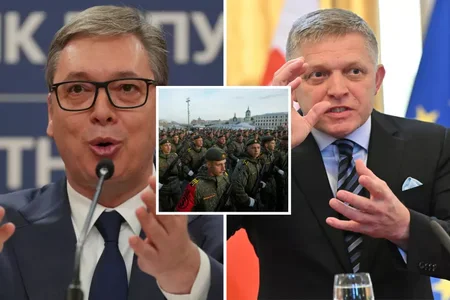
Of the European leaders, only Vučić and Slovak Prime Minister Robert Fico, a close Kremlin ally, have confirmed their participation in Moscow.
The visit was also announced by Milorad Dodik, the president of the Serb entity in Bosnia and Herzegovina, Republika Srpska. Dodik has met with Putin several times since the start of the Russian aggression, most recently on April 1.
Chinese President Xi Jinping will stay in Russia from May 7 to 9, as part of an official visit that includes bilateral meetings and the signing of agreements.
According to the Russian state news agency RIA Novosti, the presidents of Belarus, Kazakhstan, Azerbaijan, Venezuela, Brazil, and representatives from Congo and Burkina Faso have also confirmed their participation in the parade on May 9.
Where is Serbia on the path to the EU?
Serbia has not opened any new negotiation chapters or clusters with the EU as of December 2021. Opening a cluster requires full consensus from all EU member states.
Since 2014, when negotiations officially began, Brussels has repeatedly cited the issue of relations with Kosovo as the main obstacle. The EU-mediated dialogue has stalled.
The European Commission's latest report on Serbia lists serious problems such as the rule of law, widespread corruption, state control over the media, government influence in the judiciary, the lack of convictions for war crimes of the 1990s and the glorification of war criminals. It also highlights inconsistency with EU foreign policy.
During her visit to Belgrade, Commissioner Kos emphasized the need for justice reforms, the fight against corruption, media freedom, and improving the electoral process.
"Work with us on reforms, so that your membership in the European Union is possible ," Kos said after meeting with Serbian Prime Minister Gjuro Macuta on April 29.
Serbia is part of the EU's Growth Plan for the Western Balkans, which includes a six billion euro fund. However, due to the lack of progress in the dialogue with Kosovo, neither Serbia nor Kosovo have yet benefited from the first phase of this plan, which provides for advance money.


Lini një Përgjigje