


 Shkruar nga Pamfleti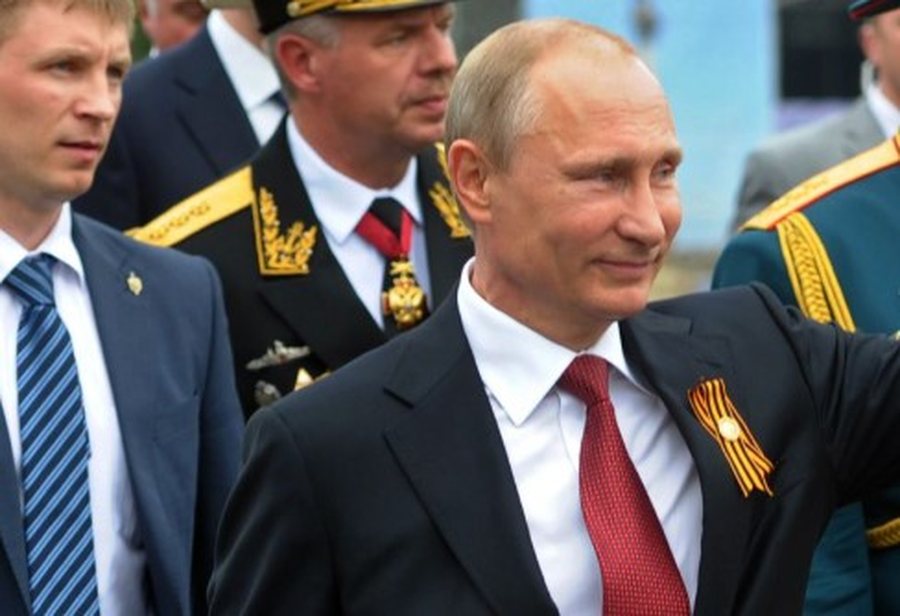
Recognition of Russia's annexation of Crimea would constitute an overturning of the rules governing the international order, the very legitimacy of which could be called into question, say experts in international law and international relations.
The legal unification of this Ukrainian peninsula, annexed in 2014, with Russia is being promoted, according to media reports, in the American proposal to resolve the conflict between Moscow and Kiev. Ukrainian President Volodymyr Zelensky does not even think that such a thing will happen.
Legal recognition would conflict with the principles on which the international order established with the creation of the United Nations is founded, experts say.
International law has been built since 1945 on the prohibition of aggressive wars and the self-determination of peoples. Changes in borders can only be the result of the free consent of states.
"Thanks to this, there has not been a single case in 80 years where one country has grown by militarily occupying the territory of another," said Phillips O'Brien, a professor at the University of St. Andrews in Scotland.
"Forcing Ukraine to recognize Russian sovereignty over Crimea would mean returning the right of occupation," said Elie Tenenbaum of the French Institute of International Relations.
"The message this sends is that it can be profitable, at least for the great powers, to violate this prohibition on the use of force," adds Lauri Melkso, a professor at the University of Tartu in Estonia.
According to him, Washington's recognition of Russian sovereignty over Crimea would also constitute a "major change" for the United States, which owes its 1932 doctrine of non-recognition of annexations carried out by force.
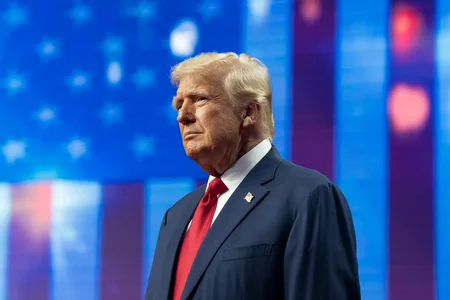
In 2018, during Donald Trump's first term, the US was "committed to maintaining" this position of rejecting Russia's annexation of Crimea.
"Such a precedent could have extremely destabilizing, even catastrophic consequences for world peace. And it could bring the problem of minorities back to the forefront," says Michael Epperling, a professor at the Max Planck Institute in Frankfurt.
“One only needs to look at the borders drawn with one ruler in Africa and the Middle East and the continuation of border disputes in Europe, where Hungary still disputes the borders inherited from the 1920 Treaty of Trianon,” he points out.
For Laurie Melkshaw, Donald Trump had already opened Pandora's box by recognizing Israeli sovereignty over the Syrian Golan and Moroccan sovereignty over Western Sahara.
The similar French stance, adopted last year for this disputed territory in Africa, is also "extremely dangerous," according to Michel Eperling.
"In principle, all treaties that are reached by force are invalid, so everything will be a matter of interpretation," explains Lauri Melkso.
"Ukraine could use this argument to invoke the invalidity of any agreement it might be forced to conclude," Michel Eperling estimates.
If Kiev signs with Moscow, it will have to revise its Constitution, as well as ratify the annexation of Crimea by referendum.
If the Ukrainian people approve it, then it will be up to each state to assess whether or not it had an obligation to recognize Russian sovereignty over this peninsula.
Although the United States seems willing to take the step, most of the international community does not recognize Russian territorial annexations.
“In the past, some illegal territorial annexations could be accepted and ratified through peace treaties,” noted Marie Lemay, a professor at the University of Western Brittany.
In practice, political and economic considerations “always led to the acceptance of the validity of treaties concluded under duress,” she says.
In September 2022, Russia annexed four more Ukrainian regions, which it partially occupies: Donetsk, Luhansk, Kherson, and Zaporizhia. This is a “de facto” annexation, which the American plan neither recognizes as legal nor as disputed.
But by agreeing to give up Crimea, Ukraine would set a precedent.
According to Marie Lemay, it would be a devastating signal for Russia, which could seek to achieve recognition of its occupation of other Ukrainian territories, but also for other states.
China, for example, has claims to some Russian territories in Siberia.
For Phillips O'Brien, the situation is clear: "If Kiev gives up its sovereignty over Crimea, this would be the beginning of Moscow's plan to end Ukraine."


Lini një Përgjigje