


 Shkruar nga Pamfleti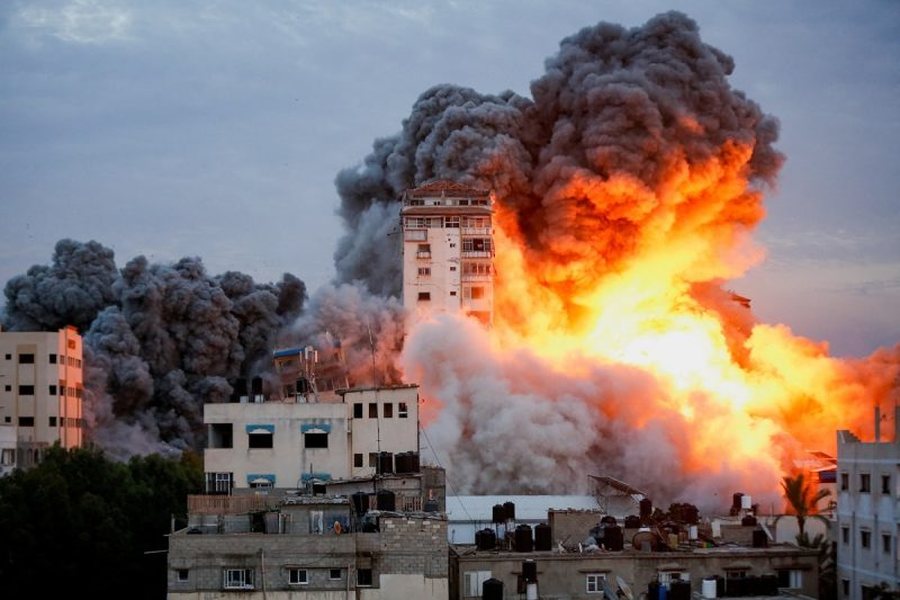
On October 7, 2023, a surprise attack by Hamas shocked Israel, killing an estimated 1,200 people and taking 251 others hostage.
The armed attack breached Gaza's fortified border, bringing deep insecurity and trauma to Israeli society.
A day later, on October 8, Israel launched the largest military offensive in its history against Gaza, which in two years has proved devastating for the Palestinian population. According to the Hamas-run Gaza Health Ministry, at least 66,000 people have been killed, 80% of them civilians, and over 169,000 have been injured. The real figures are expected to be even higher.
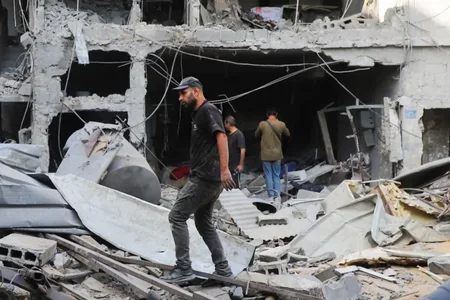
The International Organization for Migration reports that about 90% of Gaza's housing has been destroyed or damaged, displacing over 1.9 million people out of a population of 2.1 million. Meanwhile, the total blockade imposed by Israel has worsened the humanitarian crisis, with cases of extreme hunger causing the deaths of at least 450 people, including 150 children.
The war goals have not been achieved.
Israeli Prime Minister Benjamin Netanyahu announced two clear objectives: the release of all hostages and the destruction of Hamas. Two years later, neither has been fully achieved. Of the 251 hostages, 148 have returned alive to Israel, while 48 still remain in Gaza, only 20 of whom are thought to be alive.
Although a large number of Hamas fighters and leaders have been killed, including Ismail Haniyeh and Yahya Sinwar, the organization still exists and operates in Gaza.
In late September 2025, US President Donald Trump presented a 20-point peace plan, aimed at disarming Hamas and returning hostages, while offering amnesty to fighters who accept peaceful coexistence with Israel.
The conflict spreads throughout the region
The fighting has not been limited to Gaza. Hezbollah in Lebanon and the Iranian-backed Houthi rebels in Yemen have launched sustained attacks on Israel. In response, Israel has launched airstrikes in Lebanon and Iran, killing Hezbollah leader Hassan Nasrallah and hitting Iranian targets, including nuclear facilities. A top Hamas figure, Ismail Haniyeh, was also killed in Iran.
The fall of Bashar Al Assad's regime in Syria in late 2024 has further weakened the pro-Iranian axis in the region, strengthening Israel's military position.
Accusations of genocide and international pressure
Israel's harsh military operations in Gaza have been widely criticized by the international community. Bombardments of hospitals, refugee camps and schools, as well as obstructions to humanitarian aid, have fueled accusations of genocide against the Palestinian population.
Various organizations, including the United Nations, the International Association of Genocide Scholars, and Israeli organizations such as B'Tselem, have confirmed concerns about serious crimes. In December 2023, South Africa sued Israel at the International Court of Justice (ICJ), while in November 2024, the International Criminal Court (ICC) issued arrest warrants for Netanyahu and former Defense Minister Yoav Gallant.
Recognition of the Palestinian state
The tragedy in Gaza has revived efforts to recognize a Palestinian state. Since October 7, 2023, 20 more countries — including France, Britain, Spain, Australia and Canada — have officially recognized Palestine, supporting a two-state solution. However, Israel opposes this, considering it a “reward for Hamas,” while the countries that have made the recognition have stated that Hamas will have no role in a future Palestinian state.
Several countries, including South Africa, Colombia and Malaysia, have imposed sanctions on Israel, while the EU is discussing punitive economic measures. However, countries such as Germany continue to oppose these steps.
Deep division within Israel
In Israel itself, society is deeply divided over the continuation of the war. While some right-wing ministers are calling for the full annexation of the West Bank, protests by families of hostages, Israeli Arabs, veterans and ordinary citizens have increased. Over 60% of the population wants a ceasefire, according to a poll published in July.
Two years after October 7, the war has left serious consequences for Palestinian civilians, strained international relations, and opened a new, still unclear, chapter for the future of the Middle East.






Lini një Përgjigje