


 Shkruar nga Pamfleti
"Have you seen Macron and Scholz? I am the only successful head of government in Europe".
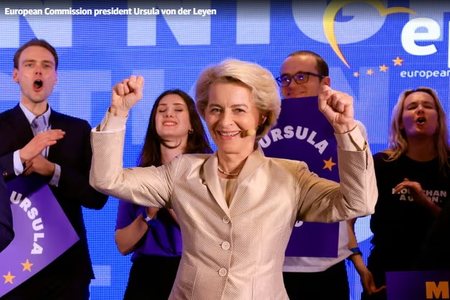
How can these four phrases uttered in the heat of the moment be reconciled while the polling stations had not yet closed in Italy? The first is from Ursula Von der Leyen, president of the European Commission: "The People's Party is the biggest force in the European Parliament. We will build a stronghold against left and right extremists. We will stop them."
The second is from Manfred Weber, head of the EPP group: "I invite the Socialists and Renew to join us for a pro-European alliance."
The third is from Pedro Marques, vice-president of the European Socialists: "It is essential that there is no coalition with the extreme right: no coalition with ECR and ID".
The fourth is from Assita Kanko, Belgian MEP and vice president of Ecr, the conservative group led by Giorgia Meloni: "In the last five years we have worked well with Von der Leyen. Let's wait for the results and see the program. But I don't see what would prevent us from working with him."
Between one and the other of these sentences is the entire difficult path of Meloni towards the EU .
The joys and sorrows of a victory that somehow, in Europe, could be crippled. The path is very narrow, burdened by a paradox: Meloni's success at home, on the crest of the black wave that has hit the continent, may be limited to Brussels.
And the first reactions of the great socialists and the people are there to prove it.
Because the question the prime minister has been asking herself for weeks, maybe months, is: what levers can her European strategy rely on to try to steer the EU government to the right?
Meloni has something to celebrate. "I am the only leader of a large European country - was the immediate reaction that the associates said - to arrive first and increase the political consensus. While Macron and Scholz fell".
A devastating result for her indigestible colleagues that undoubtedly makes her smile and that Ecr co-president Nicola Procaccini translates with a very optimistic attitude: «France and Germany have gone through a crisis. It is a crucial element in the reading of the vote. And this can clearly strengthen the weight of Giorgia Meloni, who at that point would certainly be the strongest among the main European governments".
All true.
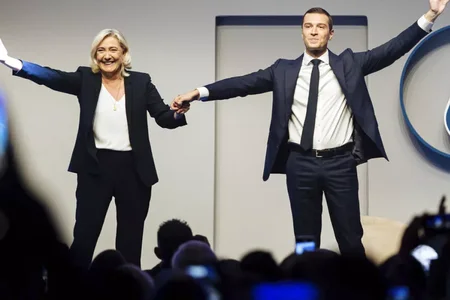
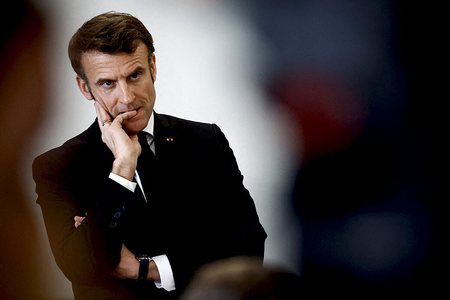
The chancellor's German Socialists even finished third, behind the far-right AFD, and the French president was ousted by the National Assembly of Marine Le Pen and Jordan Bardella. But it is also true that Macron has already made his move, which Meloni did not expect. And Macron is - in every sense - the antagonist on whom many prime ministerial elections depend. When the head of the Elysee announced that he would dissolve the Elysee and immediately bring France to a vote on June 30, two days after the European Council was supposed to crown the new president of the European Commission, Meloni realized that once again he would have to work for descent and caution, keeping triumphalism within national boundaries.
He will wait, his strategists say. It is unlikely that the next president of the Commission - whether Ursula von der Leyen or another name - will win before the French elections.
Macron has effectively frozen everything. Even Melon's countermoves.
In any case, she will not have much space, except for the distinction she rightly has in the European Council as the head of the Italian government.
In the great party of the ultra-right, Fratelli d'Italia participates with the smile of the winners, but with the anxiety of those who still see a lot of uncertainty. Despite Melon's growth compared to five years ago, the ECR group grows by several MPs and the union with Identity and Democracy, strengthened by the exploits of Le Pen but crippled by the collapse of the League compared to 2019, is not enough to change balance in the European Parliament.
All the more so that a few weeks ago AfD Germans, considered unrepresentable, were expelled from the ID.
And there are many unknowns here: the war in Ukraine, which has divided sovereigntists for the past two years - between Vladimir Putin supporters like Le Pen and the AfD, and rediscovered Atlanticists like Meloni - is a variable the prime minister knows all too well. to take into account. As well as Le Pen's triumph: it will certainly have an effect on the right-wing coalition in Italy, and it could also be destabilizing if the French leader continues to keep open a dialogue with Meloni to the detriment of Matteo Salvini./ Adapted from La Stampa



Lini një Përgjigje